India v Sri Lanka at Adelaide, Commonwealth Bank Series

Today: Pakistan lost.

I blame myself, and my new found admiration for Pakistani cricket.

The eternal optimist in me however does see them winning the next three ODIs in the Emirates.

You heard it hear first.

A thrilling come from behind series victory would cap off what has been a very successful series overall.

It is actually a little odd, historically speaking, to watch them excel in the test format but struggle in the limited overs format, as their biggest  successes have come in One Day Internationals and T2OIs.

Three stand out, as I mentioned yesterday: The 1986 Australasia Cup, the 1992 World Cup, and the 2009 World Twenty20 Cup.

But allow me to digress a little:

I have at least a handful of American readers who know nothing of the sport. When I first started the blog, I wrote with them in mind as my audience. Recently, however, I have written with actual cricket fans as my intended audience, and have evidently spurned my non-fan readers by talking over their heads.

Therefore:

International Cricket has three main formats: Test, One Day International, and Twenty20.

Test cricket is the oldest format, and the most interesting of the three. In it: each team bats until the bowling team gets 10 wickets, or outs. And then the team that was bowling gets their turn to bat. And then the first team bats again, and then the second team bats again. The team with the most runs at the end of the two “innings” is the winner. If time runs out (five days, six and a half of hours of play per day) before a team gets their “fair ups”, then the game is a draw.

Limited overs cricket does just that: it limits the overs. An over is six deliveries – or pitches.

One Day International limits each teams’ overs to 50 each. Basically, they get 300 pitches to score as many runs as possible. If the bowling team gets 10 of the batting teams’ wickets, then their turn is over, no matter if they have had all of their overs.

Then bowling team gets their 300 pitches. And the team with the most runs wins.

The games last about 6-8 hours; it is the format used in the World Cup.

Twenty20 is the newest form, and its more egregious bastardization: each team gets 20 overs to score as many runs as possible and the games last about three hours.

It is currently the most popular format, though most cricket snobs, myself included, turn their noses up at it.

I hope that helps, though I am sure I just confused things even more.

Anyway: Pakistan’s three most glorious moments:

The Australasia Cup, 1986:

The Australasia Cup was a One Day International tournament that initially featured the nations of Pakistan, India, Australia, New Zealand, and Sri Lanka. Bangladesh joined in on the fun in 1990, but were replaced by the United Arab Emirates in 1994.

The 1994 tournament was the last Australasia Cup – it was later more or less replace by the ICC’s Champions Trophy.

All three incarnations of the tournament took place in the UAE – and all three were won by Pakistan.

But the 1986 Cup was the big one: as it saw Pakistan defeat India in front of 20,000 spectators with the final ball of the final over.

The over started with Pakistan needing ten runs to win. Wasim Akram was run out with the first ball. Javed Miandad scored four with the second ball, and another one with the third ball.

In the fourth delivery, Chetan Sharma bowled Zulqarnain who was replaced at the crease by Tauseef Ahmed. He singled off of the fifth delivery, putting Miandad back on strike:

His team needed three to tie, four to win:

So he hit a six.

Wonderful scenes, surely, for Pakistan. Defeating their bitter rivals with the final ball, of the final over.

This article sums it up thusly:

“Do you remember where you were when…? When Pakistanis of my generation say this to each other there are several ways in which the sentence might end: when Zia was killed; Bhutto was hanged; democracy returned; Pakistan went nuclear; troops withdrew from Kargil; the military took over, again. But, more often than not, the sentence ends: when Miandad hit that six.”

Fantastic.

In 1992, Pakistan’s good fortunes in One Day Internationals continued: winning their first World Cup.

The tournament took place in Australia and New Zealand. It featured all seven test playing nations, as well as South Africa and Zimbabwe.

It was a straight round robin involving all the teams, the top four finishers advanced to the semi-finals, and then the finals.

Pakistan finished fourth, just one point higher than Australia and the West Indies.

In their first group match, they were crushed by the West Indies by 10 tickets.  In their second, they defeated the minnows Zimbabwe by 53 runs; and their next match against England ended with no result.

Then they lost to India.

It was not going well for Pakistan.  Through four group games they had won one and lost two.

And it didn’t get any better, as they lost to South Africa in their fifth match by 20 runs (D/L method.)

But then they beat Australia by 48 runs; then defeated Sri Lanka four wickets; and then defeated New Zealand by seven wickets, putting them into the semi-final against New Zealand – thanks to the one point they received in the “no result” match against England, a match that looked to be going England’s way before being washed out.

In the semi-final, they demolished New Zealand, winning their first semi-final in four tries.

In the thrilling final, they defeated England by 22 runs.

Imran Khan, in his last One Day International, took England’s last wicket.

Lots and lots of great photos on Cricinfo.

Javed Miandad (there he is again) scored the most runs for Pakistan in the tournament, with 437.  The highest score in an innings came from Rameez Raja with 119* against New Zealand in the final group stage match.

Wasim Akram was their best bowler, by far, going 89.4-3-338-18.

A special tournament from a special player.

*

2009 was a difficult year for Pakistan.

Violence had raged in the nation post 09/11.

In 2003, 164 people died in terrorist related attacks.

In 2009, that number had risen to 3,318, a 48% increase over 2008’s total.

To put that into perspective: 2,996 people were killed in the September 11th attacks.

In other words: in 2009, Pakistan needed something to cheer for.

And they got it, in the form a World Twenty20 Cup victory.

And while that might sound like hyperbole to some, Pakistanis adore cricket, and their cricketers. There is nothing to compare it to here in the States.

The tournament took place in England. Pakistan lost their first group stage match but won their second to advance to the knock out stages; where they defeated South Africa in the semi-final, and Sri Lanka in the final.

Shahid Afridi carried his team. Taking two wickets and scoring a half century against South Africa, and then scoring another half century in the final.

He gave Pakistan a victory, when his country needed it most.

The more I read about this team, the more I love them.

*

I was searching for a conclusion to these moment, about how to tie them all together.

What they mean for Pakistan, the country…and what they mean for cricket…

But then I remembered this wonderful article posted on The Sight Screen.

The conclusion stands out:

“What we ask of cricket is not redemption, but a chance to know that beauty, passion, desire and belief can be real, visceral, true experiences, even if for only a moment.”

Thank you, Ahmer Naqvi, you said it better than I ever could, so yours will be the last words of consequence.

Until next time.

Kenya v Ireland at Mombasa, ICC Intercontinental Cup

Three Pakistanis have hit triples centuries in a test match.

There was Hanif Mohammad against the West Indies in 1958; Inzamam-ul-Haq versus New Zealand in 2002; and Younis Khan against Sri Lanka in 2009.

Mohammad’s knock came at the Kensington Oval in Bridgetown in the first match of a five test series. The match ended in a draw.

West Indies went on to win the next three tests to take the series.

The home squad had put up a massive score of 579 in their first innings, while restricting the visitors to 106, and forcing the follow on.

And then Mohammad stepped to the crease, and as I mentioned in my previous post: batted for a jaw dropping 970 minutes for 337 runs.  Carrying his bat through the innings as partner after partner fell.

Pakistan set a target of 185 for their hosts, but time ran out on day five after only handful of overs.

Cricinfo has a couple of photos that are worth checking out.

Herr Mohammad looks like the sort of cricketer I could get on board with, based simply on his picture. Just like The Nawab of Pataudi.

Unfortunately, as mentioned above, Pakistan had a poor showing in the series overall – as did Mohammad. He scored 337 runs in the innings, but only 628 in the entire series.

An aside: Sir Gabby Sobers also hit a triple century in the series: he scored 365 not out in the Windies’ first innings of the third test. His team went on to score 790/d and won the match by an innings and 174 runs.

Mohammad’s 337 is the highest ever for a Pakistani, and was broadcast live on the radio in Pakistan. This, according to Cricinfo, had a great deal to do with the popularizing of cricket in Pakistan.

*

The second triple century in Pakistan’s test history came from Inzamam-ul-Haq.

He played in 120 tests for his country, scoring 8,830 runs, with 25 centuries, 46 half centuries, and an average of 49.60.

He was a big man, who loathed exercise, but who attacked the ball with ferocity.

His triple century happened at Lahore Stadium (formerly the Gaddafi stadium, at least here on Limited Overs) against New Zealand on May the 2nd, 2002.

The knock came in the first innings, and Pakistan went on to win the match by an innings and a whopping 324 runs.

Imran Nazir also scored a century for Pakistan in the match, but he was the only other Pakistani to get into triple digits.  All the hosts needed was Inzamam.

Their bowling was spectacular in the match, getting New Zealand out for only 76 in their first innings, and only 246 in their second.

In the first innings, Shoaib Akhtar had remarkable figures of 8.2-4-11-6. While in the second innings, he did not bowl an over.

Danish Kaneria bowled 32 of them, however. He was expensive, allowing 110 runs, but he also took six Kiwi wickets.

Unfortunately, the series is better known for the tragedy that preceded the second test in the series.

On May 8th, outside of the Sheraton Hotel in Karachi, where the teams were staying, a man detonated a car bomb near a city bus: killing himself and thirteen others.

The teams were minutes away from boarding their busses for the stadium.

New Zealand immediately called its players home.

And thus began Pakistan’s slow descent into exile.

*

Pakistan’s final triple century happened, interestingly enough, at the National Stadium in Karachi.

Younis Khan scored it for his country in the first innings after Sri Lanka put up a superb score of 644.

Pakistan went on to score 765 in their innings, thanks mainly to Khan’s 313, and the match ended in a draw.

It was a marvelous innings for Khan, his first as Pakistan’s captain, and propelled him into the number one slot in the ICC Player Rankings.

Unfortunately, again, the test preceded a tragedy: two weeks later in Lahore, gunmen attacked the Sri Lankan team bus, and Pakistan has not hosted an international match since.

Nor will they in all likelihood ever host one again – at least not in my lifetime.

*

I decided to write about the three triple centuries because in some ways, for me, with one major exception which I will get to in a minute, they sum up Pakistani cricket.

Incredibly talented, yet beset by tragedy over and over again.

Two of their biggest moments ever: overshadowed within days by terrible moments in their nation’s history.

They will be my team, going forward, I have decided.

I like that the are controversial, that they soldier on in the face of adversity, that they entertain…

And sometimes they even win.

Gloriously.

And that’s the exception: their one day history: the 1986 Australasia Cup, the 1992 World Cup, the 2009 ICC World T20…

More on those tomorrow.

And speaking of Pakistan:

Back on the pitch: their first ODI against England begins at 5am Minneapolis time tomorrow morning. I am very much looking forward to it.

Also: congrats to Dhoni and India for their win yesterday at the Adelaide Oval. A special victory from a special Captain.

As I mentioned before on this blog: I love it when Captains step up and drag their team over the line. It might just be my favorite thing in sport.

And finally, Ireland is playing Kenya in a four-day ICC Intercontinental March. They were 75 all out in their first innings but restricted their hosts to 109. Currently they are 81 for two in their second innings at the close of day one.

22 wickets fell in one day’s play. Amazing.

It should be a fun day tomorrow at Mombasa.

Which brings up our geography lesson:

Mombasa, Kenya:

Until next time.

Pakistan v Afghanistan at Sharjah, Only ODI

Pakistan.

Let’s talk about Pakistan.

I was planning on making this one, long post. But writing about the entire cricketing history of a test playing nation is a fool’s errand. So much would have to be omitted that the flavor of the country’s history would be diluted; the poetry and the magic would be gone. So I am going to split this up into multiple posts. Their test history, their ground history, their one day history…etc.

Today we go back to where it all started: Independence, and the first Test series against India, in India.

The country itself was conceived in the 1930s by the Muslim League, who wanted to create a Muslim state within India. This led to the Lahore Resolution in 1940, which called for a more active role for Muslims in British India.

In 1947, the British left. And an agreement between the Sikhs in the South and the Muslims in the left created what is now known as Pakistan: the country was officially established on August the 14, 1947.

Millions of Muslims streamed North. Millions of Sikhs streamed South.

War broke out in 1948 over Kashmir. Over 5,000 Indians and Pakistanis were killed in the conflict.  It was the first of four short wars between the two nations over the region.

Four years later, the two nations faced each other not on the rocky foothills of the Pir Panjal mountain range, but on a cricket field: specifically, a Test match in Delhi at the Feroz Shah Kotla ground.

Cricket has been played at the ground since 1883, and it hosted its first Test match in 1948, and continues to host them to this day, despite an ODI in 2009 being abandoned due to a dangerous pitch.

It seats 48,000, is home to the IPL’s Delhi Daredevils, and is famously known as the preferred haunt of leg spinner, Anil Kumble, who took 63 wickets there in 11 matches, including a 10-fer there in a test match in 1999 – one of only two bowlers in the history of test cricket to take all 10 wickets in an innings.

But I digress.

The first Test match between India and Pakistan ended disappointingly for the visitors, as India won by an innings and 70 runs. The match lasted only three days after India won the toss and put Pakistan in the field. The hosts went on on to score 372, and then scuttled Pakistan for 150 all out and 152 all out.

The highest score in that match for Pakistan was a 52 from Hanif Mohammad. He also famously played the longest Test innings in history in 1957 in Bridgetown against the West Indies: 970 minutes. 16 hours at the crease.

(In case you have failed to notice, my jaw still drops when I think about long stints of batting.)

Pakistan, however, won the second match of the series at the University Ground in Lucknow.

India were bowled out in the first innings for 106 thanks to five wickets from Fazal Mahmood, while Nazar Mohammad scored Pakistan’s first test cricket century: 124 not out. He carried his bat too and was out there batting for almost nine hours: leading his team to a respectable total of 331.

In India’s second innings, Mahmood took another seven wickets, and the hosts were all out for 182.

Pakistan won the match by an innings and 43 runs.

India won the third test by 10 wickets, and the final two matches ended in draws, so India won the series 2-1. But the match in Lucknow will long surely be remembered by Pakistani cricket fans the world over.

Interesting side note: the match at Lucknow’s University Ground in October of 1952 was the only international match ever played there.

***************************************************************

Back on the pitch:

Last night Australia defeated Sri Lanka by five runs at the WACA in Perth; while in Sharjah Pakistan (hey!) are chasing Afghanistan’s respectable total of 198 in their only One Day International.

I am off to follow the chase.

Until next time.

Australia v Sri Lanka at Perth, Commonwealth Bank Series

There is one match worth watching in world Cricket today (or tomorrow, depending on where you are): the only ODI between Pakistan and Afghanistan at the Sharjah Cricket Stadium in the United Arab Emirates.

Both countries’ cricket teams are great stories, for different reasons. Pakistan for their recent resurgence after the attacks on the Sri Lankan team and the spot fixing in England; Afghanistan because, well, they have been brutalized by the Soviets, the Taliban, Al Queda, and the United Nations for generations.

They are neighbors, of course, but neither plays their home matches in their home country. Further, the game came to Afghanistan from refugees who fled to Pakistan during the 1990s.  And Afghanistan’s national team was invited to playing Pakistan’s domestic league in 2001 (a rather ominous year for Afghanis, of course).

Afghani cricketers have traveled the world over the last 12 years: England, Nepal, Buenos Aires, the Netherlands…and they have a great at qualifying for the World Twenty20s.

Both teams are two of world cricket’s best stories, and both countries share a sad history. I look forward to following the match tomorrow morning.

Another half hearted post, sorry, there is just a bit of a lull in  the sport right now.

And I am tired.

I am tired because last night I was up late celebrating my new job.

As of February 27th, I will be working for MinnPost.com.  A non-profit online news source that focuses primarily on local politics and policy here in Minnesota. I am pretty excited.

The downside? Less time to write about cricket, at least at first. I plan on writing a lot over the next couple of weeks however.

Also, I wanted to welcome to the cricket blogging fold another fellow local: American Armchair Cricket. He’s just down the road in Indiana, and the story of how he found the sport is very similar to mine. Welcome! See you on Twitter.

Finally tonight, I wanted to thank Deep Backward Point for the kind words on his blog yesterday.  It made my day, week, month. Yesterday I accepted the offer at MinnPost, and on the drive home, saw his blog post. It was  a really great couple of hours. So: thanks: your support of Limited Overs has been invaluable.

Until next time.

Tasmania v New South Wales at Hobart, Sheffield Shield

Now that we have entered a bit of a Test cricket lull, and now that I have finished up my post on the 199 Club, I think I might be experiencing a touch of writer’s block.

Sure, I could write about the IPL auction, or the Commonwealth Bank Series, but that’s just not doing it for me.

I am researching for a longer post on Pakistani cricket, and I am trying to find something else to write multiple posts on, like the 199s, and I am already writing a proper preview of the three Test series between New Zealand and South Africa, but I am just not ready to throw any of those up on the blog right now.

So I am going to take 48 hours off, refresh, reflect, research, and be back with new material on Thursday.

Until next time.

North West v Border at Potchefstroom, CSA Provincial One-Day Challenge

Okay, hey, let’s talk about Bangladesh Premiere League for a second, shall we?

Website: bplt20.net

Twitter:  @t20_bpl

This is, of course, the inaugural season for the tournament, and is Bangladesh’s answer to the India Premiere League and the Big Bash League: a short Twenty20 tournament featuring international cricketing mercenaries.

There are six teams from six of the seven Bangladeshi cricketing regions (sorry Rangpur). The teams are as follows:

1. Barisal Burners

2. Chittagong Kings

3. Dhaka Gladiators

4. Khulna Royal Bengal

5. Duronto Rajshahi

6. Sylhet Royals

All fine names, except for the team from the Barisal division.  I mean, really, the Burners?  That’s the best you can do?

There was an auction for each of the franchises, they went for about $1million a piece, and there was of course an auction for the players, just like in the IPL.

Each squads has its share of “big name” t20 cricketers:

Burners: Chris Gayle, Brad Hodge, Yasir Arafat, Phil Mustard, Shane Harwood.

Kings: Dwayne Bravo, Muttiah Muralitharan

Gladiators: Shaheed Afridi (his status is in doubt, however) Imran Nazir, Kerion Pollard, Saeed Ajmal

Royal Bengal: Sanath Jayasuriya (really?), Dwayne Smith, Niall O’brien.

Rajshahi: I am disappointed in myself because I do not recommend any of the names on the squad list. They do have a Canadian, Rizwan Cheema, so that’s cool.

Royals: Faisal Iqbal, Brad Hogg, Peter Trego, Kamran Akmal.

Plus each squad features Bangladeshi players – a good opportuntity for some of them to make a name for themselves on such a big stage.

The format of the tournament is rather standard: each team plays each other team twice. The top four teams go into the knockout stage: two semi-finals and a final.

There has been a lot of hype surrounding the tournament: there was the franchise auction, and the player auction, and the logo release party, and the opening ceremonies. Plus each team has their own song and is having their own opening day party.

Whoever runs their social media has also been on a tear, I think they tweeted like 75 times the other night: mostly links to the Cricinfo pages for each of the international players, but also important bulletins like the fact that the Kings had checked into their hotel.

There are a couple disappointing things about the tournament (other than the fact that these three week t20 money grabs are what’s killing cricket): 1. It is not on TV in the states (yes, that’s me, being hypocritical)  (I had thought ESPN3 would pick up the matches, as they do show Bangladeshi home internationals, but no dice) and 2. The matches will only be played in Dhaka and in Chittagong.

Regarding number 2: I thought it would have been awesome if each region had been able to host its home matches. But that is not the case, and though it must be down to an infrastructure issue (and a financial issue, surely), it really is too bad for the four franchises who will have to play all of their matches on the road.

I have feeling that it will hurt attendance as well. I mean, will cricket fans in Dhaka go watch Barisal v Duronto?

That’s a serious question.

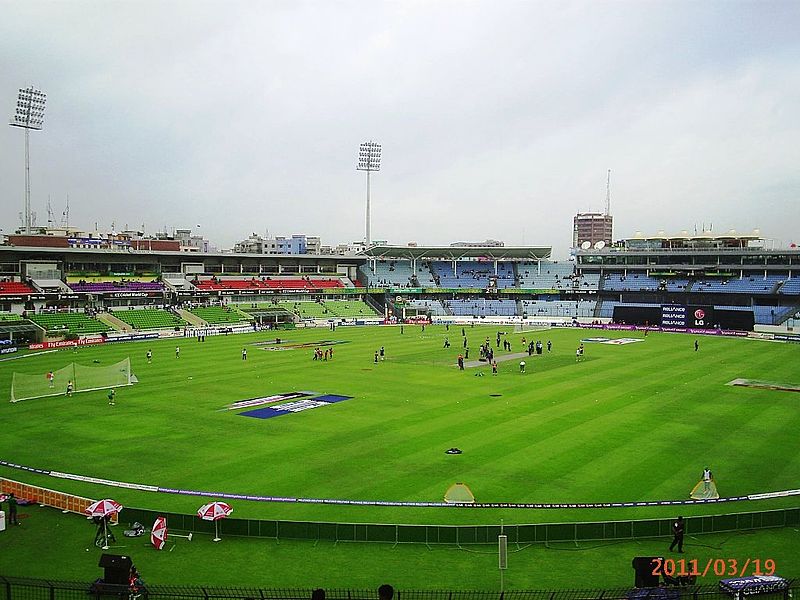
The two stadiums involved are: the Zohur Ahmed Chowdhury Stadium in Dhaka, and the Sher-e-Bangla Cricket Stadium in Chittagong.

Thanks to Wikipedia for the pics:

Dhaka:

Chittagong:

The first match is on February 10th, with the Barisal Burners taking on the Sylhet Royals at Dhaka.

The final is on my birthday: February the 29th.

Over the next week, the weather looks to be quite good: highs in 80s, dry, clear. Great cricketing weather. Who knew the weather was so very pleasant in Bangladesh?

I really think I need to visit there.

Anyway, I won’t go as far to say that I am looking forward to the BPL, but I think it will be worth at least paying attention to.

*****************************************************************

Back on the pitch: Younis Kahn, a member of the 199 Club, cracked a century for Pakistan against England in Dubai last night, giving them a very firm grip on the match. A three-nil white wash of England for Pakistan? Unbelievable.

And just wonderful for the sport, in my opinion. Just simply wonderful.

I have talked a lot about “choosing” a nation to support. I vacillated between England, and Australia, and India, and even Bangladesh.

But now, I am thinking: Pakistan.

I know that makes me a bit of a front runner, but goodness me do I love watching them play cricket.

And they have had a really terrible time of it as late, before the series against England anyway. It’s not like they have been winning everything over the last two years like England, or even India (yes, you did win the world cup not eight months ago, remember?)

No decision is final, yet, but I am planning a post on Pakistani cricket. Go into their history a bit, see how they fit.

Until next time.

Tasmania v New South Wales at Hobart, Ryobi One-Day Cup

Today: part eight, the final part, of the 199 Club.  Eight different posts on the eight different times a batter has gotten out one run shy of a double century.

Part seven is here.

The 199s have happened in just about every corner of the cricket playing world: Pakistan (twice), India, England (twice), Sri Lanka, the West Indies, and Zimbabwe…

Two of the batsman were from Pakistan, two from Australia, and one each were from India, Sri Lanka, Zimbabwe, and England.

Members were run out, LBWed, bowled, and caught.

And today we meet the club’s last member: Ian Bell.

Bell, of course, is everything that is wrong with English cricket right now.  And I mean that with a heaping helping of sarcasm. Yes, he has looked absolutely clueless at the crease in the UAE versus Pakistan, but the cricket media has been, in my opinion, overly hard on him.

The whole of England has been rubbish in this series against Pakistan.

Calling for Bell to be dropped is silly – if he should be dropped, then so should Pietersen, Cook, Trott…etc.

Shoot, Andrew Strauss has been awful for like two years, yet no one is calling for his head like they are calling for Bell’s.

Maybe it’s because he is Irish?

Seriously.

He has played in 71 tests for his country, scoring over 5,000 runs, and he is only 29 years old.

Calling for his head is treason.

But, we are not here to talk casual racism or Bell’s troubles in the desert, we are here to talk about Bell’s score of 199 in the first innings against South Africa at Lord’s on July the 11th, 2008.

When he was out via a catch on 199, it was as close as he had ever gotten to a double century in his four years in England’s test squad – so thank goodness he got that 235 against India at the Oval last summer.

Bell’s 199 happened on day two of the test, a day interrupted several times due to rain (of course), so you have to assume that he would have gotten to 200 if not for all of the starting and stopping.

England had put up a huge score in their innings, thanks to Bell and Pietersen (152) – plus Broad scored a respectable 72.

South Africa in their innings were all out for 247 despite a century from Ashwell Prince (that’s a cool name) – Monty Panesar was 4-74 to lead England’s attack.

The visitor’s were forced to follow on, getting to 393 before time ran out on day five and the match ended in a draw.

In South Africa’s second innings, Graeme Smith batted for 340 minutes, scoring 107 runs; Neil McKenzie batted for 553 minutes scoring 138 runs; and Hashim Amla batted for 345 minutes and scored 104*.

That’s how you go about earning a draw in Test cricket. The batsmen knew their attack was toothless, so they batted on and on and on.

South Africa went on to win at Leeds by 10 wickets and at Birmingham by five to win the series 2-1 (England won the dead rubber at the Oval by six wickets.)

Of historical note: on July the 7th, 2008: the price of oil hit an all time record: $147 a barrel.

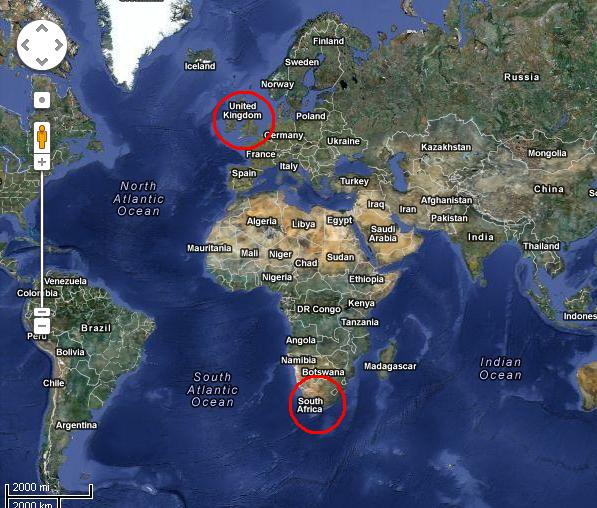
So, really, when you think about it, it all feels a little gross that a bunch of South African cricketers plus all their press and all their staff and all their trainers got onto a gas guzzling jumbo jet and flew 10,000 miles to England to play a silly game involving a bat and a little red ball.

So, let’s not think about it.

But, first, your geography lesson:

And that, folks, is the 199 Club.  Thanks for reading.

*******************************************************************

On the pitch:

Hey, look at that, India won a game!!

Yep, you heard right, India beat Australia last night in the 2nd T20 of the tour. Congrats, India!

Also, New Zealand demolished hapless Zimbabwe at Dunedin, and England scuttled Pakistan all out for 99 – only to lose six of their wickets before reaching the same score.

16 wickets fell in one day’s play. I should have stayed up for that.

Maybe this weekend.

Until next time.

East Zone v West Zone at Valsad, Duleep Trophy #2

I wasn’t planning on writing a post tonight, but I thought I should, considering all that has happened since I last posted: Australia completed their 4-0 whitewash of India, Pakistan shocked the world and England, winning the series 2-0 with one Test left to play, and Zimbabwe was positively crushed by New Zealand in Napier.

What does this tell us? That every Test nation is positively shit in foreign conditions.

(I stole that from someone on Twitter, but I cannot for the life of me remember who it was – sorry, forgotten Tweeter.)

But is that really true?

There have been 32 Test series since the start of the 2010 Summer in England, and the hosts have won 12 of those series. 11 were draws. Nine were won by the visiting nation.

Almost an even three-way split.

Now, of course, the above was an unscientific analysis – it does not account for India playing in Sri Lanka in familiar circumstances, for instance, but I think as a 30,000 foot overview of World Cricket, it speaks volumes: winning away from home is not impossible, and England and India should not be let off the hook for their capitulations, and on the same note Pakistan and Australia’s teams deserve ALL of the plaudits they are getting from the press.

And it also tells me that cricket is in dire need of a Test Playoff.  Imagine if we were to get treated with Pakistan v Australia this summer at Lord’s?

But, no, we get three weeks of International T20s instead.

Yawn.

But do really need the Test Playoff?

I mentioned over on Twitter that cricket has made me rethink all that I know about sport. Specifically, I meant test cricket, and how there is no championship, no season: just series after series after series.

It is a statement on infinity, on endlessness.  Test cricket does not last five days, it lasts forever, and ever and ever. That’s its lesson, that’s what it is teaching us.

That is an utterly foreign concept for me, and I think that is why I crave the Test Playoff – my mind is trying to find a pattern in the wallpaper; and maybe that is something I should avoid trying to do.

Reprogram myself to look at sport from a different angle.

Like England playing Pakistani spin in the desert.

A few housekeeping notes:

– the 199 series returns tomorrow.

– Look late next week for a Limited Overs style preview of the Bangladesh Premiere League.

– No test matches, aside from the dead rubber in the UAE, until March the 7th (New Zealand v South Africa.) After that: it all starts up again with England in Sri Lanka and Australia in the West Indies.

Which is fine, I need a break.  Last week was wild.  I ate and drank nothing but Test cricket for five straight days.  My days started with Zimbabwe and New  Zealand and ended 12 hours later with Pakistan and England; Australia and India were sandwiched inbetween.  I slept maybe five hours a night.  That kind of schedule is not compatible with a healthly lifestyle, so I think I am going to enjoy these next few weeks.

Until next time.

Mashonaland Eagles v Mid West Rhinos at Harare, Castle Logan Cup

There have been 2,032 Test matches since Australia first hosted England at the Melbourne Cricket Ground in 1877.

Those 2,032 matches have been played at 106 different grounds.

My original plan was to write about each and every one of them – one post each, make it a twice-a-week feature, but this morning I had second thoughts.

I have written about a lot of these grounds already. In fact, the first half dozen or so have been beaten to death not only on this blog, but in blogs and articles and books the world over for the last 125 years. The MCG, the SCG, Old Trafford, Lord’s…etc. What else could I possibly say about those grounds?

It would be 106 filler posts, all in the same format: Test history, domestic teams, weather, pitch…etc. Not exactly page turning material. I am much better off saving those posts for topical grounds, i.e. grounds that are featuring a current match. Like when I wrote about Napier Park last week.

But in order for this blog to survive, I am going to need to get creative with the topics, as I just do not have the analytical chops to write thoughtful 1,000 word posts on cricket’s guts five days a week.

So I am going to start doing week long features (sometimes a full week, sometimes a little longer) along with my daily updates and rants and opinions on the current happenings in world cricket.

This week’s topic: 199

Last night, we all saw Ponting and Clarke each put up double centuries for Australia in Adelaide, and while some see centuries and double centuries as arbitrary and meaningless benchmarks, they are benchmarks nonetheless, and a big part of cricket tradition.

Getting to 200 in a cricket match is a feat worth celebrating, but so is getting to 199 in a cricket match, but unfortunately those 199s do not provide the player with a standing ovation, an opporunitity to raise their bat to the crowd, a moment in the spotlight. Instead, we just all feel a little bad for them – one single short of history of a milestone…

Over the next week, we will explore each of Test cricket’s 199s.

There have been eight of them. The first one did not happen until 1984, which really is shocking when you think about.

Specifically, it was October the 24th, 1984, and the knock was from Mudassar Nazar of Pakistan against India at the Iqbal stadium in Faisalabad, Pakistan.

The 199 happened in Pakistan’s first innings in the second test of the tour.  The match ended in a draw – as did the series, which ended with two draws, one no result, and two matches cancelled before a ball was bowled.

During the series, India’s Prime Minister, Mrs. Indira Ghandi, was assassinated by Sikh extremists, casting a real pall on the tour, and cancelling the final two matches.

Mudassar Nazar’s knock happened alongside two successful partnerships, 141 runs for the 1st wicket with Mohsin Kahn and 250 runs for the 2nd with Qasim Umar – who incidentally did end up with a double century.

Nazar batted for 555 minutes, Umar for 685 – 20 hours between the two of them. Not exactly Big Bash League stuff.

Over his long career, Mudassar played in 76 test matches for Pakistan, scoring 4,114 runs, including 10 centuries and, thankfully, one double century (14 Jan, 193, versus India at Hyderabad.) (Thankfully because it would be quite sad if 199 had been as close as he ever came to 200.)

After retiring, he coached the Kenyan national side, briefly, and is now working for the ICC inDubai.

Interestingly enough, Mudassar’s father, Nazar Mohammed, was also an opening test batsman forPakistan– and faced the first ball ever bowled against Pakistan in a test match at Delhi in 1952.

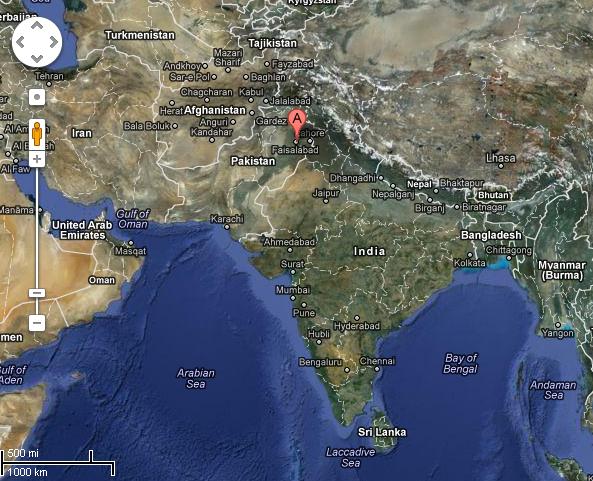
The match featuring Mudassar’s 199 was played at the Iqbal Stadium in Faisalabad, Pakistan. It has hosted 25 tests, the first against India in 1978 (drawn) and the most recent in 2006 versus India (also drawn.)

The Ground:

Your Geography Lesson:

One final note, the five day match featured a rest day after day three – I guess these were quite common up until recently. I had no idea.

Tomorrow: another segment of 199.

Back on the pitch: England are having a much better day in Abu Dhabi, restricting Pakistan to 256 for seven on a bowler’s pitch thanks to three wickets each from Broad and Swann – and one from Monty Panesar!

Meanwhile, in Adelaide, piss poor India continue to not care. Australia batted for like nine days, declared, and immediately took two ofIndia’s wickets.

And tonight: New Zealand v Zimbabwe– hopefully I will be able to put down Skyrim long enough to watch a little of it.

Until next time.

Australia Women v New Zealand Women at Sydney, Rose Bowl

I name each of my posts after a random match that is happening on that particular day – the point being is that there is always cricketing happening somewhere on the globe.  It could be England-Australia in front of a packed house at Lord’s, or it could be two Zimbabwean domestic teams playing in front three people at some shit ground no one has ever heard of.

There is always cricket.

Just today, for instance, there are matches happening in the following tournaments: The Women’s Twenty20 Internationals; The Premiere League Tournament – Tiers A and B (Sri Lankan domestic); the Ranji Trophy Elite; the Coca-Cola Pro50 Championship (Zimbabwean domestic); the Big Bash League (I still cannot get over how stupid a name that is); the Caribbean T20; the CSA Provincial T20 Challenge; The England Lions tour of Bangladesh; and the CSA U19 Competition.

That’s a lot of cricket today.

And some might say that is a good thing, that it shows that our game is healthy. That’s eight different tournaments happening on all four points of the cricketing globe: Australia, Sri Lanka, India, Zimbabwe, the West Indies, Bangladesh, South Africa.

The game is healthy, vibrant, growing.

Or maybe not.

The bulk of those tournaments involve the game’s shortest format, and I bet that at least half of the matches happening today are, for all intents and purposes, meaningless (the pun in that sentence will become clear later.)

The first problem mentioned in the sentence above is one we are all aware of, but the prevalence of T20 at the domestic level I think is finally starting to affect test cricket. Not only are the game’s biggest names struggling in tests, but there is a real dearth of younger crickets available to take their places, because none of them were raised on first class cricket.

(One cricketing board has outlawed twenty20 for U20s and younger – really cannot remember which one though – but good on them.)

Plus the stars of the game are being forced, for a lack of better word, to play so much freaking cricket that when they do finally get to play in marquee test series, they are just simply plumb worn out; which is why we are getting so many tests ending in three or four days instead of going the distance. (I have yet to explore the stats on that claim, but I will look into it.)

Indian batsmen, for instance, are spending six weeks playing in the IPL, when they should be in England playing county cricket and learning how to bat outside of the subcontinent.

And regarding the second problem, meaningless matches are prime suspects for matchfixing and spotfixing; they are a gambler’s paradise. (Full credit to the Switch Hit podcast for initially pointing this out to me.)

The influence of the gambling mafia’s money is a BIG problem in World Cricket, and it is a problem at ALL levels – and getting rid of the countless meaningless matches would go along way toward getting rid of this cricketing scourge.

But who is to blame for all of this meaningless T20 cricket? The fans? The players? The TV networks? The cricketing boards? The ICC? The club owners?

That’s the rub: all of the above.

And how to you fix it?  One thought: national boards should outlaw its younger players from playing in domestic tournaments outside of their home tournament. For you have to say that on the surface, the BCCI’s decision to not allow is players to play County Cricket looks like the right decision – but it also hamstrings player development.  (Again, just an example, I don’t mean to single India out.)

I think the answer lies is in us, the fans. I really do. We are clamoring for more cricket, more cricket, more cricket – just look at all of us begging for more five tests series, for example?

It is up to us to let the ICC and the national boards know that we do not want more cricket, we want better cricket.  And when we are given better cricket, we need to support it by paying for Willow TV, buying kits, becoming members, supporting corporate sponsors…etc.

Right now boards in Bangladesh and Australia are being forced to organize T20 mercenary tournaments to survive, let’s give them another means.

It’s of course, not that simple, and we might have even gone too far down the road to turn back; but in order for test cricket to survive, we all need to start getting used to having less cricket.

Sure, it is great having the Caribbean T20 to watch today on ESPN3, and I am looking forward to watching the Bangladesh Premiere League, but I would gladly do without both if it meant Australia and India were 1-1 going into Adelaide.

And there are prime examples for the ICC to look at.  The NFL is printing money by the truck full, yet the season only lasts from September through January.  Players AT MOST play in 23 games a season (16 regular season, four pre-season, four inthe playoffs and Super Bowl.)

Obviously, such a format would never work for cricket, but there has to be a way to get our sport closer to such a model.

For the sake of the game: less cricket.

Finally, I had thought about ending this post with a note that I was no longer going to name each of my posts after a match, that I was going to stop being part of the problem. But nah, I really like it – I think it makes my blog stick out a little, so I am going to keep doing it for now.

And that’s your Saturday cricketing ramble.

Look early next week for a couple progamming notes, as well as a proper preview of the BPL (no joke.)

Until next time.