Kenya v Ireland at Mombasa, ICC World Cricket League Championship

On April the 23rd, 1998, Pakistan played South Africa in a One Day International cricket match in Cape Town, as part of the Standard Bank International One-Day Series (Sri Lanka also participated in the series).

South Africa won by a decisive nine wickets with 134 balls remaining.

Pakistan lost the toss and batted first. Only four batsman got out of the single digits, and the highest score was a measly 30 from opener Saeed Anwar.

They went from 84-3 to all out for 114.

It was Lance Klusener’s day, taking five Pakistani wickets for only 25 runs in seven overs.

In the chase, Gary Kirsten hit a not-out 52 to lead his team to victory, needing only 27 overs and change to do so.

It also happened to be the final of the tri-series.

Pakistan did not play an international cricket match for five months. It was not until the September the 12th, when they played an ODI against India in Toronto, Canada.

India won by six wickets.

In a similar match, Pakistan collapsed at the crease after India won the toss and chose to field.

Pakistan finished at 189 not out, a total that India chased down with six wickets and 38 balls to spare.

Sourav Ganguly hit a half century to lead his countrymen.

*

Between those two matches, Pakistan went Nuclear.

On May the 28th, deep in the Chagi Hills, they detonated five nuclear devices, becoming the seventh nation to officially have nuclear weapons.

According to the articles I have read, Pakistan’s nuclear capability is a source of great national pride for the nation’s citizens. The leader of the nuclear program, Abdul Qadeer Khan, for example, is respectively known as Moshin-e-Pakistan – literally: the Savior of Pakistan.

And as I mentioned in a previous post, their national cricket stadium in Lahore is named after Muammar Gaddafi, all because he gave a speech in 1974 that supported Pakistan’s pursuit of a nuclear weapons program.

Now, I am not here to editorialize.  I do not claim to understand the region, or what is like to be a citizen of Pakistan.

My point actually is that there are two major sources of national pride in Pakistan: their cricket team, and their nuclear program.

The former is a pastoral bat and ball sport, the latter is the most dangerous creation ever envisioned by man.

And considering the dichotomy of the two sources of pride, maybe one explains the other, and vice versa.

Or maybe not.

But I find it fascinating.

And I think I might explore the link between the two in more detail going forward.

I would love to hear folks’ comments on the correlation.

Pakistan are back on the pitch tomorrow morning, looking for pride in the ODI series against England.  I hope to tune in for large portions of the match.

Until next time.

Obit.

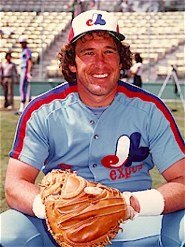
Gary Carter died today.

He was only 57 years old.

I know this is a cricket blog, but I love baseball, too. In fact I think the things I love about baseball ultimately led to me to cricket. It is rich in tradition, and history. It inspires fantastic writing.

Watching our former heroes age, grow weak, fade away – it’s one of the toughest parts of growing older. And it is even tougher when it is someone like Carter.

I grew up on baseball, and he was my first favorite player – and therefore more than likely my first favorite athlete ever.

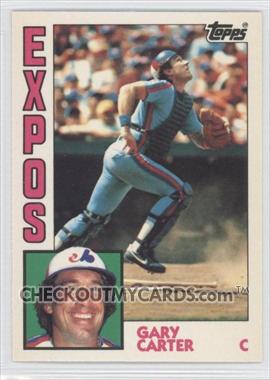
My favorite baseball card growing up was Carter’s 1984 Topps:

For whatever reason, I loved the catchers. My favorites were Johnny Bench, and Carlton Fisk, and Gary Carter.

I moved around a lot growing up. I was never in one place long enough to have a team to cheer for, and so I developed affinitites for certain players instead.

I followed Carter from Montreal to New York, without missing a beat.

He was one of those players that your dad would tell you to emulate: he worked hard, he was always smiling, he ran out every ball.  I remember reading a biography of him in like fourth grade, and while I remember nothing else from it, I do recall him talking about how much he simply loved playing baseball, and that he felt so blessed that he was able to do it for he living.

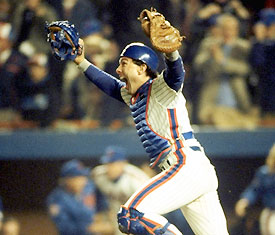
In 1986, he won the World Series with the New York Mets, and even though years later I wrote a song about Bill Buckner, I cheered for Carter and the Mets that night.

The video is of course nowhere to be found on YouTube, but I remember as if it was yesterday: Carter running up and jumping into the arms of Jesse Orosco:

He was always smiling.

His nickname was the “kid”.

Over his 19 season career, he played in almost 2,300 games – along the way collecting over 2,000 hits and over 1,200 runs batted in. Phenomenal offensive numbers for a catcher.

Behind the plate, he led the team. Catchers are the field generals in baseball, and he commanded his field and his pitcher like no one else in the game – before or since.

In 1992, he retired from baseball. He was inducted into MLB’s Hall of Fame in 2003.

Last spring he went to the doctor complaining of headaches. Less than a year later he was dead.

His former teammate, Bob Ojeda, put it best: “He is gone too soon for us to understand.”

Rest in peace.


Barisal Burners v Chittagong Kings at Dhaka, Bangladesh Premier League

The One Day International format was my first introduction to the sport, thanks to the World Cup, and as such it holds a very special place in my heart.

Lately, of course, my preferred format has been Test cricket, and I have found myself thumbing my nose at cricket’s forgotten middle child over the last few years.

Over the last few days, however, I have fallen in love all over again.

Yesterday, I was able to enjoy a lovely ODI between Pakistan and England.

And the Commonwealth Bank Series feature Sri Lanka, India, and Australia has been brilliantly entertaining.

The most recent match between India and Australia featured everything that is wonderful about the ODI: tight, tense, every ball mattering…and it came down to the final delivery of the match…

Under the floodlights…

And, so, today, I thought I would talk a bit the One Day International…

95 years after playing in the first ever Test match, Australia and England played the first ever ODI, on January the 5th, 1971.

The first three days of a Test had been washed out, so Cricket Australia just decided to have each team bowl 40 eight ball overs, and the One Day International was born.

Australia won by five wickets.

Most features of the ODI as we know them were put in place by Australian billionaire, Kerry Packer. These include the colored uniforms, the floodlights, and the white ball.

Other than the limited overs, the rules of the ODI use, basically, the same rules of Test cricket. The biggest difference of course are the power play fielding restrictions:

For three blocks of overs (the first ten, and then five decided on by the batting side and five decided on by the bowling side), teams in the field can only have three fielders outside of the fielding circle.

The rules were introduced in 2005, and have been altered by the ICC like a dozen times since.

Also, the ODI brought us the Duckworth/Lewis Method – the algorithm used to decide rain shortened matches.

It’s hilariously complicated:

“The essence of the D/L method is ‘resources’. Each team is taken to have two ‘resources’ to use to make as many runs as possible: the number of overs they have to receive; and the number of wickets they have in hand. At any point in any innings, a team’s ability to score more runs depends on the combination of these two resources. Looking at historical scores, there is a very close correspondence between the availability of these resources and a team’s final score, a correspondence which D/L exploits.

Using a published table which gives the percentage of these combined resources remaining for any number of overs (or, more accurately, balls) left and wickets lost, the target score can be adjusted up or down to reflect the loss of resources to one or both teams when a match is shortened one or more times. This percentage is then used to calculate a target (sometimes called a ‘par score’) that is usually a fractional number of runs. If the second team passes the target then the second team is taken to have won the match; if the match ends when the second team has exactly met (but not passed) the target (rounded down to the next integer) then the match is taken to be a tie.”

(from wikipedia)

However, it is widely considered a fair method for deciding matches, despite how difficult it is to understand.

Oh, and it’s a killer band name, too.

*

Since 1971, there have been 3,338 One Day Internationals.

Currently, there are 16 nations with full ODI status: the ten full members, as well as Kenya, Ireland, the Netherlands, Scotland, Canada, and Afghanistan.

Australia has played the most ODIs, and consequently has won the most: 779 played, 484 won. A winning percent of 33.93.

South Africa has a better winning percentage, however, with 34.95 (played 467, won 291).

Sachin Tendulkar has the most runs in ODI history: 18,111.

No one else has 17,000…or 16,000…or 15,000…or 14,000

The next closest batsman is Ricky Ponting 13,686.

Caveat: Sachin has played in 453 ODIs, Ricky has only played in 370.

(Side: Ricky is his real name. I always wondered why he went by Ricky instead of Rich or Rick or Richard or Dick or ANYTHING besides Ricky…but now I know: it’s because it’s actually his name.)

Virender Sehwag has the highest run total in a single innings: 219; while South Africa’s Hashim Amla has the highest average, with 56.35 (50 innings minimum.)

Shahid Afridi has the fastest ever ODI century: doing it off of only 37 deliveries in 1996 against Sri Lanka.

That is seriously insane.

Bowling in an ODI, of course, it a bit of a different story than it is in Tests.  While you are still trying to take wickets, you are also doing your best to play damage limitation, much more so than in a Test, as batsmen will take risks in an ODI that they would never take in a Test match.

But, there have been some very successful bowlers in ODIs, all the same.

Muttiah Muralitharan and Wasim Akram each have more than 500 wickets, for instance.

But the ODI, for the most part, is a format for the batsmen.

And that’s the One Day International, in a nutshell.

Oh, one last thing: an ODI was the scene for my favorite cricket YouTube video ever: the underarm delivery:

I love the 70s uniforms, the Bacchanalian scenes in the crowd (that is 90% shirtless), the indigination of the announcers, the hair.

I love it all.

I love One Day Internationals.

Or maybe: I just love cricket.

*

Back on the pitch:

Tonight the South African tour of New Zealand starts up with a Twenty20 match at the Westpac Stadium in Wellington; while Sri Lanka searches for its first win in the CB series against Australia at the SCG.

Both matches are on Willow, I hope to be able to watch the first few overs (at least) of the former.

Until next time.

India v Sri Lanka at Adelaide, Commonwealth Bank Series

Today: Pakistan lost.

I blame myself, and my new found admiration for Pakistani cricket.

The eternal optimist in me however does see them winning the next three ODIs in the Emirates.

You heard it hear first.

A thrilling come from behind series victory would cap off what has been a very successful series overall.

It is actually a little odd, historically speaking, to watch them excel in the test format but struggle in the limited overs format, as their biggest  successes have come in One Day Internationals and T2OIs.

Three stand out, as I mentioned yesterday: The 1986 Australasia Cup, the 1992 World Cup, and the 2009 World Twenty20 Cup.

But allow me to digress a little:

I have at least a handful of American readers who know nothing of the sport. When I first started the blog, I wrote with them in mind as my audience. Recently, however, I have written with actual cricket fans as my intended audience, and have evidently spurned my non-fan readers by talking over their heads.

Therefore:

International Cricket has three main formats: Test, One Day International, and Twenty20.

Test cricket is the oldest format, and the most interesting of the three. In it: each team bats until the bowling team gets 10 wickets, or outs. And then the team that was bowling gets their turn to bat. And then the first team bats again, and then the second team bats again. The team with the most runs at the end of the two “innings” is the winner. If time runs out (five days, six and a half of hours of play per day) before a team gets their “fair ups”, then the game is a draw.

Limited overs cricket does just that: it limits the overs. An over is six deliveries – or pitches.

One Day International limits each teams’ overs to 50 each. Basically, they get 300 pitches to score as many runs as possible. If the bowling team gets 10 of the batting teams’ wickets, then their turn is over, no matter if they have had all of their overs.

Then bowling team gets their 300 pitches. And the team with the most runs wins.

The games last about 6-8 hours; it is the format used in the World Cup.

Twenty20 is the newest form, and its more egregious bastardization: each team gets 20 overs to score as many runs as possible and the games last about three hours.

It is currently the most popular format, though most cricket snobs, myself included, turn their noses up at it.

I hope that helps, though I am sure I just confused things even more.

Anyway: Pakistan’s three most glorious moments:

The Australasia Cup, 1986:

The Australasia Cup was a One Day International tournament that initially featured the nations of Pakistan, India, Australia, New Zealand, and Sri Lanka. Bangladesh joined in on the fun in 1990, but were replaced by the United Arab Emirates in 1994.

The 1994 tournament was the last Australasia Cup – it was later more or less replace by the ICC’s Champions Trophy.

All three incarnations of the tournament took place in the UAE – and all three were won by Pakistan.

But the 1986 Cup was the big one: as it saw Pakistan defeat India in front of 20,000 spectators with the final ball of the final over.

The over started with Pakistan needing ten runs to win. Wasim Akram was run out with the first ball. Javed Miandad scored four with the second ball, and another one with the third ball.

In the fourth delivery, Chetan Sharma bowled Zulqarnain who was replaced at the crease by Tauseef Ahmed. He singled off of the fifth delivery, putting Miandad back on strike:

His team needed three to tie, four to win:

So he hit a six.

Wonderful scenes, surely, for Pakistan. Defeating their bitter rivals with the final ball, of the final over.

This article sums it up thusly:

“Do you remember where you were when…? When Pakistanis of my generation say this to each other there are several ways in which the sentence might end: when Zia was killed; Bhutto was hanged; democracy returned; Pakistan went nuclear; troops withdrew from Kargil; the military took over, again. But, more often than not, the sentence ends: when Miandad hit that six.”

Fantastic.

In 1992, Pakistan’s good fortunes in One Day Internationals continued: winning their first World Cup.

The tournament took place in Australia and New Zealand. It featured all seven test playing nations, as well as South Africa and Zimbabwe.

It was a straight round robin involving all the teams, the top four finishers advanced to the semi-finals, and then the finals.

Pakistan finished fourth, just one point higher than Australia and the West Indies.

In their first group match, they were crushed by the West Indies by 10 tickets.  In their second, they defeated the minnows Zimbabwe by 53 runs; and their next match against England ended with no result.

Then they lost to India.

It was not going well for Pakistan.  Through four group games they had won one and lost two.

And it didn’t get any better, as they lost to South Africa in their fifth match by 20 runs (D/L method.)

But then they beat Australia by 48 runs; then defeated Sri Lanka four wickets; and then defeated New Zealand by seven wickets, putting them into the semi-final against New Zealand – thanks to the one point they received in the “no result” match against England, a match that looked to be going England’s way before being washed out.

In the semi-final, they demolished New Zealand, winning their first semi-final in four tries.

In the thrilling final, they defeated England by 22 runs.

Imran Khan, in his last One Day International, took England’s last wicket.

Lots and lots of great photos on Cricinfo.

Javed Miandad (there he is again) scored the most runs for Pakistan in the tournament, with 437.  The highest score in an innings came from Rameez Raja with 119* against New Zealand in the final group stage match.

Wasim Akram was their best bowler, by far, going 89.4-3-338-18.

A special tournament from a special player.

*

2009 was a difficult year for Pakistan.

Violence had raged in the nation post 09/11.

In 2003, 164 people died in terrorist related attacks.

In 2009, that number had risen to 3,318, a 48% increase over 2008’s total.

To put that into perspective: 2,996 people were killed in the September 11th attacks.

In other words: in 2009, Pakistan needed something to cheer for.

And they got it, in the form a World Twenty20 Cup victory.

And while that might sound like hyperbole to some, Pakistanis adore cricket, and their cricketers. There is nothing to compare it to here in the States.

The tournament took place in England. Pakistan lost their first group stage match but won their second to advance to the knock out stages; where they defeated South Africa in the semi-final, and Sri Lanka in the final.

Shahid Afridi carried his team. Taking two wickets and scoring a half century against South Africa, and then scoring another half century in the final.

He gave Pakistan a victory, when his country needed it most.

The more I read about this team, the more I love them.

*

I was searching for a conclusion to these moment, about how to tie them all together.

What they mean for Pakistan, the country…and what they mean for cricket…

But then I remembered this wonderful article posted on The Sight Screen.

The conclusion stands out:

“What we ask of cricket is not redemption, but a chance to know that beauty, passion, desire and belief can be real, visceral, true experiences, even if for only a moment.”

Thank you, Ahmer Naqvi, you said it better than I ever could, so yours will be the last words of consequence.

Until next time.

Kenya v Ireland at Mombasa, ICC Intercontinental Cup

Three Pakistanis have hit triples centuries in a test match.

There was Hanif Mohammad against the West Indies in 1958; Inzamam-ul-Haq versus New Zealand in 2002; and Younis Khan against Sri Lanka in 2009.

Mohammad’s knock came at the Kensington Oval in Bridgetown in the first match of a five test series. The match ended in a draw.

West Indies went on to win the next three tests to take the series.

The home squad had put up a massive score of 579 in their first innings, while restricting the visitors to 106, and forcing the follow on.

And then Mohammad stepped to the crease, and as I mentioned in my previous post: batted for a jaw dropping 970 minutes for 337 runs.  Carrying his bat through the innings as partner after partner fell.

Pakistan set a target of 185 for their hosts, but time ran out on day five after only handful of overs.

Cricinfo has a couple of photos that are worth checking out.

Herr Mohammad looks like the sort of cricketer I could get on board with, based simply on his picture. Just like The Nawab of Pataudi.

Unfortunately, as mentioned above, Pakistan had a poor showing in the series overall – as did Mohammad. He scored 337 runs in the innings, but only 628 in the entire series.

An aside: Sir Gabby Sobers also hit a triple century in the series: he scored 365 not out in the Windies’ first innings of the third test. His team went on to score 790/d and won the match by an innings and 174 runs.

Mohammad’s 337 is the highest ever for a Pakistani, and was broadcast live on the radio in Pakistan. This, according to Cricinfo, had a great deal to do with the popularizing of cricket in Pakistan.

*

The second triple century in Pakistan’s test history came from Inzamam-ul-Haq.

He played in 120 tests for his country, scoring 8,830 runs, with 25 centuries, 46 half centuries, and an average of 49.60.

He was a big man, who loathed exercise, but who attacked the ball with ferocity.

His triple century happened at Lahore Stadium (formerly the Gaddafi stadium, at least here on Limited Overs) against New Zealand on May the 2nd, 2002.

The knock came in the first innings, and Pakistan went on to win the match by an innings and a whopping 324 runs.

Imran Nazir also scored a century for Pakistan in the match, but he was the only other Pakistani to get into triple digits.  All the hosts needed was Inzamam.

Their bowling was spectacular in the match, getting New Zealand out for only 76 in their first innings, and only 246 in their second.

In the first innings, Shoaib Akhtar had remarkable figures of 8.2-4-11-6. While in the second innings, he did not bowl an over.

Danish Kaneria bowled 32 of them, however. He was expensive, allowing 110 runs, but he also took six Kiwi wickets.

Unfortunately, the series is better known for the tragedy that preceded the second test in the series.

On May 8th, outside of the Sheraton Hotel in Karachi, where the teams were staying, a man detonated a car bomb near a city bus: killing himself and thirteen others.

The teams were minutes away from boarding their busses for the stadium.

New Zealand immediately called its players home.

And thus began Pakistan’s slow descent into exile.

*

Pakistan’s final triple century happened, interestingly enough, at the National Stadium in Karachi.

Younis Khan scored it for his country in the first innings after Sri Lanka put up a superb score of 644.

Pakistan went on to score 765 in their innings, thanks mainly to Khan’s 313, and the match ended in a draw.

It was a marvelous innings for Khan, his first as Pakistan’s captain, and propelled him into the number one slot in the ICC Player Rankings.

Unfortunately, again, the test preceded a tragedy: two weeks later in Lahore, gunmen attacked the Sri Lankan team bus, and Pakistan has not hosted an international match since.

Nor will they in all likelihood ever host one again – at least not in my lifetime.

*

I decided to write about the three triple centuries because in some ways, for me, with one major exception which I will get to in a minute, they sum up Pakistani cricket.

Incredibly talented, yet beset by tragedy over and over again.

Two of their biggest moments ever: overshadowed within days by terrible moments in their nation’s history.

They will be my team, going forward, I have decided.

I like that the are controversial, that they soldier on in the face of adversity, that they entertain…

And sometimes they even win.

Gloriously.

And that’s the exception: their one day history: the 1986 Australasia Cup, the 1992 World Cup, the 2009 ICC World T20…

More on those tomorrow.

And speaking of Pakistan:

Back on the pitch: their first ODI against England begins at 5am Minneapolis time tomorrow morning. I am very much looking forward to it.

Also: congrats to Dhoni and India for their win yesterday at the Adelaide Oval. A special victory from a special Captain.

As I mentioned before on this blog: I love it when Captains step up and drag their team over the line. It might just be my favorite thing in sport.

And finally, Ireland is playing Kenya in a four-day ICC Intercontinental March. They were 75 all out in their first innings but restricted their hosts to 109. Currently they are 81 for two in their second innings at the close of day one.

22 wickets fell in one day’s play. Amazing.

It should be a fun day tomorrow at Mombasa.

Which brings up our geography lesson:

Mombasa, Kenya:

Until next time.

Pakistan v Afghanistan at Sharjah, Only ODI

Pakistan.

Let’s talk about Pakistan.

I was planning on making this one, long post. But writing about the entire cricketing history of a test playing nation is a fool’s errand. So much would have to be omitted that the flavor of the country’s history would be diluted; the poetry and the magic would be gone. So I am going to split this up into multiple posts. Their test history, their ground history, their one day history…etc.

Today we go back to where it all started: Independence, and the first Test series against India, in India.

The country itself was conceived in the 1930s by the Muslim League, who wanted to create a Muslim state within India. This led to the Lahore Resolution in 1940, which called for a more active role for Muslims in British India.

In 1947, the British left. And an agreement between the Sikhs in the South and the Muslims in the left created what is now known as Pakistan: the country was officially established on August the 14, 1947.

Millions of Muslims streamed North. Millions of Sikhs streamed South.

War broke out in 1948 over Kashmir. Over 5,000 Indians and Pakistanis were killed in the conflict.  It was the first of four short wars between the two nations over the region.

Four years later, the two nations faced each other not on the rocky foothills of the Pir Panjal mountain range, but on a cricket field: specifically, a Test match in Delhi at the Feroz Shah Kotla ground.

Cricket has been played at the ground since 1883, and it hosted its first Test match in 1948, and continues to host them to this day, despite an ODI in 2009 being abandoned due to a dangerous pitch.

It seats 48,000, is home to the IPL’s Delhi Daredevils, and is famously known as the preferred haunt of leg spinner, Anil Kumble, who took 63 wickets there in 11 matches, including a 10-fer there in a test match in 1999 – one of only two bowlers in the history of test cricket to take all 10 wickets in an innings.

But I digress.

The first Test match between India and Pakistan ended disappointingly for the visitors, as India won by an innings and 70 runs. The match lasted only three days after India won the toss and put Pakistan in the field. The hosts went on on to score 372, and then scuttled Pakistan for 150 all out and 152 all out.

The highest score in that match for Pakistan was a 52 from Hanif Mohammad. He also famously played the longest Test innings in history in 1957 in Bridgetown against the West Indies: 970 minutes. 16 hours at the crease.

(In case you have failed to notice, my jaw still drops when I think about long stints of batting.)

Pakistan, however, won the second match of the series at the University Ground in Lucknow.

India were bowled out in the first innings for 106 thanks to five wickets from Fazal Mahmood, while Nazar Mohammad scored Pakistan’s first test cricket century: 124 not out. He carried his bat too and was out there batting for almost nine hours: leading his team to a respectable total of 331.

In India’s second innings, Mahmood took another seven wickets, and the hosts were all out for 182.

Pakistan won the match by an innings and 43 runs.

India won the third test by 10 wickets, and the final two matches ended in draws, so India won the series 2-1. But the match in Lucknow will long surely be remembered by Pakistani cricket fans the world over.

Interesting side note: the match at Lucknow’s University Ground in October of 1952 was the only international match ever played there.

***************************************************************

Back on the pitch:

Last night Australia defeated Sri Lanka by five runs at the WACA in Perth; while in Sharjah Pakistan (hey!) are chasing Afghanistan’s respectable total of 198 in their only One Day International.

I am off to follow the chase.

Until next time.

Australia v Sri Lanka at Perth, Commonwealth Bank Series

There is one match worth watching in world Cricket today (or tomorrow, depending on where you are): the only ODI between Pakistan and Afghanistan at the Sharjah Cricket Stadium in the United Arab Emirates.

Both countries’ cricket teams are great stories, for different reasons. Pakistan for their recent resurgence after the attacks on the Sri Lankan team and the spot fixing in England; Afghanistan because, well, they have been brutalized by the Soviets, the Taliban, Al Queda, and the United Nations for generations.

They are neighbors, of course, but neither plays their home matches in their home country. Further, the game came to Afghanistan from refugees who fled to Pakistan during the 1990s.  And Afghanistan’s national team was invited to playing Pakistan’s domestic league in 2001 (a rather ominous year for Afghanis, of course).

Afghani cricketers have traveled the world over the last 12 years: England, Nepal, Buenos Aires, the Netherlands…and they have a great at qualifying for the World Twenty20s.

Both teams are two of world cricket’s best stories, and both countries share a sad history. I look forward to following the match tomorrow morning.

Another half hearted post, sorry, there is just a bit of a lull in  the sport right now.

And I am tired.

I am tired because last night I was up late celebrating my new job.

As of February 27th, I will be working for MinnPost.com.  A non-profit online news source that focuses primarily on local politics and policy here in Minnesota. I am pretty excited.

The downside? Less time to write about cricket, at least at first. I plan on writing a lot over the next couple of weeks however.

Also, I wanted to welcome to the cricket blogging fold another fellow local: American Armchair Cricket. He’s just down the road in Indiana, and the story of how he found the sport is very similar to mine. Welcome! See you on Twitter.

Finally tonight, I wanted to thank Deep Backward Point for the kind words on his blog yesterday.  It made my day, week, month. Yesterday I accepted the offer at MinnPost, and on the drive home, saw his blog post. It was  a really great couple of hours. So: thanks: your support of Limited Overs has been invaluable.

Until next time.

Tasmania v New South Wales at Hobart, Sheffield Shield

Now that we have entered a bit of a Test cricket lull, and now that I have finished up my post on the 199 Club, I think I might be experiencing a touch of writer’s block.

Sure, I could write about the IPL auction, or the Commonwealth Bank Series, but that’s just not doing it for me.

I am researching for a longer post on Pakistani cricket, and I am trying to find something else to write multiple posts on, like the 199s, and I am already writing a proper preview of the three Test series between New Zealand and South Africa, but I am just not ready to throw any of those up on the blog right now.

So I am going to take 48 hours off, refresh, reflect, research, and be back with new material on Thursday.

Until next time.

Sri Lanka A v England Lions at Colombo (RPS), 5th unofficial ODI

I was planning on writing a post on the Woolf report. Summing up the main points, giving my own thoughts…etc.

But then I read this post over on Idle Summers and realized that it said everything that needed to be said. I highly recommend it.

Back on the pitch:

Pakistan finished off the 3-0 white wash of England. There will be commentary galore over the next few weeks from every corner of the Internet: what went wrong for England? What went right for Pakistan? Are the ICC ratings a sham? Should the ECB sack Flower and Strauss?

All good questions, surely, but I  as I have mentioned several times a strong Pakistan is great for world cricket.  I am really excited about the result.  I am going to enjoy it for a bit before deconstructing it.

Also, if South Africa can do the job down in New Zealand in March, their test series in England this summer will decide who is number one in the world, just like last year’s England v India tests.  Now that is something to look forward to.

But: watch out South Africa. New Zealand are not pushovers. They look a very strong side. Lest we forget they just recently defeated Australia at Hobart; the same Australian side that dismantled India.

And what’s next for Pakistan? They host Bangladesh for three tests in April, and then head to Sri Lanka in August for three more.

Down the road a bit, in February of 2013, they travel to South Africa for three tests: another series that could very well decide the world test number one.

Lots and lots to look forward to.

Until next time.

North West v Border at Potchefstroom, CSA Provincial One-Day Challenge

Okay, hey, let’s talk about Bangladesh Premiere League for a second, shall we?

Website: bplt20.net

Twitter:  @t20_bpl

This is, of course, the inaugural season for the tournament, and is Bangladesh’s answer to the India Premiere League and the Big Bash League: a short Twenty20 tournament featuring international cricketing mercenaries.

There are six teams from six of the seven Bangladeshi cricketing regions (sorry Rangpur). The teams are as follows:

1. Barisal Burners

2. Chittagong Kings

3. Dhaka Gladiators

4. Khulna Royal Bengal

5. Duronto Rajshahi

6. Sylhet Royals

All fine names, except for the team from the Barisal division.  I mean, really, the Burners?  That’s the best you can do?

There was an auction for each of the franchises, they went for about $1million a piece, and there was of course an auction for the players, just like in the IPL.

Each squads has its share of “big name” t20 cricketers:

Burners: Chris Gayle, Brad Hodge, Yasir Arafat, Phil Mustard, Shane Harwood.

Kings: Dwayne Bravo, Muttiah Muralitharan

Gladiators: Shaheed Afridi (his status is in doubt, however) Imran Nazir, Kerion Pollard, Saeed Ajmal

Royal Bengal: Sanath Jayasuriya (really?), Dwayne Smith, Niall O’brien.

Rajshahi: I am disappointed in myself because I do not recommend any of the names on the squad list. They do have a Canadian, Rizwan Cheema, so that’s cool.

Royals: Faisal Iqbal, Brad Hogg, Peter Trego, Kamran Akmal.

Plus each squad features Bangladeshi players – a good opportuntity for some of them to make a name for themselves on such a big stage.

The format of the tournament is rather standard: each team plays each other team twice. The top four teams go into the knockout stage: two semi-finals and a final.

There has been a lot of hype surrounding the tournament: there was the franchise auction, and the player auction, and the logo release party, and the opening ceremonies. Plus each team has their own song and is having their own opening day party.

Whoever runs their social media has also been on a tear, I think they tweeted like 75 times the other night: mostly links to the Cricinfo pages for each of the international players, but also important bulletins like the fact that the Kings had checked into their hotel.

There are a couple disappointing things about the tournament (other than the fact that these three week t20 money grabs are what’s killing cricket): 1. It is not on TV in the states (yes, that’s me, being hypocritical)  (I had thought ESPN3 would pick up the matches, as they do show Bangladeshi home internationals, but no dice) and 2. The matches will only be played in Dhaka and in Chittagong.

Regarding number 2: I thought it would have been awesome if each region had been able to host its home matches. But that is not the case, and though it must be down to an infrastructure issue (and a financial issue, surely), it really is too bad for the four franchises who will have to play all of their matches on the road.

I have feeling that it will hurt attendance as well. I mean, will cricket fans in Dhaka go watch Barisal v Duronto?

That’s a serious question.

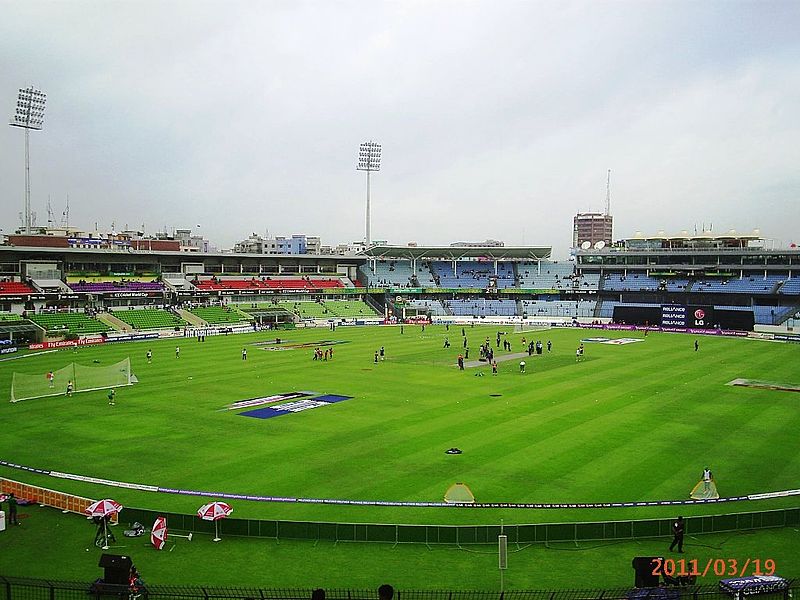
The two stadiums involved are: the Zohur Ahmed Chowdhury Stadium in Dhaka, and the Sher-e-Bangla Cricket Stadium in Chittagong.

Thanks to Wikipedia for the pics:

Dhaka:

Chittagong:

The first match is on February 10th, with the Barisal Burners taking on the Sylhet Royals at Dhaka.

The final is on my birthday: February the 29th.

Over the next week, the weather looks to be quite good: highs in 80s, dry, clear. Great cricketing weather. Who knew the weather was so very pleasant in Bangladesh?

I really think I need to visit there.

Anyway, I won’t go as far to say that I am looking forward to the BPL, but I think it will be worth at least paying attention to.

*****************************************************************

Back on the pitch: Younis Kahn, a member of the 199 Club, cracked a century for Pakistan against England in Dubai last night, giving them a very firm grip on the match. A three-nil white wash of England for Pakistan? Unbelievable.

And just wonderful for the sport, in my opinion. Just simply wonderful.

I have talked a lot about “choosing” a nation to support. I vacillated between England, and Australia, and India, and even Bangladesh.

But now, I am thinking: Pakistan.

I know that makes me a bit of a front runner, but goodness me do I love watching them play cricket.

And they have had a really terrible time of it as late, before the series against England anyway. It’s not like they have been winning everything over the last two years like England, or even India (yes, you did win the world cup not eight months ago, remember?)

No decision is final, yet, but I am planning a post on Pakistani cricket. Go into their history a bit, see how they fit.

Until next time.