The other day, I asked about those cricketers that transcend stats, and received a very succinct reply from Benny, aka @tracerbullet007. He lists just about every active cricketer known to, well, known to bring it when it matters. They might not be the best players on the planet, but if you had to go to war, those are the guys I would want with me. Hat tip.
He also told me of a famous quote that Sunil Gavaskar’s wife might have said, which I just love, no matter who said it:
“If I wanted someone to bat for my pleasure, I would ask my husband. If I needed someone to bat for my life, I would ask Javed Miandad.”
Now, I would love to be able to write eloquently like that on the cricketers I would trust my life to, if need be, but unfortunately, and simply: I have not watched enough cricket.
Being able to write lucid and brillant prose on the poetry of batting is something beyond me. I think quite honestly that in order to write like that, and do it well, you need to have been a cricket fan your entire life.
I firmly believe that.
A few weeks ago, one of my favorite tweeters, @legsidelizzy, tweeted about her favorite individual performance by a Nottinghamshire cricketer. I cannot find the specific tweet, unfortunately, but she basically summed up a transcendent bowling performance that would have an otherwise been ignored on a stat sheet, and she did so beautifully, in fewer than 140 characters!
She has followed cricket her entire life, and it shows.
And therefore while I want to write such prose, I have decided to instead stick to basing my posts on cold, hard stats.
And so: for the next five days: I will be posting about the five fastest hundreds in the knockout round of an ODI tournament. Not just the World Cup, but every tri-series, quad-series, World Series.
The only caveat is that the tournament has to involve teams with full test status. For instance, Gayle’s immense 110 off of 77 balls in the final of the 2008 Scotiabank Series does not count.
After I write about the batsmen, I will write about the bowlers. Though I have yet to pick a stat on which to rate them, so I am not sure how that is going to go.
All of this starts tomorrow. Because I am tired. It has been a long week. And I was up at 6:45am CST to watch Arsenal.
Speaking of players that transcend stats, how about that Robin van Persie, eh?
A lot has happened in the world of cricket since my last post.
Matches were played, runs were scored, wickets were taken.
England beat Pakistan; South Africa beat New Zealand.
But the most important event?
Virat Kohli’s brilliant century for India against Sri Lanka in the Commonwealth Bank series, to pull his country out of the fire, and give them life.
It was a wonderful knock. Simply wonderful. We all saw every reason why most see him as World Cricket’s next great talent.
Unfortunately, the videos of it are long gone from YouTube. But I suggest signing up for Willow.tv simply to watch the highlights. Trust me.
In fact, excuse me for a second…
It has been simply a brutally awful tour for India. And I am sure that most of the players are ready to board the jet back home.
But not Virat Kohli.
He blistered his way into the hearts of every cricket fan the world over that evening.
It was just wonderful.
A master-class, as the pundits like to say.
Over the last few days, I had been talking about who are the best cricketers, who can perform both when it matters, and over the long term.
I posted some stats and came to a couple of conclusions. More or less.
But after watching Kohli, my mind changed a bit: the best cricketers in the world are the ones that perform at their best when their team needs them the most.
Whether it be the big wicket at the right time of a test match, or a big innings in a must win ODI. It’s the players who stand up and own the moment that are the most valuable to their team, to their country.
Unfortunately, cricket is a stats driven game, and the above, this je ne sais quois, is unmeasurable.
Being able to name those players that have this quality takes time, and experience. You have to have watched a great deal of cricket.
And so I ask, dear reader, who are these cricketers?
Today’s topic: Jacques Kallis and The Theory of the All-Rounder.
First of all: Is he the best all-rounder of all time?
Let’s start from the batting side.
Here are the top ten test batsmen of all time, based on average runs scored, 100 innings minimum:
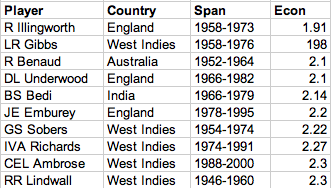
And here are the top test bowlers of all time, based on economy rate, 100 innings minimum
Kallis does not appear on both lists. Only Gary Sobers does, in fact, the man who most cricketing pundits considered the greatest all arounder of all time, before Kallis came along.
(One quick note on fielding statistics, I am going to ignore them for the most part, except in cases where a tie-breaker of sorts is needed. For the record however: Kallis has 180 test dismissals and counting, while Sobers retired with only 109…for whatever that’s worth).
Of course, Sobers retired from International cricket in 1974, and only played in one ODI, and no T20s. So once the short formats become part of the discussion, everything changes.
As such, I am hesitant to see what the numbers gives us, as I feel it might punish those that played in the pre-one-day era.
But for argument’s sake:
Top ten ODI batsmen, based on average, 100 innings minimum:
And the top ten ODI bowlers, based on economy rate, 100 innings minimum:
Not one player makes both lists. In fact, no one really comes close.
And I ran the numbers for wickets taken, strike rate, and average, and still no one came close.
One Day Internationals are just a different beast, it seems, for the all rounders.
Of course, Kallis still has a lot of cricket left in him (he has fantasies of playing all the way through the 2015 World Cup), but for now, Sir Gary Sobers is still the best all rounder cricket has ever seen.
But is he the best best cricketer ever?
Using the above information: yes, surely. He is top ten in batting and in bowling. He played for 20 years, and therefore his quality was proven over many years, on many grounds, against many teams.
And his team was, well, all right during his tenure, as well. Between 1954 and 1974, the West Indies played 23 test series, winning nine of them and drawing four.
In fact, they won five series in a row at one point. Against India at home, in England, against Australia at home, in England (again), and in India.
So: greatest cricketer ever?
Nope.
Sachin Tendulkar is the greatest cricketer ever. And he will retain that seat for the next 1,000 years.
Today: Arsenal scored five unanswered goals, and defeated the Scum 5-2 at the Emirates. (So many jokes: but simply put: the worst Arsenal team in a generation put five past the best Tottenham team like ever…hilarious).
The fourth goal was scored by Theo Walcott. A lovely dink after a poor first touch.
But what struck me was his reaction. He simply ran to the corner flag, stopped, clenched his fists, and screamed. In the London Sunshine. In front of 60,000 adoring fans.
It was his first goal at the Emirates in who knows how long, and quite possibly the biggest goal of his career.
It was visceral reaction. It was not showy, he did not lift his shirt to praise Jesus or whatever. He didn’t samba, or cradle an imaginary baby, or point to the sky.
He had simply been liberated by the goal. The shackles thrown off. And all he could do was stand and vent years’ worth of frustration. Frustration with himself, frustration with his team, the English press.
They go really well together, I would suggest you listen to the song as you read the article, even if you have experienced them on their own already.
My attempt at a mash-up, with a thousand apologies to the artists:
“It had taken maybe an hour and a half. They’d only made 60-odd and we knocked them off quickly, on the ground surrounded by trees, underneath the perfect sky.
And I can see for miles and miles…”
*
There is a great deal of quality cricket happening, too. The CB series is reaching its climax, the third and decisive T20 between Pakistan and England is tomorrow, and the 2nd ODI in South Africa’s tour of New Zealand is on the 29th (my birthday).
In the first ODI of that series, Jacques Kallis took two wickets and then later added a disappointing 13 with the bat.
The announcers called him the greatest all-rounder ever. And it is hard to argue with the numbers: in 150 test matches, he has scored 12,260 runs at an average of 57.02; whilst simultaneously taking 74 wickets at an economy rate of 2.84: including seven four-fers and five five-fers.
In ODIs, his all-round numbers are equally as impressive: 11,494 runs, 269 wickets.
And those are just the 30,000ft stats.
And if he really is the greatest all-rounder ever, does that make him the best cricketer ever?
That questions begs another question: who are the most valuable cricketers? The all rounder, the bowler, the wicketkeeper, the batsman, the captain?
I have a lot of free time all of a sudden. I am winding down at the old job, waiting to start the new one – and on top of that school is out for two weeks.
And so I thought for sure I would be able to write a great deal for the blog, but I have been coming up empty.
A very real case of writer’s block.
This morning I was reading about the World T20 qualifiers over in Dubai next month, and then I read Test Match Sofa’s latest post and was reminded that England won the last incarnation of the tournament (2010) and that Kevin Pietersen was Player of the Tournament.
And so, I need to eat my words from yesterday: as that makes two global competitions where KP was magnificent: the 2007 World Cup and the 2010 World Twenty20.
Consider those words eaten.
And now I have World T20s on the brain. And I find myself looking forward just a little to the 2012 version this year in Sri Lanka.
And then I thought: why not just do a post similar to yesterday’s, but only for the World Twenty20s instead.
Bingo!
First: a little history: the first Twenty20 World Cup was in 2007. The tournament was held in South Africa, and won by India.
The second tournament was in 2009: England hosted, Pakistan won.
The most recent was in 2010 (moved up a year, I am guessing, to make room for the 50-over cup). The West Indies were the hosts, and as mentioned, England won.
Over those three tournaments, the players with the best scoring averages (minimum 10 innings) are as follows:
Player
Country
Innings
Avg
RG Sharma
India
10
60.6
MEK Hussey
Australia
11
47
JH Kallis
South Africa
10
45.44
KP Pietersen
England
15
79
CH Gayle
West Indies
11
44.2
DPMD Jayawardene
Sri Lanka
18
41
Shoaib Malik
Pakistan
14
33.9
TM Dilshan
Sri Lanka
17
32.35
AD Mathews
Sri Lanka
11
32.33
Misbah-ul-Haq
Pakistan
17
30.66
And the top ten batsmen in ALL International T20s are as follows (minimum 20 innings):
Player
Country
Innings
Avg
Misbah-ul-Haq
Pakistan
31
37.94
KP Pietersen
England
33
36.68
MJ Guptill
New Zealand
27
35.81
MEK Hussey
Australia
20
35.15
BB McCullum
New Zealand
47
34.66
CH Gayle
West Indies
20
32.47
TM Dilshan
Sri Lanka
34
31.92
DPMD Jayawardene
Sri Lanka
35
31.76
JP Duminy
South Africa
33
31.76
GC Smith
South Africa
33
31.67
Six players made both lists this time: Hussey, KP, Gayle, Jayawardene, Dilshan, and Mishbah.
Sri Lanka, interestingly enough, had two players make both lists, and had a third make the World Cup list only, but has only advanced to a final once in the three tournaments.
This bodes well for their chances this year, at home, however.
Now, none of the players that appear on both lists above also appeared on two lists in yesterday’s post on the ODIs.
But that is probably because those posts were based on the full history of ODIs – from 1971 until the present day. While Twenty20s of course have only been around since 2005.
And so I pulled similar numbers for ODIs between 2005 and 2012.
The top ten batsmen for ODIs in the two World Cups (10 innings minimum)
Player
Country
Innings
Avg
MJ Clarke
Australia
15
83.62
ML Hayden
Australia
10
73.22
Yuvraj Singh
India
11
71.14
SR Watson
Australia
12
62.14
DPMD Jayawardene
Sri Lanka
18
56.8
JH Kallis
South Africa
16
54.61
KC Sangakkara
Sri Lanka
19
54.33
SB Styris
New Zealand
15
53.41
RT Ponting
Australia
15
53.21
AB de Villiers
South Africa
15
51.78
The top ten batsmen overall, between 2005 and 2012, 50 innings minimum:
Player
Country
Innings
Avg
HM Amla
South Africa
53
56.35
MS Dhoni
India
177
52.1
ML Hayden
Australia
51
51.91
S Chanderpaul
West Indies
96
50.43
MEK Hussey
Australia
141
50.35
AB de Villiers
South Africa
116
49.03
V Kohli
India
77
45.95
JH Kallis
South Africa
104
45.82
MJ Clarke
Australia
151
45.15
SR Tendulkar
India
114
44.8
Four players made both lists: Hayden, Clarke, Kallis, and de Villiers.
And still no one player stands out. Not one was brilliant both in the long term and in the short term, in the two one-day formats, from 2005 through 2012.
The conclusion: there are a lot of world class one-day cricketers actively playing right now – and we are blessed to all be around to see them.
And maybe that’s why Twenty20 is so popular, because there are so many cricketers worth watching.
And maybe that’s why we have so many domestic t20 tournaments that feature international players: because there are enough players to go around.
And maybe that’s why we have seen a resurgence in ODIs as of late.
And maybe that’s why Test cricket has been sliding.
Today, Kevin Pietersen hit a marvelous century for England to successfully lead their chase against Pakistan in Dubai.
It was his second ODI century in as many matches.
Over on Twitter, I opined that maybe, just maybe, KP was not a big game player. That in ODIs specifically, he didn’t come through when England needed him most: In the World Cup.
This is similar to the knock that most people had on Alex Rodriguez until 2010.
Great all season, but crap in October.
I have always thought it was a bit unfair to criticize players based on such small samples sizes, but I thought it might make for an interesting blog post.
KP’s career ODI average is 41.84 in 116 innings. In World Cups, his average is 47.91 in 13 innings.
Again, a small sample size, but it looks as if my tweet might have been off base a bit.
However, I was referring more to the 2011 World Cup and its relation to the UAE One Day Interationals. In the former, he averaged just 32.75 in four innings; while in the latter he averaged 70.25 in the same number of innings.
So while my tweet was not incorrect, per se, it was off base, as KP had himself a monster World Cup in 2007.
And so I decided to look at more players in a similar manner.
The top ten World Cup batsmen based on average runs scored (minimum 10 innings) are as follows:
Player
Innings
Average
L Klusener
11
124
A Symonds
13
103
MJ Clarke
15
83.62
IVA Richards
21
63.31
SR Watson
12
62.14
R Dravid
21
61.42
GM Turner
14
61.2
SR Tendulkar
44
56.95
HH Gibbs
23
56.15
SC Ganguly
21
55.88
In all One Day Internationals, here are the best batsmen based on average (minimum 40 innings):
Player
Innings
Average
HM Amla
53
56.35
MG Bevan
196
53.58
MS Dhoni
180
51.44
MEK Hussey
142
50.52
IJL Trott
42
48.31
Zaheer Abbas
60
47.62
AB de Villiers
120
47.56
IVA Richards
167
47
GM Turner
40
47
V Kohli
77
45.95
Only one player shows up on both lists: the incomparable Sir Viv Richards, widely considered the best ODI batsman in history.
I then expanded it to a 100 innings minimum:
Player
Innings
Average
MG Bevan
196
56.58
MS Dhoni
180
51.44
AB de Villiers
120
47.56
IVA Richards
167
47
JH Kallis
305
45.55
MJ Clarke
191
45.14
CG Greenridge
127
45.03
SR Tendulkar
447
44.83
DM Jones
161
44.61
ML Hayden
155
43.8
Now three players appear on both lists: Michael Clarke, Viv Richards, and Sachin Tendulkar.
It is a bit of a stretch, and a bit meaningless, but those are three batsmen who best exemplify “clutch” batting as well as long term brilliance.
But I bet you could have told me that without spending 45 minutes with Statsguru.
Pakistan’s history can be divided into three distinct segments.
1947 – 1972: Not actively seeking nuclear weapons
1972 – 1998: Actively seeking nuclear weapons
1998 – Present: Nuclear
On the cricket field, between 1952, the year they gained full test status, and January the 19th, 1927 (the day of the Multan meeting), they played in 62 test matches.
They won 10, lost 18, drew 34. A winning percentage of around 16%.
Between the Multan meeting and May 28th, 1998 (the date of their first successful weapon’s test), they played in 189 test matches: winning 61 of them. A winning percentage of around 33%.
And finally, as a nuclear power, Pakistan played in 119 test matches. They won 44 of them, a winning percentage of nearly 37%.
Non-nuclear: 16%
Pursuing nuclear: 33%
Nuclear: 37%
I don’t think there is any correlation to the above, not in the slightest.
All it tells us is that Pakistani cricket has been improving over the last half century.
I think Pakistan is a fascinating topic. Both on the cricket field and in more global issues such as nuclear power.
I look forward to continuing to post on their two sources of national pride.
*
Other posts upcoming next week: inspired by Levi’s magnificent innings down in New Zealand yesterday: the quickest international hundreds in test matches.
On April the 23rd, 1998, Pakistan played South Africa in a One Day International cricket match in Cape Town, as part of the Standard Bank International One-Day Series (Sri Lanka also participated in the series).
South Africa won by a decisive nine wickets with 134 balls remaining.
Pakistan lost the toss and batted first. Only four batsman got out of the single digits, and the highest score was a measly 30 from opener Saeed Anwar.
They went from 84-3 to all out for 114.
It was Lance Klusener’s day, taking five Pakistani wickets for only 25 runs in seven overs.
In the chase, Gary Kirsten hit a not-out 52 to lead his team to victory, needing only 27 overs and change to do so.
It also happened to be the final of the tri-series.
Pakistan did not play an international cricket match for five months. It was not until the September the 12th, when they played an ODI against India in Toronto, Canada.
India won by six wickets.
In a similar match, Pakistan collapsed at the crease after India won the toss and chose to field.
Pakistan finished at 189 not out, a total that India chased down with six wickets and 38 balls to spare.
Sourav Ganguly hit a half century to lead his countrymen.
*
Between those two matches, Pakistan went Nuclear.
On May the 28th, deep in the Chagi Hills, they detonated five nuclear devices, becoming the seventh nation to officially have nuclear weapons.
According to the articles I have read, Pakistan’s nuclear capability is a source of great national pride for the nation’s citizens. The leader of the nuclear program, Abdul Qadeer Khan, for example, is respectively known as Moshin-e-Pakistan – literally: the Savior of Pakistan.
And as I mentioned in a previous post, their national cricket stadium in Lahore is named after Muammar Gaddafi, all because he gave a speech in 1974 that supported Pakistan’s pursuit of a nuclear weapons program.
Now, I am not here to editorialize. I do not claim to understand the region, or what is like to be a citizen of Pakistan.
My point actually is that there are two major sources of national pride in Pakistan: their cricket team, and their nuclear program.
The former is a pastoral bat and ball sport, the latter is the most dangerous creation ever envisioned by man.
And considering the dichotomy of the two sources of pride, maybe one explains the other, and vice versa.
Or maybe not.
But I find it fascinating.
And I think I might explore the link between the two in more detail going forward.
I would love to hear folks’ comments on the correlation.
Pakistan are back on the pitch tomorrow morning, looking for pride in the ODI series against England. I hope to tune in for large portions of the match.
I know this is a cricket blog, but I love baseball, too. In fact I think the things I love about baseball ultimately led to me to cricket. It is rich in tradition, and history. It inspires fantastic writing.
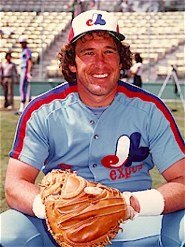
Watching our former heroes age, grow weak, fade away – it’s one of the toughest parts of growing older. And it is even tougher when it is someone like Carter.
I grew up on baseball, and he was my first favorite player – and therefore more than likely my first favorite athlete ever.
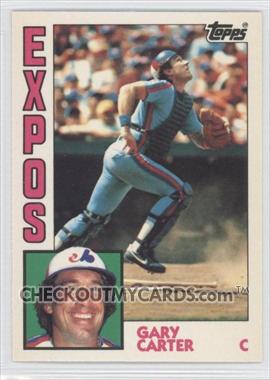
My favorite baseball card growing up was Carter’s 1984 Topps:
For whatever reason, I loved the catchers. My favorites were Johnny Bench, and Carlton Fisk, and Gary Carter.
I moved around a lot growing up. I was never in one place long enough to have a team to cheer for, and so I developed affinitites for certain players instead.
I followed Carter from Montreal to New York, without missing a beat.
He was one of those players that your dad would tell you to emulate: he worked hard, he was always smiling, he ran out every ball. I remember reading a biography of him in like fourth grade, and while I remember nothing else from it, I do recall him talking about how much he simply loved playing baseball, and that he felt so blessed that he was able to do it for he living.
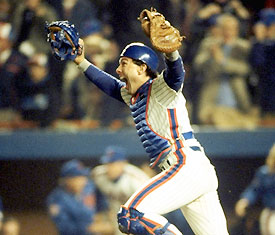
In 1986, he won the World Series with the New York Mets, and even though years later I wrote a song about Bill Buckner, I cheered for Carter and the Mets that night.
The video is of course nowhere to be found on YouTube, but I remember as if it was yesterday: Carter running up and jumping into the arms of Jesse Orosco:
He was always smiling.
His nickname was the “kid”.
Over his 19 season career, he played in almost 2,300 games – along the way collecting over 2,000 hits and over 1,200 runs batted in. Phenomenal offensive numbers for a catcher.
Behind the plate, he led the team. Catchers are the field generals in baseball, and he commanded his field and his pitcher like no one else in the game – before or since.
In 1992, he retired from baseball. He was inducted into MLB’s Hall of Fame in 2003.
Last spring he went to the doctor complaining of headaches. Less than a year later he was dead.
His former teammate, Bob Ojeda, put it best: “He is gone too soon for us to understand.”
The One Day International format was my first introduction to the sport, thanks to the World Cup, and as such it holds a very special place in my heart.
Lately, of course, my preferred format has been Test cricket, and I have found myself thumbing my nose at cricket’s forgotten middle child over the last few years.
Over the last few days, however, I have fallen in love all over again.
Yesterday, I was able to enjoy a lovely ODI between Pakistan and England.
And the Commonwealth Bank Series feature Sri Lanka, India, and Australia has been brilliantly entertaining.
The most recent match between India and Australia featured everything that is wonderful about the ODI: tight, tense, every ball mattering…and it came down to the final delivery of the match…
Under the floodlights…
And, so, today, I thought I would talk a bit the One Day International…
95 years after playing in the first ever Test match, Australia and England played the first ever ODI, on January the 5th, 1971.
The first three days of a Test had been washed out, so Cricket Australia just decided to have each team bowl 40 eight ball overs, and the One Day International was born.
Australia won by five wickets.
Most features of the ODI as we know them were put in place by Australian billionaire, Kerry Packer. These include the colored uniforms, the floodlights, and the white ball.
Other than the limited overs, the rules of the ODI use, basically, the same rules of Test cricket. The biggest difference of course are the power play fielding restrictions:
For three blocks of overs (the first ten, and then five decided on by the batting side and five decided on by the bowling side), teams in the field can only have three fielders outside of the fielding circle.
The rules were introduced in 2005, and have been altered by the ICC like a dozen times since.
Also, the ODI brought us the Duckworth/Lewis Method – the algorithm used to decide rain shortened matches.
It’s hilariously complicated:
“The essence of the D/L method is ‘resources’. Each team is taken to have two ‘resources’ to use to make as many runs as possible: the number of overs they have to receive; and the number of wickets they have in hand. At any point in any innings, a team’s ability to score more runs depends on the combination of these two resources. Looking at historical scores, there is a very close correspondence between the availability of these resources and a team’s final score, a correspondence which D/L exploits.
Using a published table which gives the percentage of these combined resources remaining for any number of overs (or, more accurately, balls) left and wickets lost, the target score can be adjusted up or down to reflect the loss of resources to one or both teams when a match is shortened one or more times. This percentage is then used to calculate a target (sometimes called a ‘par score’) that is usually a fractional number of runs. If the second team passes the target then the second team is taken to have won the match; if the match ends when the second team has exactly met (but not passed) the target (rounded down to the next integer) then the match is taken to be a tie.”
Since 1971, there have been 3,338 One Day Internationals.
Currently, there are 16 nations with full ODI status: the ten full members, as well as Kenya, Ireland, the Netherlands, Scotland, Canada, and Afghanistan.
Australia has played the most ODIs, and consequently has won the most: 779 played, 484 won. A winning percent of 33.93.
South Africa has a better winning percentage, however, with 34.95 (played 467, won 291).
Sachin Tendulkar has the most runs in ODI history: 18,111.
No one else has 17,000…or 16,000…or 15,000…or 14,000
The next closest batsman is Ricky Ponting 13,686.
Caveat: Sachin has played in 453 ODIs, Ricky has only played in 370.
(Side: Ricky is his real name. I always wondered why he went by Ricky instead of Rich or Rick or Richard or Dick or ANYTHING besides Ricky…but now I know: it’s because it’s actually his name.)
Virender Sehwag has the highest run total in a single innings: 219; while South Africa’s Hashim Amla has the highest average, with 56.35 (50 innings minimum.)
Shahid Afridi has the fastest ever ODI century: doing it off of only 37 deliveries in 1996 against Sri Lanka.
That is seriously insane.
Bowling in an ODI, of course, it a bit of a different story than it is in Tests. While you are still trying to take wickets, you are also doing your best to play damage limitation, much more so than in a Test, as batsmen will take risks in an ODI that they would never take in a Test match.
But, there have been some very successful bowlers in ODIs, all the same.
Muttiah Muralitharan and Wasim Akram each have more than 500 wickets, for instance.
But the ODI, for the most part, is a format for the batsmen.
And that’s the One Day International, in a nutshell.
Oh, one last thing: an ODI was the scene for my favorite cricket YouTube video ever: the underarm delivery:
I love the 70s uniforms, the Bacchanalian scenes in the crowd (that is 90% shirtless), the indigination of the announcers, the hair.
I love it all.
I love One Day Internationals.
Or maybe: I just love cricket.
*
Back on the pitch:
Tonight the South African tour of New Zealand starts up with a Twenty20 match at the Westpac Stadium in Wellington; while Sri Lanka searches for its first win in the CB series against Australia at the SCG.
Both matches are on Willow, I hope to be able to watch the first few overs (at least) of the former.




 Limited Overs