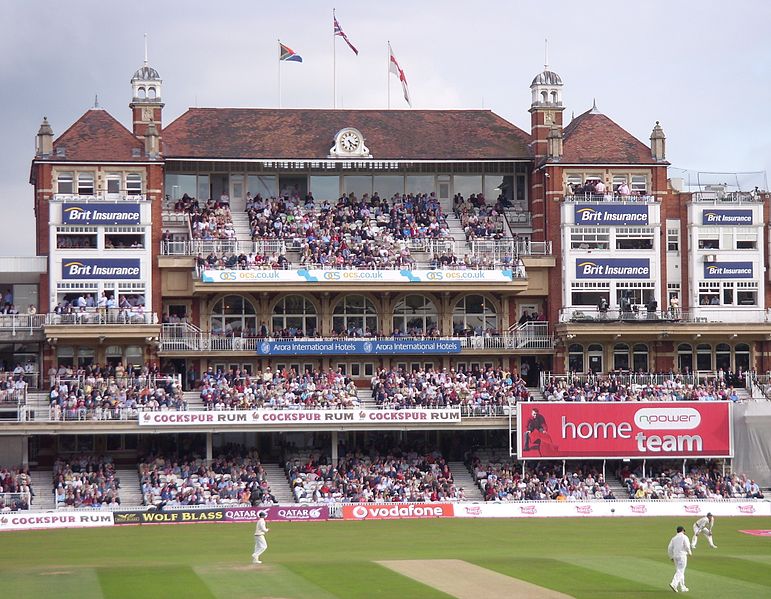
Lancashire v Warwickshire at Liverpool, County Championship Division One

Globalization.

Some will argue for it: that it spreads democracy and capitalism, assisting the Third World into economic security.

Most argue against it: because it destroys indigenous cultures, it wreaks havoc on the environment, it exploits cheap labor, it gives developed countries an unfair advantage. And the list goes on.

Most progressive thinking, educated, modern citizens understand that globalization is in some ways a necessary evil, but most also believe that things are going too far, too fast, and that First World nations need to step a little more lightly in their dealings with under-developed countries.

Let’s stop being a bully, let’s stop exploiting cheap labor, let’s stop incentivizing smaller nations to building o-zone destroying factories,  let’s stop encouraging the destruction of rain forests…and so on.

So what exactly does this have to do with cricket, you ask?

Well, globalization, and the evils involved in globalization are not new.

To wit:

The sun never set on the British Empire, as you can plainly see, though it surely does now.

Englishmen brought Christianity, the slave trade, and exploitation to every corner of the earth.

They also brought their sport.

All ten of the current nations with Test status are former British Colonies, in one way or another.

Therefore, in a very real way, the sport of cricket that we all love does not exist in its current form without Globalization and the British Empire.

I think about this a lot. And it always serves to make me feel a little, well, gross.

Millions died so I could enjoy Australia v West Indies. In the initial conquests, the occupations, and the revolutions.

But this is true for most sports I enjoy. Africa loves football, for example, and the sport of baseball does not exist without my ancestor’s destruction of the Native American tribes, nor does it exist, honestly, in its current form, without the slave trade.

And it is true for most everything, generally speaking. The computer I am typing this on does not exist without the exploitation of someone, somewhere. This mug that holds my tea would never have made it to my cupboard with a least a dash of globalization.

And so how do I reconcile my trivial passions with my liberal, modern philsophies?

Fingers in my ears? Head in the sand?

It’s either that or stop enjoying cricket, among other things, which I am loathe to do.

Unfortunately, modern life requires blinders, no matter your disposition.

I don’t eat meat, but those that do rarely think about what happens on the killing floor of a slaughterhouse, for instance.

No conclusions today, just something I have been thinking about.

Now, if you will excuse, I want to watch the second half of Juventus v Roma on ESPN3.

Globalization has its advantages. I plan on writing about this a bit more down the road.

I am also putting together a longer post for later in the week that I am really excited about. Stay tuned.

Until next time.
West Indies v Australia at Port of Spain, 2nd Test

*Caveat: Officially, the United Kingdom has a nuclear weapons program, not England. But for the sake of continuity, I am going to just use England in the post. 

**Also, part two of this three part series is here

Earlier today, over on Twitter, I mentioned that a nuclear attack scenario put on by 10 Downing in 1980 was named after the cricket fielding position: “Square Leg.” Cricket and nuclear weapons, hopelessly entwined…and so I begin part three of my discussion on the test nations with a nuclear arsenal.  Yesterday was India, today…

England invented cricket. In the sixteenth century, give or take, in or around Guildford in the county of Surrey. Records are spotty, of course, and some historians will tell you that a similar bat and ball sport dates all the way back to 1300 CE, but that seems like a bit of a stretch. The romantic likes to think that the game is over 900 years old, of course, but the realist in me says that I am going to have to go with it being just, just, 600 years young.

England cricketers played in the very first test match, against Australia, on March the 15th, 1876.

*

England was also one of the founding five fathers of the nuclear weapon phenomenon, along with the US, China, the Soviet Union, and France. (Those five nations also happen to be the five permanent members of the UN security council.) Their first weapon’s test was on October the 3rd, 1952, and their most recent on the 26th of November, 1991.  (I am going to look a bit more  into that most recent test. I mean, the Berlin Wall had fallen, the USSR was in shambles – why in the blue hell did the UK think it would be just a dandy idea to detonate a 20 kiloton nuclear warhead in the Nevada desert? A question for another day, and another blog.)

I digress:

1952 was an interesting time for England.

The War was over, of course, and the good guys had won. But the country was in ruins, the balance of world power had shifted to the USA and the USSR, they were bankrupt…

…and The Empire was disintegrating.

One of the final dominoes to fall was India in 1947.

And so, in some ways, as mentioned yesterday, England has been in steady decline since going nuclear, while Pakistan and India have only strengthened their presence on the world stage.  (Pakistan has taken a couple big steps backward in the last few years, admittedly.)

The real question here is: using their nuclear weapons program as a bookmark: how has England performed on the cricket pitch?

Their last match before their first weapons test was against India, on August 14-19 at the Kennington Oval, in London.

The match was ruined by weather, and ended in a draw.

David Sheppard hit one of his three centuries that day. Later, he went on to become an ordained minister and rose to become the Bishop of Liverpool.

Their first match as a nuclear power was almost a year later, against Australia, on June 11-16 at Trent Bridge, Nottingham, in the first match of the 1953 Ashes series.

Just like at the Oval a year prior, the match ended in a draw. In fact, four out of the five matches of that year’s Ashes series ended in draws. England won the final match by eight wickets to regain the trophy.

David Sheppard didn’t play in the game at Trent Bridge, but Australia’s Lindsay Hassett did. Hassett was his country’s captain during their tour of England for the Victory Series in 1945, as a Sergeant in the Australian army.

The series is largely credited with re-popularizing the game in England after the War.

Speaking overall:

Before going nuclear, England played in 302 test matches that were not abandoned. They won 116 of them, lost 90 of them, and drew the rest.

Winning percentage, pre-nuclear: 38%

After October, 1952, England played in 623 test matches. They won 211 of them, lost 175, and drew the rest.

Winning percentage, post-nuclear: 34%.

And, therefore, unlike India and unlike Pakistan, England’s performance on the cricket field has gone downhill since developing a nuclear program.

There are no conclusions to be drawn here. I think it is interesting, though.

Two of England’s former colonies, developing nuclear weapons, becoming cricketing powerhouses, while England’s empire falls apart, and they lose their grip on the sport they invented, they popularized…

And most importantly it must be remembered that the game as we know it today does not exist without that broken empire.

Which, as I mentioned on Twitter earlier, will be a topic of a blog later in the week.

Until then.

Kings XI Punjab v Kolkata Knight Riders at Mohali, Indian Premiere League

Cricket.

And nuclear weapons.

They are an odd couple.

I have talked about this before, here and here, and I think it might be a topic worth exploring some more.

There are ten nations with full test status in cricket: England, Pakistan, India, Bangladesh, Sri Lanka, Australia, New Zealand, the West Indies, South Africa, and Zimbabwe. An exclusive club, surely. Just ask Ireland.

Meanwhile there are nine nations with nuclear weapons: the United States, Russia, France, England, China, India, Pakistan, North Korea, and Israel (supposedly). An even more exclusive club, and a far more dangerous one.

Three nations appear on both lists: England, India, and Pakistan.

In the links above, I talked about Pakistan’s first nuclear weapon’s test in 1998, and went on to relate its transformation into a nuclear power to the nation’s performance on the cricket pitch. (Read the links, it’s not nearly as ridiculous as it sounds at first glance.)

And, so, in the interest of fair play, I am going to do similar posts for both India and England.

I will begin with Pakistan’s neighbor.

India, as know it today, was formed in 1947, when they declared their independence from, coincidentally, England. However, most historians will tell you that their nuclear ambitions began even before their independence. Most trace is as far back as 1946, when soon to be Prime Minister, Jawaharlal Nehru, said: “I have no doubt India will develop her scientific researches and I hope Indian scientists will use the atomic force for constructive purposes.”

Officially, their weapon’s program began in earnest in 1968, with its first weapons test on May the 24th, 1974: Smiling Buddha was its codename.

The last cricket India played before going nuclear was in February, 1973. They played England in a test match at the Brabourne Stadium in Mumbai. It ended in a draw. And India won the series 2-1.

Their first match as a nuclear power took place almost 18 months later, also against England, at Old Trafford in Manchester.

England won that one by 113 runs. And the other two matches went England’s way, as well. The tour itself was coined “India’s tour from hell.”

Their new found power on the world stage was not immediately transferring itself onto the cricket pitch, in other words.

Overall, however?

Between their first test match in England at Lord’s in 1932, and their last match before Smiling Buddha in 1974, a period of 42 years, India played in 129 test matches, winning 18, drawing 60, and losing the rest. A rather pitiful display, but hey, they were just starting out. (There had to have been a few abandoned matches in there, but Statsguru fails me sometimes. Or, more correctly, I fail Statsguru.)

After the nuclear test, and up until the most recent test match against Australia this year in Adelaide, India have played in 333 test matches (that were not abandoned). They won 103, whilst 142 ended in draws.

A much better record of course, but again, its meaningless, as their overall improvement as cricketing nation has nothing to do with their nuclear capabilities, but every look at history requires bookmarks, and I think nuclear power is a fine placeholder.

Here’s what we have so far then (test matches only):

Pakistan pre-nuclear winning percentage: 29%

Pakistan post-nuclear matching winning percentage: 37%

India pre-nuclear winning percentage: 14%

India post-nuclear winning percentage: 31%.

Make of that, what you will.

What it comes down is that as both nations have developed into world powers, their cricketing prowess has also  grown and matured. It’s almost as if, in order to be taken seriously, a country needs to develop in two areas: weapons of mass destruction…and sport. It’s silly, I know, but I think it’s worth a deeper look at some point, by some historian, somewhere, especially in the case of Pakistan.

Tomorrow: England.

(Which should be interesting, as they were a world power and a cricketing powerhouse long before nuclear weapons were even first imagined. And, really, one could say that England has declined over the last 100 years.)

Like I said, it should be interesting.

Until then.

Durham v Nottinghamshire at Chester-le-Street, County Championship Division One

Last Wednesday, April the 11th, was the one year anniversary of Limited Overs.

I remember the day. I started up the twitter feed, the WordPress account, and the new gmail address, whilst sitting at my desk at the job I hated more than any other job ever.  It was nine days after India had won the World Cup, and a month after I had been in London and visited Lord’s.

It was a nothing day, as far as cricket was concerned. Australia and Bangladesh played a ho-hum ODI. Australia won by nine wickets with 144 balls to spare, thanks to a massive 185-not out from Shane Watson (it took less than two hours and he only needed 96 deliveries – maybe “ho-hum” was the wrong descriptor) as well as three wickets from Mitchell Johnson.

The IPL had started three days earlier, as had the County Championship, but neither tournament had really taken hold, as of yet.

Truth be told, I started the blog not out of a love for cricket, but for a desire to work on my writing. I wanted an excuse to write: everyday.  I had been inspired by my friend Tim who writes for 7amkickoff.com, who had started his Arsenal blog for the same reason over four years ago.

Over the last year, I have written 187 blog posts, which works out to a bit more than one post every other day. Not bad, considering the two or three lengthy hiatuses I have taken, and actually much better than I had hoped when I first started this project.

And I like to think that my writing has improved, here and there, bit by bit: I do feel a bit more confident in my words.

Most of all, this blog has allowed me to do two things: understand this wonderful game more than I ever thought possible, and truly explore all of the cricket blogs out there, all of which, for the most part, are just fantastic.

I read a lot of bicycling blogs, a lot of music blogs, a lot of general interest blogs, a lot of Arsenal blogs, a lot of travel blogs…and none of those genres compare in sheer quality of writing to cricket blogs.

Fact.

I look forward to another year.

Goal: 200 posts.

Oh, and I’d like to thank two people: Andrew McGlashan, who responded to an e-mail I had sent him when I first started up. A nice inspiration to keep me going during those first few weeks, a tricky time for any new blog – when one is most at the risk of “blog fade”.

And, most of all, Devanshu of Deepbackwardpoint.com – whose near constant support of Limited Overs has been invaluable.

Until next time.

Middlesex v Surrey at Lord’s, County Championship Division One

I am watching the Marlins v the Phillies on ESPN3 as I type this…and it brings to mind a question: just how similar are baseball and cricket anyway?

Now, many folks will debate which is better, but I feel no need to slag off one at the expense of the other, as I honestly do enjoy both sports, and I think it is quite possible to love both, that you don’t necessarily need to choose one.  I actually think they compliment each very nicely, in fact.

They are just similar enough for me to sincerely answer the question, “so, cricket, that’s like baseball, right?” from my cricket ignorant American friends with a “yeah, I guess, kind of.”

Sure, they both have a bat, and a ball. And they both have a pitcher/bowler and a batter/batsman. And runs are registered in a similar enough manner, as are outs. They both have innings, they both thrive on statistics, and they both make grownups wear silly little hats.

But, really, once you get past the surface the games are inherently as different as night and day, as American football and European football even.

In baseball, generally speaking, the pitcher is on the defensive, while the hitter on the attack. The opposite is true, for the most part, in cricket.

Generally speaking, hitters in baseball want to clobber every pitch as long and as far as they can. Sure, they might take a few pitches, wait for one they want, but in the end: they want to send it screaming into the night.

Batsmen in cricket, however, have to defend their wicket as if their life depended on it, especially in the longer forms of the game. Every bowled ball is looking to get them out, not looking to get hit into the seats, as it is in baseball.

And once you are out, in cricket, you are out. Your day is over. It limits the batters, while freeing up the bowlers.  In baseball, one swing and a miss does not mean a whole lot – it gives baseball batsman the freedom to attack, attack, attack.

And because of the above, there is a major role reversal in each respective game: a bowler can change an entire cricket match with one delivery, this is patently untrue in baseball.

In baseball, a hitter can change the complexity of a game with a single swing – which is simply impossible in cricket.

Pitchers in baseball need hours to prove their dominance of a given game – the same is true for batsman in cricket.

And bowlers in cricket need only one decent ball to become heroes – just like baseball batters only need one good swing.

This sums up the difference between the two sports – they are oceans apart at the cores because of these role reversals.

And because of that, I don’t think the two sports can really be compared to each other, fairly.  (Even though many folks have done so, including me, on many an occasion.)

All of this is just my opinion, of course, and you are welcome to disagree – but I do think that like most American cricket fans, this is one subject I am uniquely qualified for.

*

Back on the pitch: so much has happened that I have failed to write about.

Sri Lanka v England, West Indies v Australia, the IPL, County Cricket, The Two Chucks the list goes on.

And it is a golden age for an American cricket fan, as well.  Cricinfo has ball by ball coverage of County Cricket, while Willow.TV has been “televising” both #slveng and #wivaus on their website (not youtube.com/willow, but on their flagship, willow.tv).

Now I am just counting down the days until the English international summer starts – the first test at Lord’s against the West Indies is only one month and six days away.  To get me through, I still have two more test matches down in the Caribbean to enjoy – nothing makes a work day better than a test match to keep track of.

Until next time.  Thanks for reading.

Cardinals vs Marlins at Miami, Major League Baseball

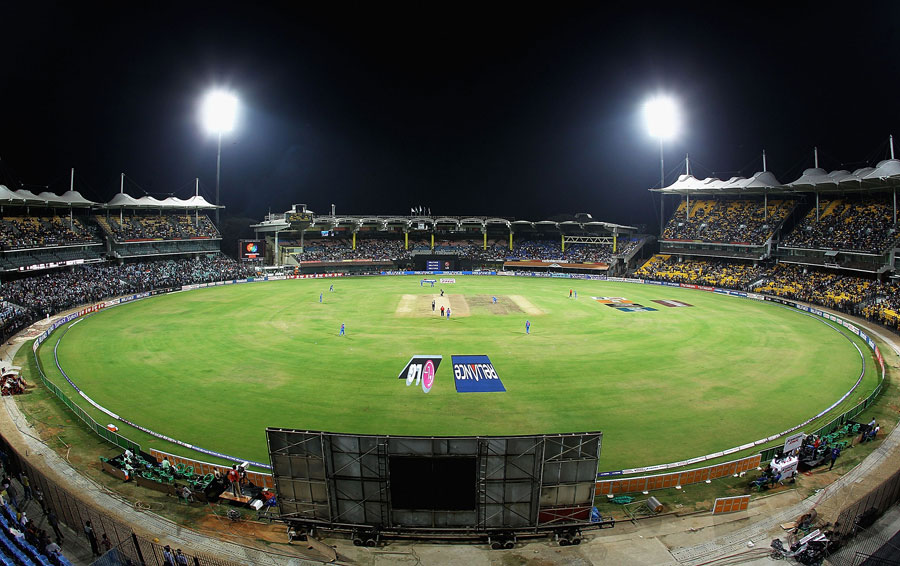
This morning, in Chennai, the fifth season of the Indian Premiere League opened with an eight wicket win for Mumbai over the hosts at the MA Chidabaram Stadium:

Meanwhile, tonight, in Miami, the St. Louis Cardinals are playing the Miami (?) Marlins, in brand spanking new Marlins Park, in the opening game of the 2012 Major League Baseball season:

Finally, tomorrow morning, the 122nd County Championship starts up with four first-division, first-class, four-day matches, taking place throughout England.

I had to pick one ground to post a picture of, so I picked the Oval:

A big day for the bat and ball sports of the world – and I am very much looking forward to all three campaigns.

Cambridge MCCU v Essex at Cambridge, Marylebone Cricket Club University Matches

England ended 2011 the number one test nation on the planet. And the only goal entering 2012 was quite simple: win everything.

So far, they have won: nothing.

Outdone by spin in the UAE for three matches against Pakistan, and again in Sri Lanka in the first test last week.

This was the same England that obliterated India and Sri Lanka last summer, the same England that retained the Ashes in Australia just a little over a year ago, the same England that won six straight test series, the same England that had not lost a test series since 2009.

And it just goes to prove once more that modern cricket teams, no matter how high their quality, cannot compete at the same levels in unfamiliar conditions.

This is not a new problem in cricket, winning in a different hemisphere has never been easy, but it does seem like more and more an issue facing teams.

And, personally, I think it is one of cricket’s biggest problems: having home teams wipe the floor with all visitors makes for boring sport. Even diehard Australian supporters were surely hoping India would at least look like they were interested in making one match worth watching.

The potential causes: the IPL, the Twenty20 format, Indian cricketers not playing county cricket, just an overall decline in the quality of the athletes ( that last one is not necessarily permanent – I think football is going through something similar), or maybe simply all of the above.

Or maybe just simply that these athletes are being forced into too much cricket; and thus the overall quality of the game is being downgraded. The inability of teams to win in unfamiliar conditions is a symptom of a larger disease: too much bloody cricket.

I have talked over and over again about how there is quite simply too much cricket, and that all parties are to blame: the ICC, the national boards, the players, and yes, the fans. Especially the fans. Everyone needs to step back and take a good hard look in the mirror: do we really need to have non-stop cricket?

There was a period last week when there was a match happening somewhere for like 36 straight hours or something crazy. Twitterers loved it, myself included. Putting the kettle on, following match after match, ball after ball.  But goodness is no one thinking of the players?

Which brings me to last week’s match between South Africa and India. The just plain gross one-off Twenty20 that no one could really explain. The epitome of the problem of too much cricket. And to the fans credit, there was outcry from cricket supporters near and far: this match crossed the line.

But where were those fans during the Asia Cup? Or any other of the countless meaningless matches that take place every week? We cannot just act indignant at matches like the Twenty20 last week, we need to turn off all meaningless cricket; let the ICC know that we want quality over quantity.

Bottom line: England is losing in the sub-continent because South Africa played India in Johannesburg. And the fans are partially to blame.

(Also, as a side note, one of cricket’s blackest of black eyes is spot-fixing: and meaningless matches just absolute scream out to gamblers that they are ripe for spot-fixing. I have preached this before, I will preach it again.)

I am not a fan of the NFL, but they take care of their players, and for the time being, they seem to value quality over quantity.  That is quite seriously a model that the cricket world should look at.

I know I am being a broken record here, that I write about this all the time, but it is really something all cricket fans need to start thinking about.

Update: here is a lovely write up from The Sight Screen on the “why” behind the South Africa-India T20.

Impi v Lions at Benoni, MiWAY T20 Challenge

Goodness, do I love a good One Day International…and we were treated to two of them today.

First, over in Bangladesh, the hosts chased down Sri Lanka’s score in a rain shortened match, winning by five wickets with 17 balls to spare.

Bangladesh’s second, third, and fourth batsmen were out for a grand total of nine, but their fifth, sixth, and seventh batsmen combined for 124. Most teams would drool over that kind of production from the lower half of their order. And I mean that literally.

And good on Bangladesh, it’s only their final in a major one-day tournament ever – and the first one they lost to Sri Lanka after having them at six for five, which is really crazy when you think about – and Bangladesh play a stylish, fun cricket that I think most people enjoy watching. And as I have mentioned time and again: world cricket needs a competitive Bangladesh.

Unfortunately, world cricket also needs superstars, and we are not going to be able to see the latest one to emerge from the sub-continent, Virat Kohli, in the final because Bangladesh’s victory meant India were eliminated.

It also deprives us all of seeing Pakistan play India in one of sport’s greatest rivalries.

However, despite what I said on twitter, Bangladesh versus Pakistan will surely be entertaining. Both teams are very streaky, both positively and negatively, so let’s hope they both get on a positive streak for the match.

*

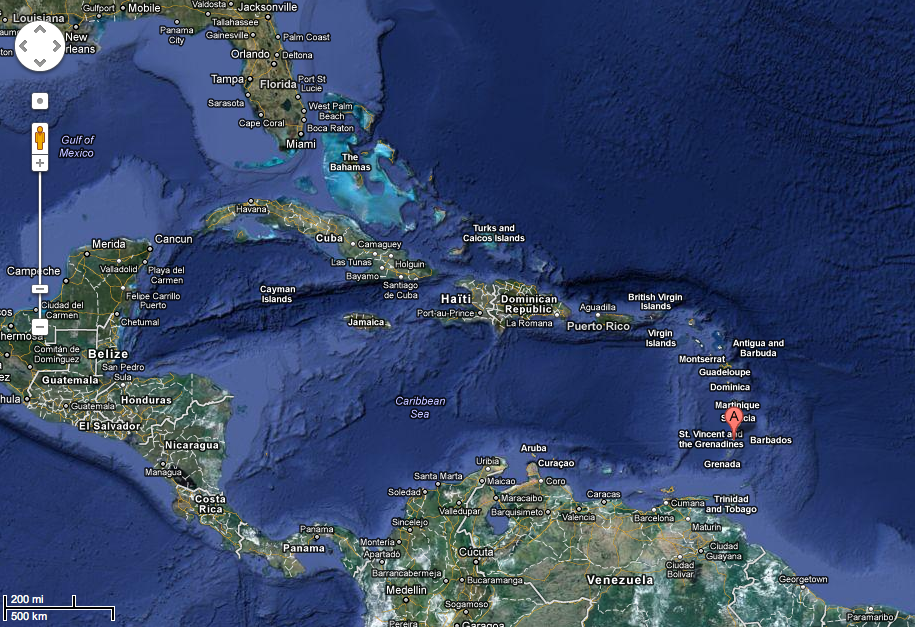
The second match we were treated was the West Indies versus Australia at the Arnos Vale Ground, on the southern most tip of Saint Vincent, in the Caribbean…

A lovely ground in a magnificent part of the world – just about the perfect spot to spend the day taking in the cricket. And if you were a resident of the St. Vincent or the string of islands to the south, the Grenadines, it was a bit easier for you to do so, as the Prime Minister declared a public holiday on the islands.

Considering everyone had the day off, the ground was full to see the match end, spectacularly, in a tie.

I was unable to watch the match, unfortunately, because it was not a public holiday here in Minneapolis, so instead I followed the ball by ball on Cricinfo. I love it when matches are in the West Indies, as the ODIs that are not day/night, as well as all the test matches, take place during the work day. First over as I am getting my coffee, last over as I am finishing up for the day. I tune in and out as the day goes by, catching bits here, and pieces there. It is a great way to spend a work day.

And it reminds me so much of the 2007 World Cup, when I was quitting smoking, and falling in love with cricket.

That tournament was of course overwhelmingly forgettable for most fans: empty stadiums, rain, poor cricket, a farcical final match…but I loved spending six weeks following matches every day, dreaming of the Caribbean in rainy Minnesota, and most of all: not smoking.

I am writing a book about this, as I am pretty sure I have mentioned, so I won’t go into too much detail, but truth be told: I would still be smoking if it wasn’t for cricket. More specifically, even, I would still be smoking if it wasn’t for the 2007 World Cup.

Fact.

As I said at the start of this post: I love a good One Day International. For lots of reasons.

*

That post felt good to write. I like writing about stadiums, and exotic locales, and ODIs. I need to do more of that. Keep it simple, sometimes.

Italy v Namibia at Dubai (GCA), ICC World Twenty20 Qualifier

Back from the dead: for now.

There hasn’t been a specific reason for my silence as of late: I have not been overly busy, in other words. I just haven’t had a great deal to say.

Further, for a bit there, each post felt like work. I was not having any fun, and so I stopped torturing myself.

Plus, I was sick of having the same thought whenever I read an enjoyable article about cricket, or something of note happened in world cricket: I should probably blog about this, or at the very least tweet about it.

It shouldn’t be like that, it shouldn’t be “should” – it should “want to” or “can’t wait to.”

And so: a week off.  Not from cricket, but from this blog.

And what happened while I was away? Well, Rahul Dravid retired, Sachin scored his 100th 100, India chased down 329, Amir apologized, Virat Kohli became the greatest young batsman on earth, South Africa beat New Zealand, the West Indies beat Australia, and County Cricket is back with its warm-up matches.

That’s a lot.

Too much to reflect on in detail, surely, but here are the blog ideas I had for each event:

Dravid retired: link to this wonderful piece and talk about fans of different sports.

Sachin: discuss other meaningless milestones in sport: 20 wins, the 40/40 club, 100 rushing yards, 1000 rushing yards…etc.

India and Kohli: I wanted to rave, rave, rave

Amir: still deciding how I feel about the interview, but I really want him to play again

#nzvsa: I have sleepwalked through these tests; I hope to watch the third one a little more closely.

#wivaus: I wanted to write about the 2007 world cup again. Australia, the West Indies, spring…and finally talk about how cricket correlated to me quitting smoking. (More on this another time.)

County Cricket: I love County Cricket. Love love love. Can’t wait for it to be back in full

That’s your lot: a week worth of Limited Overs in 300 words.

Until next time.

Oh wait: one more thing:

The Twenty20 World Cup qualifiers have been happening, and honestly I have nearly ignored them completely, beyond checking the scores. USA have spiraled into a spectacular crash out, despite the hopes we all had two weeks ago.

Personally, I don’t really care that much about US cricket. Yeah, I would love it if they won a couple matches, and I would love it our national board wasn’t run by crooks and liars, but I find it hard to get all that excited about it.

There are several of my compatriots who are fighting the good fight for US cricket fans: Stephen Rooke, Terry Coffey, and Peter Della Penna, just to name a few. I am going to let them take the reins, for as much as I love cricket, I have no passion for US cricket.

And that’s all I have to say about that.

KwaZulu-Natal v Free State at Durban, CSA Provincial One-Day Challenge

The last in a series: the fourth and fifth fastest ODI centuries in the knockout stages of a major tournament.

Number four took place in the final of the Rothman’s Cup Triangular Series on the March the 11th, 1990 – the same day that Lithuania declared its independence from the Soviet Union, one of the very first dominoes to fall in the inevitable deconstruction of the former super power.

But I digress…

The Rothman’s Cup Triangular series was an ODI tri-series featuring Australia, New Zealand, and India, with each team playing each other team twice.

Australia won all four of its matches, while New Zealand (the hosts) and India each won one and lost three.

New Zealand advanced to the finals thanks to a superior run rate.

The final took place at Eden Park in Auckland.

New Zealand won the toss and elected to have a bat; and were quite literally obitlerated by the superior Australian attack. At one point there were 33-5 before Jeff Crowe stayed out there for 100 deliveries – unfortunately for New Zealand he only scored 28 runs.

Sir Richard Hadlee came to the host’s rescue, scoring 79 off of only 105 deliveries, but he couldn’t bat forever, and his teammates did nothing else to help out, and New Zealand were all out for 162, four balls short of their allotted overs.

With the bat, Australia were equally as dominate, thanks mostly to Dean Jones’s fourth fastest ODI century in the knockout stage of a major tournament. He cruised to 102 not-out off of only 91 Kiwi deliveries and Australia won by eight wickets with 65 balls remaining.

A lovely knock from Jones, surely, but the match was really never in doubt.

Jones went into commentary after retiring and went on to call Hashim Amla a terrorist while on air.

He also played what Bob Simpson called the “greatest innings ever for Australia” – 210 runs off of 330 deliveries – over 500 minutes at the crease – at Chennai in 1987.

That particular test match ended in a tie – and that looks like an innings worth writing about. His 102 at Auckland surely is long forgotten; probably even by the batsman himself.

*

And the fifth fastest? Adam Gilchrist, in the final of the VB Series on February 14th, 2006.

Gilchrist, is of course, known for his big innings in big matches, and this match was no different.

The VB series was a tri-series involving Australia, Sri Lanka, and South Africa. It was twice as long as the series discussed above, with each team playing each other team four times instead of just twice.

Australia advanced with by far the best record of the three, and Sri Lanka advanced thanks to a couple bonus points.

Sri Lanka won the toss and chose to bat, and put up a decent enough score of 266, thanks mostly to 86 off of 91 from Jayawardene, another batsman who steps up when it matters, as we saw earlier in these posts.

Alas, it wasn’t enough, as Gilchrist put on a stunning batting performance, scoring 122 runs off of only 91 deliveries before being bowled by Muttiah Muralitharan.

Australia went on to win by nine wickets with 27 balls remaining.

Gilchrist did not hit another ODI century for 14 months, when he scored 149 off of 104 deliveries in a little over two hours at the Kensington Oval in Bridgetown, Barbados.

That was also, interestingly enough, against the Sri Lankans. But more importantly the knock came in the final of the World Cup.

Again, a more interesting bat, in a more interesting scenario, and also a more impressive performance, based simply on strike rate.

Which brings up the same point I made over and over again while writing about these posts: they are meaningless and arbitrary.

Jones’ knock at Chennai and Gilchrist’s knock at Bridgetown would have both been more fun to write about, definitely.

Thus, we close this chapter.  Something new tomorrow.

*

In other cricket news: Rahul Dravid retired.

I urge you, if you have done so already, to seek out as many of the tributes as you can online, as they are almost all worth your time.

Until next time.