Durham v Nottinghamshire at Chester-le-Street, County Championship Division One

Last Wednesday, April the 11th, was the one year anniversary of Limited Overs.

I remember the day. I started up the twitter feed, the WordPress account, and the new gmail address, whilst sitting at my desk at the job I hated more than any other job ever.  It was nine days after India had won the World Cup, and a month after I had been in London and visited Lord’s.

It was a nothing day, as far as cricket was concerned. Australia and Bangladesh played a ho-hum ODI. Australia won by nine wickets with 144 balls to spare, thanks to a massive 185-not out from Shane Watson (it took less than two hours and he only needed 96 deliveries – maybe “ho-hum” was the wrong descriptor) as well as three wickets from Mitchell Johnson.

The IPL had started three days earlier, as had the County Championship, but neither tournament had really taken hold, as of yet.

Truth be told, I started the blog not out of a love for cricket, but for a desire to work on my writing. I wanted an excuse to write: everyday.  I had been inspired by my friend Tim who writes for 7amkickoff.com, who had started his Arsenal blog for the same reason over four years ago.

Over the last year, I have written 187 blog posts, which works out to a bit more than one post every other day. Not bad, considering the two or three lengthy hiatuses I have taken, and actually much better than I had hoped when I first started this project.

And I like to think that my writing has improved, here and there, bit by bit: I do feel a bit more confident in my words.

Most of all, this blog has allowed me to do two things: understand this wonderful game more than I ever thought possible, and truly explore all of the cricket blogs out there, all of which, for the most part, are just fantastic.

I read a lot of bicycling blogs, a lot of music blogs, a lot of general interest blogs, a lot of Arsenal blogs, a lot of travel blogs…and none of those genres compare in sheer quality of writing to cricket blogs.

Fact.

I look forward to another year.

Goal: 200 posts.

Oh, and I’d like to thank two people: Andrew McGlashan, who responded to an e-mail I had sent him when I first started up. A nice inspiration to keep me going during those first few weeks, a tricky time for any new blog – when one is most at the risk of “blog fade”.

And, most of all, Devanshu of Deepbackwardpoint.com – whose near constant support of Limited Overs has been invaluable.

Until next time.
Middlesex v Surrey at Lord’s, County Championship Division One

I am watching the Marlins v the Phillies on ESPN3 as I type this…and it brings to mind a question: just how similar are baseball and cricket anyway?

Now, many folks will debate which is better, but I feel no need to slag off one at the expense of the other, as I honestly do enjoy both sports, and I think it is quite possible to love both, that you don’t necessarily need to choose one.  I actually think they compliment each very nicely, in fact.

They are just similar enough for me to sincerely answer the question, “so, cricket, that’s like baseball, right?” from my cricket ignorant American friends with a “yeah, I guess, kind of.”

Sure, they both have a bat, and a ball. And they both have a pitcher/bowler and a batter/batsman. And runs are registered in a similar enough manner, as are outs. They both have innings, they both thrive on statistics, and they both make grownups wear silly little hats.

But, really, once you get past the surface the games are inherently as different as night and day, as American football and European football even.

In baseball, generally speaking, the pitcher is on the defensive, while the hitter on the attack. The opposite is true, for the most part, in cricket.

Generally speaking, hitters in baseball want to clobber every pitch as long and as far as they can. Sure, they might take a few pitches, wait for one they want, but in the end: they want to send it screaming into the night.

Batsmen in cricket, however, have to defend their wicket as if their life depended on it, especially in the longer forms of the game. Every bowled ball is looking to get them out, not looking to get hit into the seats, as it is in baseball.

And once you are out, in cricket, you are out. Your day is over. It limits the batters, while freeing up the bowlers.  In baseball, one swing and a miss does not mean a whole lot – it gives baseball batsman the freedom to attack, attack, attack.

And because of the above, there is a major role reversal in each respective game: a bowler can change an entire cricket match with one delivery, this is patently untrue in baseball.

In baseball, a hitter can change the complexity of a game with a single swing – which is simply impossible in cricket.

Pitchers in baseball need hours to prove their dominance of a given game – the same is true for batsman in cricket.

And bowlers in cricket need only one decent ball to become heroes – just like baseball batters only need one good swing.

This sums up the difference between the two sports – they are oceans apart at the cores because of these role reversals.

And because of that, I don’t think the two sports can really be compared to each other, fairly.  (Even though many folks have done so, including me, on many an occasion.)

All of this is just my opinion, of course, and you are welcome to disagree – but I do think that like most American cricket fans, this is one subject I am uniquely qualified for.

*

Back on the pitch: so much has happened that I have failed to write about.

Sri Lanka v England, West Indies v Australia, the IPL, County Cricket, The Two Chucks the list goes on.

And it is a golden age for an American cricket fan, as well.  Cricinfo has ball by ball coverage of County Cricket, while Willow.TV has been “televising” both #slveng and #wivaus on their website (not youtube.com/willow, but on their flagship, willow.tv).

Now I am just counting down the days until the English international summer starts – the first test at Lord’s against the West Indies is only one month and six days away.  To get me through, I still have two more test matches down in the Caribbean to enjoy – nothing makes a work day better than a test match to keep track of.

Until next time.  Thanks for reading.

Cardinals vs Marlins at Miami, Major League Baseball

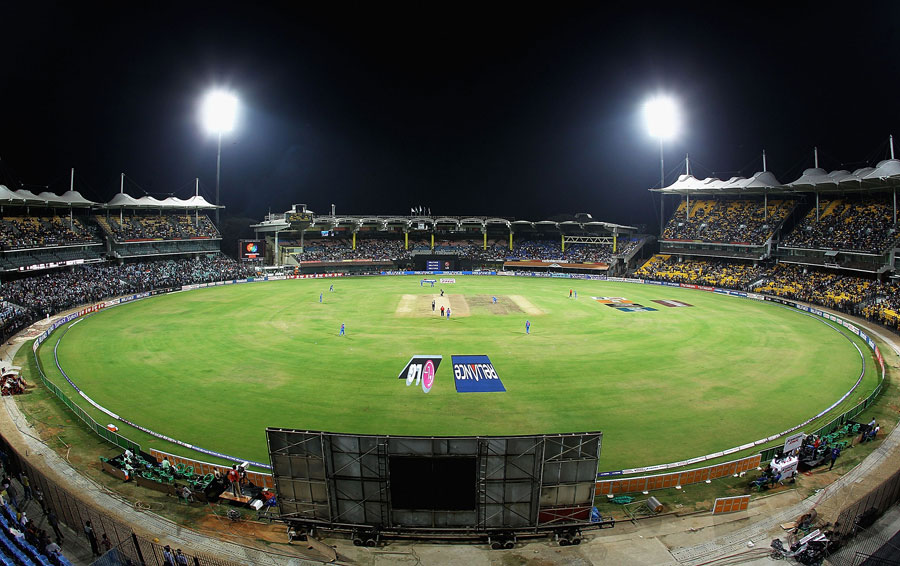
This morning, in Chennai, the fifth season of the Indian Premiere League opened with an eight wicket win for Mumbai over the hosts at the MA Chidabaram Stadium:

Meanwhile, tonight, in Miami, the St. Louis Cardinals are playing the Miami (?) Marlins, in brand spanking new Marlins Park, in the opening game of the 2012 Major League Baseball season:

Finally, tomorrow morning, the 122nd County Championship starts up with four first-division, first-class, four-day matches, taking place throughout England.

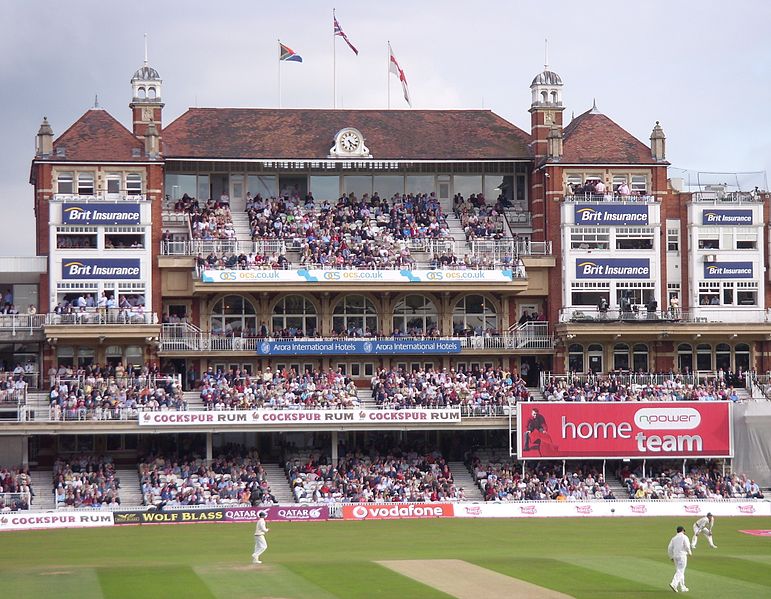
I had to pick one ground to post a picture of, so I picked the Oval:

A big day for the bat and ball sports of the world – and I am very much looking forward to all three campaigns.

Cambridge MCCU v Essex at Cambridge, Marylebone Cricket Club University Matches

England ended 2011 the number one test nation on the planet. And the only goal entering 2012 was quite simple: win everything.

So far, they have won: nothing.

Outdone by spin in the UAE for three matches against Pakistan, and again in Sri Lanka in the first test last week.

This was the same England that obliterated India and Sri Lanka last summer, the same England that retained the Ashes in Australia just a little over a year ago, the same England that won six straight test series, the same England that had not lost a test series since 2009.

And it just goes to prove once more that modern cricket teams, no matter how high their quality, cannot compete at the same levels in unfamiliar conditions.

This is not a new problem in cricket, winning in a different hemisphere has never been easy, but it does seem like more and more an issue facing teams.

And, personally, I think it is one of cricket’s biggest problems: having home teams wipe the floor with all visitors makes for boring sport. Even diehard Australian supporters were surely hoping India would at least look like they were interested in making one match worth watching.

The potential causes: the IPL, the Twenty20 format, Indian cricketers not playing county cricket, just an overall decline in the quality of the athletes ( that last one is not necessarily permanent – I think football is going through something similar), or maybe simply all of the above.

Or maybe just simply that these athletes are being forced into too much cricket; and thus the overall quality of the game is being downgraded. The inability of teams to win in unfamiliar conditions is a symptom of a larger disease: too much bloody cricket.

I have talked over and over again about how there is quite simply too much cricket, and that all parties are to blame: the ICC, the national boards, the players, and yes, the fans. Especially the fans. Everyone needs to step back and take a good hard look in the mirror: do we really need to have non-stop cricket?

There was a period last week when there was a match happening somewhere for like 36 straight hours or something crazy. Twitterers loved it, myself included. Putting the kettle on, following match after match, ball after ball.  But goodness is no one thinking of the players?

Which brings me to last week’s match between South Africa and India. The just plain gross one-off Twenty20 that no one could really explain. The epitome of the problem of too much cricket. And to the fans credit, there was outcry from cricket supporters near and far: this match crossed the line.

But where were those fans during the Asia Cup? Or any other of the countless meaningless matches that take place every week? We cannot just act indignant at matches like the Twenty20 last week, we need to turn off all meaningless cricket; let the ICC know that we want quality over quantity.

Bottom line: England is losing in the sub-continent because South Africa played India in Johannesburg. And the fans are partially to blame.

(Also, as a side note, one of cricket’s blackest of black eyes is spot-fixing: and meaningless matches just absolute scream out to gamblers that they are ripe for spot-fixing. I have preached this before, I will preach it again.)

I am not a fan of the NFL, but they take care of their players, and for the time being, they seem to value quality over quantity.  That is quite seriously a model that the cricket world should look at.

I know I am being a broken record here, that I write about this all the time, but it is really something all cricket fans need to start thinking about.

Update: here is a lovely write up from The Sight Screen on the “why” behind the South Africa-India T20.

Impi v Lions at Benoni, MiWAY T20 Challenge

Goodness, do I love a good One Day International…and we were treated to two of them today.

First, over in Bangladesh, the hosts chased down Sri Lanka’s score in a rain shortened match, winning by five wickets with 17 balls to spare.

Bangladesh’s second, third, and fourth batsmen were out for a grand total of nine, but their fifth, sixth, and seventh batsmen combined for 124. Most teams would drool over that kind of production from the lower half of their order. And I mean that literally.

And good on Bangladesh, it’s only their final in a major one-day tournament ever – and the first one they lost to Sri Lanka after having them at six for five, which is really crazy when you think about – and Bangladesh play a stylish, fun cricket that I think most people enjoy watching. And as I have mentioned time and again: world cricket needs a competitive Bangladesh.

Unfortunately, world cricket also needs superstars, and we are not going to be able to see the latest one to emerge from the sub-continent, Virat Kohli, in the final because Bangladesh’s victory meant India were eliminated.

It also deprives us all of seeing Pakistan play India in one of sport’s greatest rivalries.

However, despite what I said on twitter, Bangladesh versus Pakistan will surely be entertaining. Both teams are very streaky, both positively and negatively, so let’s hope they both get on a positive streak for the match.

*

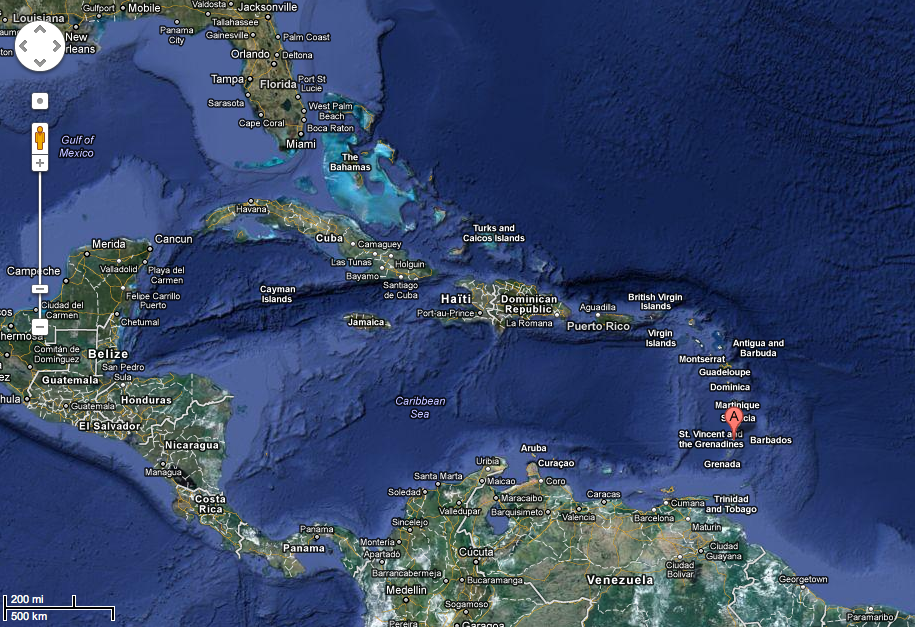
The second match we were treated was the West Indies versus Australia at the Arnos Vale Ground, on the southern most tip of Saint Vincent, in the Caribbean…

A lovely ground in a magnificent part of the world – just about the perfect spot to spend the day taking in the cricket. And if you were a resident of the St. Vincent or the string of islands to the south, the Grenadines, it was a bit easier for you to do so, as the Prime Minister declared a public holiday on the islands.

Considering everyone had the day off, the ground was full to see the match end, spectacularly, in a tie.

I was unable to watch the match, unfortunately, because it was not a public holiday here in Minneapolis, so instead I followed the ball by ball on Cricinfo. I love it when matches are in the West Indies, as the ODIs that are not day/night, as well as all the test matches, take place during the work day. First over as I am getting my coffee, last over as I am finishing up for the day. I tune in and out as the day goes by, catching bits here, and pieces there. It is a great way to spend a work day.

And it reminds me so much of the 2007 World Cup, when I was quitting smoking, and falling in love with cricket.

That tournament was of course overwhelmingly forgettable for most fans: empty stadiums, rain, poor cricket, a farcical final match…but I loved spending six weeks following matches every day, dreaming of the Caribbean in rainy Minnesota, and most of all: not smoking.

I am writing a book about this, as I am pretty sure I have mentioned, so I won’t go into too much detail, but truth be told: I would still be smoking if it wasn’t for cricket. More specifically, even, I would still be smoking if it wasn’t for the 2007 World Cup.

Fact.

As I said at the start of this post: I love a good One Day International. For lots of reasons.

*

That post felt good to write. I like writing about stadiums, and exotic locales, and ODIs. I need to do more of that. Keep it simple, sometimes.

Italy v Namibia at Dubai (GCA), ICC World Twenty20 Qualifier

Back from the dead: for now.

There hasn’t been a specific reason for my silence as of late: I have not been overly busy, in other words. I just haven’t had a great deal to say.

Further, for a bit there, each post felt like work. I was not having any fun, and so I stopped torturing myself.

Plus, I was sick of having the same thought whenever I read an enjoyable article about cricket, or something of note happened in world cricket: I should probably blog about this, or at the very least tweet about it.

It shouldn’t be like that, it shouldn’t be “should” – it should “want to” or “can’t wait to.”

And so: a week off.  Not from cricket, but from this blog.

And what happened while I was away? Well, Rahul Dravid retired, Sachin scored his 100th 100, India chased down 329, Amir apologized, Virat Kohli became the greatest young batsman on earth, South Africa beat New Zealand, the West Indies beat Australia, and County Cricket is back with its warm-up matches.

That’s a lot.

Too much to reflect on in detail, surely, but here are the blog ideas I had for each event:

Dravid retired: link to this wonderful piece and talk about fans of different sports.

Sachin: discuss other meaningless milestones in sport: 20 wins, the 40/40 club, 100 rushing yards, 1000 rushing yards…etc.

India and Kohli: I wanted to rave, rave, rave

Amir: still deciding how I feel about the interview, but I really want him to play again

#nzvsa: I have sleepwalked through these tests; I hope to watch the third one a little more closely.

#wivaus: I wanted to write about the 2007 world cup again. Australia, the West Indies, spring…and finally talk about how cricket correlated to me quitting smoking. (More on this another time.)

County Cricket: I love County Cricket. Love love love. Can’t wait for it to be back in full

That’s your lot: a week worth of Limited Overs in 300 words.

Until next time.

Oh wait: one more thing:

The Twenty20 World Cup qualifiers have been happening, and honestly I have nearly ignored them completely, beyond checking the scores. USA have spiraled into a spectacular crash out, despite the hopes we all had two weeks ago.

Personally, I don’t really care that much about US cricket. Yeah, I would love it if they won a couple matches, and I would love it our national board wasn’t run by crooks and liars, but I find it hard to get all that excited about it.

There are several of my compatriots who are fighting the good fight for US cricket fans: Stephen Rooke, Terry Coffey, and Peter Della Penna, just to name a few. I am going to let them take the reins, for as much as I love cricket, I have no passion for US cricket.

And that’s all I have to say about that.

KwaZulu-Natal v Free State at Durban, CSA Provincial One-Day Challenge

The last in a series: the fourth and fifth fastest ODI centuries in the knockout stages of a major tournament.

Number four took place in the final of the Rothman’s Cup Triangular Series on the March the 11th, 1990 – the same day that Lithuania declared its independence from the Soviet Union, one of the very first dominoes to fall in the inevitable deconstruction of the former super power.

But I digress…

The Rothman’s Cup Triangular series was an ODI tri-series featuring Australia, New Zealand, and India, with each team playing each other team twice.

Australia won all four of its matches, while New Zealand (the hosts) and India each won one and lost three.

New Zealand advanced to the finals thanks to a superior run rate.

The final took place at Eden Park in Auckland.

New Zealand won the toss and elected to have a bat; and were quite literally obitlerated by the superior Australian attack. At one point there were 33-5 before Jeff Crowe stayed out there for 100 deliveries – unfortunately for New Zealand he only scored 28 runs.

Sir Richard Hadlee came to the host’s rescue, scoring 79 off of only 105 deliveries, but he couldn’t bat forever, and his teammates did nothing else to help out, and New Zealand were all out for 162, four balls short of their allotted overs.

With the bat, Australia were equally as dominate, thanks mostly to Dean Jones’s fourth fastest ODI century in the knockout stage of a major tournament. He cruised to 102 not-out off of only 91 Kiwi deliveries and Australia won by eight wickets with 65 balls remaining.

A lovely knock from Jones, surely, but the match was really never in doubt.

Jones went into commentary after retiring and went on to call Hashim Amla a terrorist while on air.

He also played what Bob Simpson called the “greatest innings ever for Australia” – 210 runs off of 330 deliveries – over 500 minutes at the crease – at Chennai in 1987.

That particular test match ended in a tie – and that looks like an innings worth writing about. His 102 at Auckland surely is long forgotten; probably even by the batsman himself.

*

And the fifth fastest? Adam Gilchrist, in the final of the VB Series on February 14th, 2006.

Gilchrist, is of course, known for his big innings in big matches, and this match was no different.

The VB series was a tri-series involving Australia, Sri Lanka, and South Africa. It was twice as long as the series discussed above, with each team playing each other team four times instead of just twice.

Australia advanced with by far the best record of the three, and Sri Lanka advanced thanks to a couple bonus points.

Sri Lanka won the toss and chose to bat, and put up a decent enough score of 266, thanks mostly to 86 off of 91 from Jayawardene, another batsman who steps up when it matters, as we saw earlier in these posts.

Alas, it wasn’t enough, as Gilchrist put on a stunning batting performance, scoring 122 runs off of only 91 deliveries before being bowled by Muttiah Muralitharan.

Australia went on to win by nine wickets with 27 balls remaining.

Gilchrist did not hit another ODI century for 14 months, when he scored 149 off of 104 deliveries in a little over two hours at the Kensington Oval in Bridgetown, Barbados.

That was also, interestingly enough, against the Sri Lankans. But more importantly the knock came in the final of the World Cup.

Again, a more interesting bat, in a more interesting scenario, and also a more impressive performance, based simply on strike rate.

Which brings up the same point I made over and over again while writing about these posts: they are meaningless and arbitrary.

Jones’ knock at Chennai and Gilchrist’s knock at Bridgetown would have both been more fun to write about, definitely.

Thus, we close this chapter.  Something new tomorrow.

*

In other cricket news: Rahul Dravid retired.

I urge you, if you have done so already, to seek out as many of the tributes as you can online, as they are almost all worth your time.

Until next time.

New Zealand v South Africa at Dunedin, 1st Test

The last two days I have written about the top two fastest ODI centuries in the knockout stages of a major tournament.

Today: number three.

The match: the Final of the 2011 World Cup.

As anyone who’s anyone knows, the match damn near bled intangible cricketing moments – it was soaked in players recognizing the situation and upping their game just one more notch to compensate.

The match was played in a pressure cooker, and a handful of players responded with the performances of their lives.

It also included a fabulous century from Sri Lankan batsman, Mahela Jayawardene, the third fastest ODI century in the knockout stage of a major tournament: and just like Clive Lloyd yesterday, it happened in the final of the World Cup.

Two out of the top three so far, amazing.

The scene: India v Sri Lanka. Mumbai, April the 2nd, 2011. 42,000 people at the Wankhede Stadium and the whole of India watching, the whole of world cricket watching…

I don’t need to go too much into detail, but Sri Lanka were 122-3 through 27.5 overs when Jayawardene strolled to the crease. He went on to score 103 runs off of only 88 balls, an efficient and much needed knock for Sri Lanka.

Unfortunately, he could not quite put together a long enough partnership to get his team over three hundred, and Sri Lanka ended at 274, setting an achievable target for India, the hosts.

Fortunately, however, Lasith Malinga also siezed the moment: getting Sehwag out lbw for a duck, and getting Tendulkar out for only 18.

But the final drop of magical waters were left for the captain, MS Dhoni, who hit a lovely 91 not-out off of 79 deliveries…

…and of course, he hitting the game winning runs with a magnificent six…

Go ahead, watch it again, you know you want to:

This is where we come to the crux of this whole argument, as Dhoni’s 91 will long be remembered as a phenomenal performance under the most extreme pressure imaginable, but Jayawardene’s is long forgotten, despite the fact that he hit that random number of 100, and that he did it under just as much pressure.

Well, not just as much, but still a great deal….

I am really enjoying researching these posts, but I don’t know how much I enjoy writing them, as I feel like they are one giant contradiction, a touch farcical, largely inaccurate, and a little aimless.

But I guess I am proving my own point from a few days ago: the only way to know which cricketers step up their game when it matters, is to watch a whole lot of cricket…

I will never forget Dhoni’s innings, surely, despite the fact that he didn’t reach a meaningless triple digit amount of runs.

Tomorrow, parts four and five, combined into one post.

*

On the pitch: test cricket!

So, if you will excuse me…

Until tomorrow.

Eastern Province v Ireland at Port Elizabeth, Ireland tour of Kenya and South Africa

This is part two of the five fastest ODI hundreds in a major international tournament.

Today we travel to London, Lord’s, on the 21st of June, 1975.

The final of the very first World Cup.

The West Indies versus Australia.

And our featured performer: Clive Lloyd.

(One quick note about the tournament, though I don’t think it necessarily affects the soul of this particular post, but the matches played were 60-over innings, not 50-over innings as is now the case.)

Australia won the toss and elected to field.  The West Indies lost one of their openers, Roy Fredericks, in a rather bizarre manner: after hitting a six, he fell back into his own wicket.  Fellow opener, Gordon Greenridge, then scored thirteen runs at an excruciatingly slow pace: a strike rate of 21 and change. 13 runs off of 80 balls…

His partner, Alvin Kallicharran, fell for just 12, and then Greenridge fell. Leaving the West Indies at 50-3 with 1/3 of their overs gone.

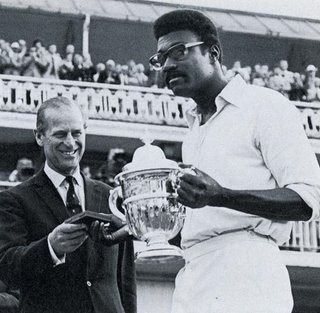
Up stepped the incomparable Clive Lloyd, who blasted the Australian quicks around Lord’s. 102 runs off of 108 deliveries. A strike rate nearly six times that of Greenridge’s. His fellow batsman for the entirity of his knock was Rohan Kanhai, who quietly blocked ball after ball as Lloyd brought Lord’s to its feet with his 12 fours.

The West Indies ended their innings with 291 runs, setting Australia’s target at 292 to win.

They fell 17 runs short, thanks mostly to five run outs, three of which were secured by Sir Viv Richards.

Clive Lloyd also bowled 12 overs in that match, allowing a paltry 3.16 runs per over, the lowest by an entire run of all his fellow bowlers.

He also took a wicket. Bowling out the dangerous Australian folk hero, Doug Walters.

All told: 102 runs when his team sorely needed them, at a pace that kept them in the match; followed by 12 overs of stingy bowling and a wicket.

Fantastic performance.

And he did it all while wearing glasses!

And my favorite part of the whole thing: he was the West Indian captain.

He did what captains do in big matches: he puts his teammates on his back and dragged them over the line.

He played in 87 ODIs in his career, but that Sunday in June in England was his only century.  That about says it all, as far as I am concerned.

Clive Lloyd did not get a single mention in my earlier posts on clutch performances, and therefore those analyses are inherently flawed.

Lovely performance, Clive.

Tomorrow: part three.

Some of you might remember the match quite fondly…

*

There is some controversy on these posts. Well, controversy in my own head anyway. Clive Lloyd was a fantastic cricketer. And so of course it follows that he was fantastic in the World Cup. It really has nothing with any sort of intangible “clutchiness”, he was simply a good batsman and a serviceable medium pace bowler who had one of his better days.

His performance at Lord’s that day does not transcend stats, it just further supports them.

I agree 100% with all of that.

But still: only one century in his entire ODI career and it came in the FINAL of the WORLD CUP!?

Sometimes it’s okay to believe in Santa Clause.

*

Back on the pitch: tonight is the 2nd final of the seriously interminable but nonetheless entertaining Commonwealth Bank series. Australia could end it all tonight in Adelaide with a victory over Sri Lanka.

Also, the first test between New Zealand and South Africa starts on the 7th (the 6th on my calendar): that’s right, test cricket is back in less than 24 hours. Happy days.

Oh, and hey, the Asia Cup starts on 11th, and Willow.tv will have all seven of the matches live on their YouTube Channel. I am pretty excited, even if the matches will be starting at 02:30 CST.

Pakistan plays India on a Sunday morning, however, so I am going to figure out a way to watch that one.

*

Finally, today, sad news: West Indian cricketer Runako Morton was killed in a road accident. He was only 33.

Proper tributes here and here.

Until next time.

Western Australia v Victoria at Perth, Sheffield Shield

Today: first in a series: the five fastest ODI hundreds in the knockout stages of a tournament.

This is my effort to use stats to find those batsmen that perform best on cricket’s biggest stages, that have that certain bit of chutzpah that few cricketers have.

The ability to hit in the clutch, in other words.

Now, mind you, I don’t think this is a definitive list, nor do I think this the best stat to use, but it is one gauge, I think.

Plus it is something fun to write about, which is why we all do this in the first place.

Oh, and by “quick”, I mean number of balls faced. And by “tournament”, I mean every tournament, as long as the majority of the teams involved were nations of test status.

Our first stop: The Final of the Pepsi Champions Trophy on November the 5th, 1993, at the Sharjah National Stadium, in the United Arab Emirates.

The tournament itself was a tri-nation series involving Pakistan, the West Indies, and Sri Lanka.

Sri Lanka had lost all four of its matches, while the West Indies and Pakistan had each won three and lost one, and so they met in the final.

The West Indies won the toss and elected to field.

Pakistan were slow out of the blocks. They lost their first three batsmen, having only scored 56 runs off of 127 deliveries.

The fifth batsmen was Basit Ali.

Only 23 years old at the time, playing in only his 11th One Day International.

His highest score to date was 60 against the West Indies at Kingstown the previous spring.

A flashy batsmen, a risk taker, he was already a favorite among the Pakistani faithful.

That day in Sharjah, he scorched the West Indian attack for 127* off of a lightning fast 79 balls.

12 fours, five sixes. A strike rate of 160.75.

His display gave Pakistan a reasonable total of 284 for the West Indies to chase.

Which they did, successfully, with 27 balls to spare, thanks to Brian Lara’s 153.

But without Basit Ali standing up and taking charge when Pakistan needed him, the Final would have been over before the lunch break.

Good on you, Basit Ali. You made the list.

And for that, I won’t even talk about the match fixing allegations that ruined your career.

Until tomorrow.