The World Test League, a Proposal

With the news of Kevin Pietersen’s retirement from international one-dayers, pundits, bloggers, journalists, and cricketers all joined in on the chorus that I have been singing since I started watching the sport:

Sing it with me now: There is too much bloody cricket.

And just to reinforce this fact, the news trickled out today that New Zealand would, more than likely, be missing four of its superstars in their test series against England next summer. Furthermore, we learned today that Jimmy Anderson would be rested for the third test against the West Indies – presumably so he is fit for the one-dayers that follow.

The outcry from the pundits is no more than I expected – just as the outcry before and after the one off twenty20 between South Africa and India was expected.

But despite all of this, nothing has changed. And to quote Douglas Adams: “And so the problem remained.”

And it is only going to get worse.

What cricket needs is a complete overhaul of how it schedules matches, how it balances formats, and who has all of the power: the franchise, the national boards, the sponsors, the ICC.

Tweaks here and there will not keep KP playing one-dayers for England, or keep Malinga playing tests for Sri Lanka – tweaks are nothing more than rotten shingles on a leaky roof. And we all known what the definition of insanity is. (In which case, the ICC is clearly out of its fucking mind – but’s a post for another day).

Cricket needs an entirely new roof. Nay. Cricket needs an entirely new house. Burn the old one down, walk away, start anew.

Let’s start with international cricket. Right now, the ten test nations play each other in a semi-regular, semi-random, cycle of tests, ODIs, and T20s. There are the Ashes, and Triangular ODI tournaments, and tours, and on and on, ad infitium. Ad nauseum.

My suggestion, and I have no idea how this will actually work, is to divide the ten teams into two divisions, based on the ICC test rankings. Over the course of each 12 month period, each team will play the four teams in its division in three tests, for a total of 12 tests per year. The winner of the top division is the World Test Champion. The last place finisher in the top division is regulated to the second division, whilst the winner of the second division is promoted to the first division.

What about the one-dayers? Well, between each test, there will be room for a single one-day match – either a T20 or an ODI, it will be up to the boards involved to decide. And that’s it. Oh, there will still be the World Cup every four years, and the T20 World Cup every two years, and the IPL and the Big Bash League, and all the other domestic competitions, but gone will be the countless, and meaningless, and interminable, international one day matches – which would of course free up scheduling room for aforementioned domestic competitions.

Now, of course, there are problems with all of this. It would be a scheduling nightmare, you would have to do away with traditional competitions like the Ashes, and the cricketing boards would have to find other ways to line their coffers other than countless one-dayers – and those are just three of the problems with what would be a monumental overhaul in the way cricket works.

But I think it could be done. And if not the above, then something else needs to happen. And I truly believe that something else will happen sooner rather than later, as more players defect from their international duties, and more test series are diluted of their talent due to domestic competitions like the IPL.

Well, I believe it will, but if it doesn’t, this might truly be what finally kills cricket in the end.

Your thoughts, dear reader?

Begun, the Format Wars, Have

A great deal has happened in our favorite sport over the last couple of days: Kevin Pietersen retired from international limited overs cricket, the ICC’s cricket committee made some rather sweeping changes to the ODI format, Sri Lanka positively THRASHED Pakistan in a T20I, there were rumors of the Champions League T20 moving to South Africa, Edgbaston was announced as the host of the 2013 Champions Trophy Final, and the details regarding England’s 2013 international summer were announced: the two most imporant parts of that last bit where that the New Zealand series is going to conflict with the IPL (or vice versa) and the Ashes are going to open at Trent Bridge.

Those were all of the major news stories regarding cricket (with one exception, which I will get to a minute), and all of the them save for the last item revolved around the one day format.

Now, that is just coincidence, of course, but I think it makes for an interesting backdrop for a discussion on KP’s decision to quit international limited overs cricket in order to focus on test cricket and, presumably, the Indian Premiere League. He is choosing the two most diametrically opposed formats in the sport; and he is doing so supposedly out of physical necessity: there is just too much cricket to play, his 32 year old body is starting to break down, and he needed to make a choice: retire from international limited-overs cricket, become a T20 mercenary in order to make big, quick cash, play some tests here and there, and then retire before it all goes south – or get hurt playing a meaningless T20I against New Zealand and die penniless.

He chose the former, and I personally don’t blame him in the slightest; just as I didn’t blame Malinga when he quit the test format; as it all comes back down to the fact that there is too much bloody cricket. Limited overs cricket has taken over the entire sport to the point where the ECB can’t find room for a fourth test against South Africa this summer, but they can find room for 13 (!!) one day internationals.  The national boards are squeezing the life out of their players, and the sport in general. The onus is no longer squarely on the IPL, nor was it ever, really – it belongs on the shoulders of every cricket board across the globe.

Now, however, the players are starting to revolt, and I think it’s great. And not just any players, but two of the most exciting players in the game. I am not an England supporter, but I was heartbroken to learn KP will not feature in this fall’s Twenty20 World Cup.

Now, we fans just need to join in on the revolution, and maybe the boards will start to listen.

*

The one news story I left out concerned discussions regarding the resumption of cricketing ties between India and Pakistan, which I think it is just fantastic news.

In order to thrive and grow, cricket needs a lot of things: to list all of them is a post for another day, but a strong West Indies side is one such thing, and India playing Pakistan on a regular basis is another.

And so let’s hope the two nations can figure out a way to peacefully co-exist, on the cricket pitch at the very least.

Until next time.

2012 CB40 Fashion Awards

The Clydesdale Bank 40, England’s domestic limited overs tournament, is more than well under way.  Most teams involved have already played at least three matches, and some squads have already played as many as five.

Of the three major domestic tournaments in England, the CB-40 is definitely a distant third in popularity behind the County Championship and the Friends Life Twenty20. (I have no idea if that is true or not, but it seems right.)

However, like all one day cricket, the CB40 allows counties to use colored kits, and therefore they can make a little money selling shirts than aren’t all white. And while I prefer my cricketers in white, I still like to look through what the counties have to offer each season.

And so without further ado, here’s the first annual Limited Overs Fashion Awards, CB40 Division. (The FLT20 Division will follow later in the year).

First off: let’s take a look at all of the kits from the 18 participating squads this season:

The Dutch:

Like in previous years, the Netherlands have been invited to play in this season’s CB40. I had a hard time finding a good picture of their current one-day kit, but it usually looks just like the above. High points for the instantly recognizable shade of orange, but it gets dinged for its lack of originality.

Gloucestershire:

A classic blue and a not too intrusive sponsor – I hate it when teams have really lame sponsors, like this. I also like the fact that the color is a different shade of blue than the rest of the shirt. And I prefer proper buttons.

Worcestershire: 

I like this kit. Good green against black, though I don’t like what appear to be giant horns. Also, nice touch with oval sponsor logo.

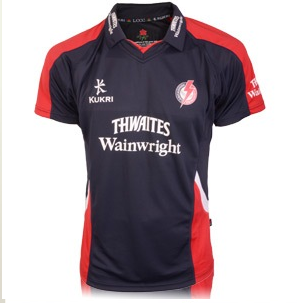
Lancashire: 

Great looking shirt, though I don’t care for the v-neck/collar combination. Classy and understated sponsor.

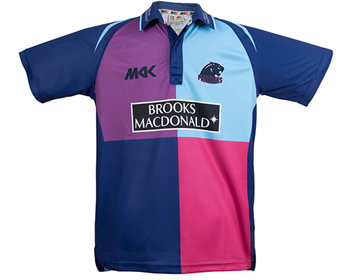
Middlesex: 

Awful, just awful. The less said about this shirt, the better.

Essex: 

Essex was absolutely HAMMERED by the Dutch today, and I am quite sure it has at least something to do with how utterly awful their kit is. Who could concentrate on batting when wearing that?

However, I must say, I enjoy the collar. Proper buttons, no v-neck.

Leicestershire:

I had a hard time finding Leicestershire’s online store. And I think it must because they know that no one in their right mind would ever want to buy their shirts. Nice wolf, nerds.

Hampshire: 

Meh. This kit is neither good nor bad. It just kind of sits there, trying not to be noticed.

Surrey:

Another simply god-awful shirt. I hate the crew-neck/collar combination – and KIA is such a gaudy sponsor. Surrey is a classy London club, they should do better.

Durham: 

It took me FOREVER to track this down, and I am still not sure if it is the right one or not. It’s really awful looking, whosever kit it is. You are hosting a test match this year, Durham, get your act together.

Scotland: 

Again, I am not sure this is right not. Nice looking kit, though.

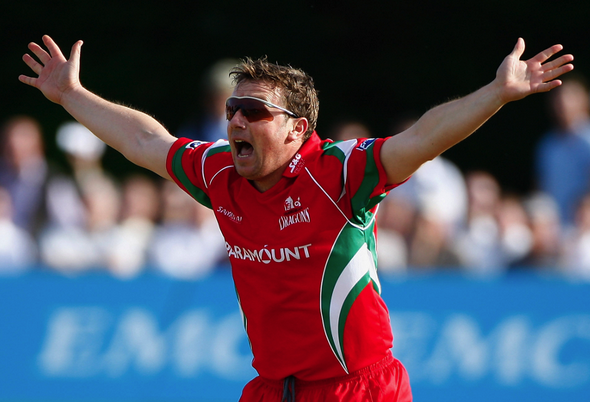
Glamorgan: 

Another one that was difficult to find. The shirt is far too loud for my tastes. Nice sponsor thought: PARAMOUNT!

Nottinghamshire: 

I assumed this shirt would be red, to match Nottingham Forest, but instead it is an ugly green and yellow combo and the collar is just too much. Also, that elk on their logo needs to go. What’s in your wallet?

Somerset: 

I honestly could not find a reliable image of Somerset’s 2012 CB40 shirt. Seriously. They automatically finish dead last.

Sussex:

Yes, this was the best image on Sussex’s official website. While their t20 shirt is actually quite nice looking, this is is rather ugly, mostly thanks to the sponsor’s logo.

Warwickshire: 

This their T20 shirt, but the only CB40 merch they had on their site was a baseball cap. I posted this picture anyway, not sure why.

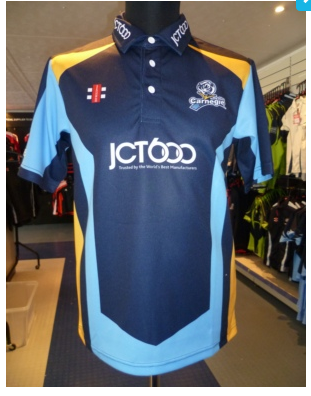
Yorkshire: 

Not a bad looking shirt, overall. Though I could do without the yellow striping. I like that they took the picture right in the store, probably with the Marketing Assistant’s iPhone.

Unicorns: 

Another no-show, another last place finish.

Derbyshire: 

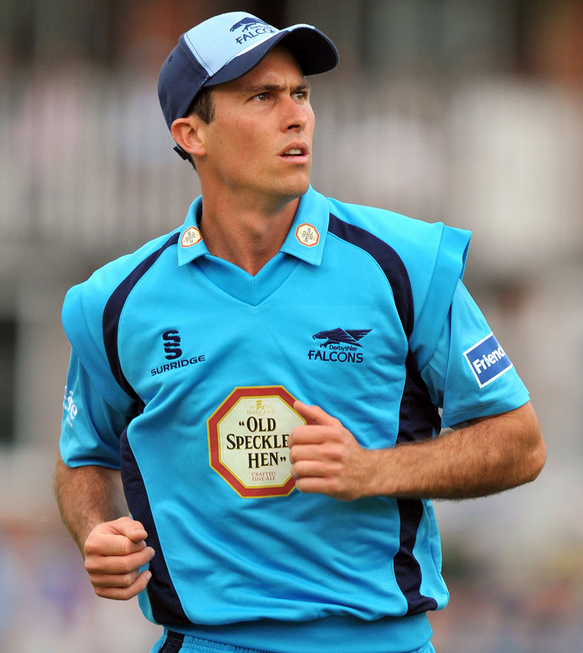
This is last year’s shirt, their site only had the County Championship and FLT20 shirts. I decided to post it anyway, because it is one more example of how a terrible sponsorship logo can ruin an otherwise okay shirt. And I like Old Speckled Hen.

Kent: 

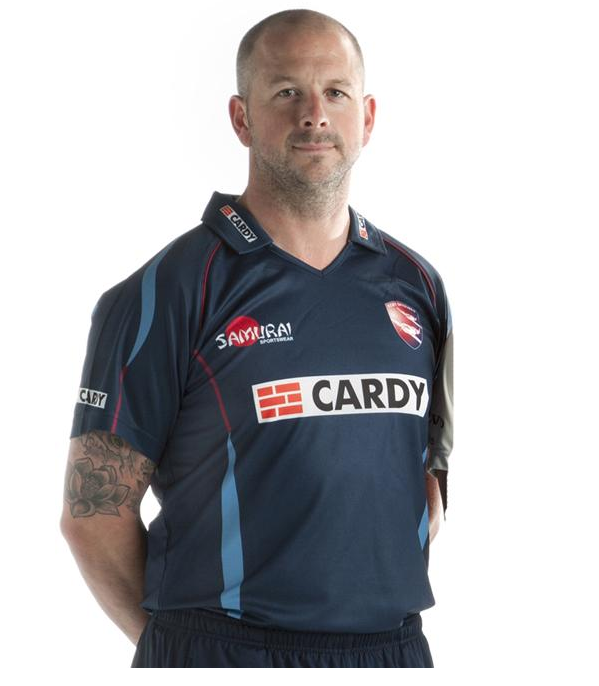
Ugh. Who designs these things? (I am talking about the shirt).

Northamptonshire: 

And another one I could not find. Though I am sure it is another maroon monstrosity, just like last year.

*

And that’s it. What a collection of terrible, terrible shirts. And what a collection of god-awful websites.

The winner of the 2012 CB40 Fashion Show? Gloucestershire, with Lancashire a close second. Honorable mention goes to the Netherlands.

The losers? Us fans, and me for having to wade my way through those seriously nightmarish websites.

I understand that these clubs operate on shoestring budgets, but web design is one thing they should be spending money on, as far as I am concerned.

In American sports, all the teams in the big leagues have cookie-cutter websites: they all the look the same. The Minnesota Twins’ looks just like the Cincinnati Reds’, for instance. And while I normally would smile on the ECB for allowing their teams to develop their own unique brands, sometimes you have to err on the side of convenience and just make all the sites look the same. You would probably sell more shirts, at the very least.

Also, geez, for crying out loud, is it that difficult to design a decent looking one-day shirt?

The answer is a resounding YES, from what I can tell.

I am excited about the FLT20 division, however. Look for that in June.

Flip-Flop

There has been a lot of talk today about how next month’s European Football Championships are going to be held in countries well known for having racist football fan groups: Poland and Ukraine.

It’s not exactly breaking news, of course, but a special report on BBC this evening reignited the discussion. Former Arsenal defender, Sol Campbell, made the most newsworthy comments in an interview for the documentary: saying that fans of African descent that travel to the tournament could come back in coffins.

Britain’s Foreign Office had already issued a warning to those traveling to the tournament to take extra care. And Arsenal players Alex Oxlade-Chamberlin and Theo Walcott will not be bringing their families along, out of fear for their safety.

Reading all of the tweets and the articles today got me thinking, or rather, rethinking, my post from a few days ago about politics and sport.

In the original post, I derided the mixing of politics and sport, that it led too often to Munich ’72 or boycotts like Los Angeles ’84 that do nothing but punish the athletes. That, sometimes, yes, sport can heal and teach and transcend (Jesse Owens, for example) but we as sports fans were all better off if the two segments of modern society were kept separate from each other, that world leaders should not use sport as a weapon, and that sporting bodies should not preach from the football pitch.

And, it seems, in this case, unfortunately, UEFA agreed with me. Instead of telling Poland and Ukraine to get their houses in order if they want to host a major tournament, they are simply handing them the tournament, hoping that the spotlight will create discussion around the problems.

Which, when you think about it, is utter bullshit. Sport is one of the most powerful weapons on the planet, and it should be wielded as such. FIFA should tell the governments of the offending nations that countries accused of racist chanting in the terraces will be banned from hosting international tournaments. In this case, FIFA needs to get involved with politics, for not doing so is a gross misuse of their power.

Unfortunately, they didn’t and a week from Friday the tournament will open despite all the outcries from around the globe.

The only other realistic options are for the fans to stay home, or for the athletes to stay home. Neither of those are fair, honestly, when you think about it, as you would be punishing the wrong people; and we are too late anyway. The tournament is going to go on.

The point of this post is that I was wrong. Well, half wrong. Sporting bodies need to involve themselves in local politics. However, at the same time, keeping political bodies out of sport is imperative to the health of sport and athletics. It is not a two-way street, in other words.

And so what does all of this have to do with cricket? Well, not a great deal, but cricket has its racist past well: the rebel tours of South Africa, and Andrew Symonds, and the USACA, but I am not going to dive into that deep of the pool. It’s a post for another day. The point of this post was the correction above, and the reversal of my earlier stance. Thanks to the original commentors for sowing the seeds.

*

Also, in another bit of backtracking, I updated my post from this morning about cricketers killed in wars. I had kinda phoned it in, and they deserved better than that.

Captains

England beat the West Indies in Nottingham today; and in doing so won the test series 2-0; and will remain the number one test side in the world.

It was professional and it was efficient. When firing on all cylinders, and when they are playing at home, this English test side is a machine.

The biggest positive for England, in my opinion, was Andrew Strauss getting back into the runs. Cricket, like most sports, needs a leader on the field; and when that leader is struggling, I think it affects the entire side. But dropping him was not the answer either, as captains need to be long term fixtures in the side; and England have a long term problem when it comes to captain turnover:

Since they first started playing test cricket in 1877, England have had 79 different test captains. That works out to a new captain once every 20 months or so. In comparison, Australia, who has been playing test cricket just as long, have only had 43 different test captains.

Australia’s test winning percentage since 1877: 43.6%

England’s test winning percentage since 1877: 35.63%

And so the point here is: what’s good for Andrew Strauss is also good for England. They are going to need him playing confidently later this summer against South Africa as well as when they travel to India this fall.

I firmly believe that those two test series will define this team’s legacy.

*

Today is Memorial Day in the United States. It was originally known as Decoration Day to honor Union soldiers killed during the American Civil War – but in the 20th century the holiday was extended to cover those killed in all American conflicts.

I talk a lot about war and conflict here on LimitedOvers, mostly because the countries involved in cricket have bloody pasts. But I have never really talked about all of the cricketers killed in wars, mostly the Great War and World War II. And while none of them are American, this is a cricket blog, and so I thought I would take the time to honor the test cricket playing soldiers that lost their lives fighting for their country:

In the Great War, 12 cricketers with test caps were killed:

Colin Blythe, England, died on 8 November, 1917, near Passchendaele, Belgium

Major Booth, England, died on 1 July 1916, near La Signy Farm, France

Frederick Cook, South Africa, died on 30 November 1915, Cape Helles, Gallipoli Peninsula, Ottoman Empire

Tibby Cotter, Australia, died on 31 October 1917, near Beersheba, Palestine

Reginald Hands, South Africa, died on 20 April 1918, Boulogne France

Kenneth Hutchings, England, died on 3 September 1916, Ginchy France

Bill Lundie, South Africa, died on 12 September 1917, near Passchendaele, Belgium

Leonard Moon, England, died on 23 November 1916, near Karasouli, Salonica, Greece

Claude Newberry, South Africa, died on 1 August 1916, France

Arthur Edward Ochse, South Africa, died on 11 April 1918, Middle Farm, Petit Puits, Messines Ridges, France

Reggie Schwarz, South Africa, died on 18 November 1918, Etaples, France

Gordon White, South Africa, died on 17 October, Gaza, Palestine

In World War 2, nine test playing cricketers were killed:

Dooley Briscoe, South Africa, died on 22 April 1941, Kombolcha, Ethiopia, Italian East Africa

Ken Farnes, England, died on 20 October 1941, Chipping Warden, Oxfordshire, England

Ross Gregory, Australia, died on 10 June 1942, near Gaffargaon, Bengal, India

Arthur Langton, South Africa, died on 27 November 1942, near Maiduguri, Nigeria

Geoffrey Legge, England, died on 21 November 1940, Brampford Speke, Devon, England

George Macaulay, England, died on 13 December 1940, Sullom Voe, Shetland Islands, Scotland

Sonny Moloney, New Zealand, died on 15 July 1942, Ruweisat Ridge, El Alamein, Egypt

Maurice Turnbull, England, died on 5 August 1944, near Montchamp, France

Hedley Verity, Englands, died on 31 July 1942, Caserta, Italy

Each of the links goes to their Cricinfo entry. Each one is worth your time.

Ken Farnes of England was arguably the most famous cricketer killed in war. He was born in 1911 and played in 15 tests, taking 60 wickets for an average of 28.65. He was Wisden’s Cricketer of the Year in 1939.

In 1940, he joined the Royal Air Force. He was killed when his plane crashed in Oxfordshire during a training exercise.

Update: thanks to Martin of Very Silly Point for pointing out that Hedley Verity has a better case for being the most famous cricketer killed during wartime.

Test cricketers are not even the tip of the iceberg, of course, and unfortunately, as countless first class cricketers were killed in both wars. Cheers, boys. Hopefully, wherever you are, the pitches are lively and the beer cold.

Enjoy your day off, America.


A Tour of West Bridgford

One of my favorite things to do when I have a bit of spare time is Google Streetview the neighborhoods around cricket grounds. And since this morning we are in Nottingham, and the pitch is an absolute road and Strauss and KP look to bat all…day…long…I thought I would take a little tour of the streets around Trent Bridge – and since it is Saturday, I thought I would take my readers along with me.

Our big blue ball. There’s the UK, and in there somewhere is Nottingham, Trent Bridge, and drunkards in fancy dress.
Now, of course, we are zoomed on the center of the known universe. There’s the city of Nottingham, about a two hour drive north on the M1 from London.
The city of Nottingham. Founded in 600, gained city status in 1897. Population: a bit over 300,000.
The three stadiums in Nottingham. That’s Meadow Lane, north of the Trent River, home to Notts County Football Club. Across the river is the City Ground, home to Nottingham Forest Football Club. And just south of there is Trent Bridge, the cricket ground. The latter two grounds are technically in the suburb of West Bridgford.
Here we are on Hound Road, the ground is to our right, behind what looks to be a row of professional buildings. Looks also to be one of those lovely Autumn afternoons. Hopefully there is football happening at the City Ground…
Now on Fox Road (I am sensing a theme.) There’s the new stand to our right, looking like a space ship in comparison to the lovely old brick wall that surrounds it. And still the same lovely day.
View of the Trent river from the London Rd bridge. Trent Bridge is to our right.
Looks a bit stale, eh? Not exactly the “proper test ground” Ian Prior spoke of yesterday. Not from this angle anyway.
Mister Pizza, a curry joint is to our left out of the picture. We are on Musters Road looking north toward the ground. There are a lot of phone booths in England still.
Roseberry Avenue, a tiny cul-de-sac smack dab between Trent Bridge and the City Ground. I would like to spend a year living on this street.
From the banks of the Trent River. There’s the London Rd. bridge.

And, hey, that’s Trent Bridge’s neighborhood. Not overly attractive, but nicer looking than the neighborhoods that surround American sport stadia.

I enjoyed this post, expect more like it in the future.

*

In my post from a few days ago, about England’s short lived reign as the number one test team, a reader gave me a bit of a hiding in the comments for making overly presumptive statements without a point of reference. Maybe his points were justified, or maybe not, hard to tell.

Now, I don’t mind being put in my place, and I freely admit that most of my readers have more cricket knowledge in their pinky toe than I do in my whole body, but that isn’t going to stop me from having opinions, or making bold statements. Otherwise this blog will just be: hey, cricket’s great, right!?

That said, I do hope my readers take my statements with a grain of salt. This is a cricket blog, but it is not meant to be taken too seriously. It is more of a “lifestyle” blog, rather than a serious nuts and bolts site. I write about grounds and history and fashion. When I do actually get into the guts of a day’s play, I realize that I am out of depth every time – and I openly invite all readers to comment and correct me or argue with me when they feel like it. Please don’t shy away from doing so because I am so obviously ignorant of the sport or because this blog normally enjoys the “lighter” side of the game. I enjoy being challenged, and I enjoy being corrected. It’s how we all learn.

(I put lighter in quotes because I do write a lot about war, and nuclear weapons, as well.)

And I stand by my statement from a few days ago: despite what is happening today in Nottingham, this England team has yet to prove to me that they are one of the greats. But Strauss getting back in the runs is a good sign, and they still very much have the potential to be one of the greatest teams in the history of test cricket.  Fact.

*

Working on another longer post for later in the weekend. Keep an eye out. And cheers to all my new readers, it has been a busy couple of days, traffic-wise, here on the blog. Thanks again to those that retweet and reblog. This blog is a real joy, even when I take a hiding in the comments.

The Legend of Pradeep Mathew, a Book Review

This article originally appeared on The Sight Screen and is republished here with permission.

*

A few weeks ago, I was asked by Graywolf Press here in Minneapolis to read and review a novel about Sri Lankan cricket that they were releasing. I jumped at the chance, of course.

I read The Legend of Pradeep Mathew by debut author Shehan Karunatilaka, winner of the 2012 DSC Prize for South Asian literature, from four different points of view: that of a fan of great fiction, that of a fan of cricket, that of an American fan of cricket, and that of a world history buff. The book delivered on all four fronts, I am happy to say, and I would highly recommend it to my cricket loving friends as well as to my literature loving friends and my history loving friends – for while the book has cricket as its bones, the novel’s flesh and personality transcend sport to explore the troubled history of Sri Lanka, as well as the themes of love, regret, alcoholism, and fatherhood.

The story, like cricket, is a simple one – on the surface. An aging, failed Sri Lankan sportswriter, Wije, is drinking himself to death, while simultaneously researching and trying to write the biography of his country’s most talented (and fictional) spin bowler, Pradeep Mathew, who only played in a handful of games in the 80s and 90s before disappearing forever.

In search of the Mathew’s ghost, Wije teams up with his best friends to track down and interview Sri Lanka’s cricket coaches, players, commentators, and sportwriters, as well as Mathew’s lovers, friends, and teammates. Along the way he is thwarted by his drinking, and his estranged son, and his suspicious wife. He encounters lunatics, terrorists, and six fingered bowling coaches.

The story, as I said, is a simple one, but the book is brilliantly written, and the characters are all likable and endearing. You will grow to love Jonny, for instance, the homosexual ex-pat whose side story is the heart and soul of the novel. And the author’s descriptions of Colombo make you feel as if you are right there with Wije in the back of a tri-shaw, drunk again, chasing phantoms.

It is heartbreaking, and it is sad, and it is funny. And while it meanders at times, and while it feels a little loose in places, well hey, that’s test cricket, that’s the way it is supposed to be.

And speaking of cricket: the book made me fall in love with the sport all over again. Wije and his friends are positively mad for the game, and reading about people who love something even more than you do is truly a fun experience. Even the most fanatical cricket fan will take something away from the cricket talk in this book.

Further, as an American cricket fan, and therefore new-ish to the sport, I learned a great deal about the intricacies of the game, about spin, about the legends, about what it is to truly be a cricket nut.

And, finally, the author talks a great deal about Sri Lanka’s history, and he is not all that subtle about the fact that the country that he loves is screwed up beyond repair. Sri Lanka has a remarkably sad and violent and interesting history, one that very few outside of Southeast Asia know much about, and so the novel delivers an important lesson in Sri Lankan history to the reader, one which I greatly appreciated.

In the end, the book is about a cricket, about friendship, about ghosts, and about hardship. It is about sport and how it rightfully transcends history; and simultaneously it is about history and how it rightfully transcends sport. It is about God, it is about sadness, and it is about spin bowling. That surely sounds like a lot of balls in the air for the author, but he successfully juggles them all.

It is a book for those that love cricket, for those that love history, or for those that love good books. Thankfully I am lucky enough to be in all three categories.

The book is available in the states via Graywolf Press. Do check it out!

The Cook and The Bell

Yesterday morning, Minneapolis time, England won their first test match of the international summer, thanks to a calm and efficient run chase from Alistair Cook and Ian Bell. Watching them grind down the West Indies was neither fun or sexy, but it accomplished the ultimate goal: it put a check mark in the win column for England.

The combatants now move on to Trent Bridge, in Nottingham, where most pundits are forecasting a comprehensive English victory.  Again.  Just as they did before the Lord’s test, just as they did before the Sri Lanka series, and just as they did before the Pakistan series.

But I don’t see it happening. And sooner or later, cricket writers in England are going to have to come to grips with the fact that this is simply a good team, not a great team, despite their record of the last 18 months.

Most recently: they drew 1-1 with a weakened Sri Lankan side and were whitewashed by Pakistan in the UAE.

Sure, last summer they beat India 4-0, but I think it was pretty clear that the Indian players had given up after the defeat at Lord’s. Before that, England limped to a 1-0 series defeat of (again) Sri Lanka – thanks only to a tremendous collapse by their opponents in Cardiff.

And so since the end of the 2011 Ashes, England have played 13 tests, wnning seven, drawing two, and losing four. A winning percentage of .538 and a win/draw versus losing percentage of .692. Over that same period, they averaged 39.41 runs per wicket and 3.48 runs per over.

To compare, between January 1st 2000 and the end of the 2011 Ashes series, England played in 155 test matches, winning 70, drawing 41, and losing 44. A winning percentage of .451 and win/draw versus losing percentage of .716 – the latter only marginally better than the same stat since the 2011 Ashes. During the same time period, they averaged 35.95 runs per wicket and 3.25 runs per over.

And what does all of this tell us? That England have learned how to turn draws into wins.

Now that is nothing to sneeze at, teams that turn draws into wins are the teams that win championships, no matter the sport.

And it seems they have accomplished this by scoring a few more runs per over, and a few more runs per wicket.

Efficient run accumulation. Just ask the West Indies if a few more runs an innings makes a difference.

But that’s all that it is: efficient. Cook, Bell, Trott: all of them will remorselessly accumulate runs in an efficient manner. But at the end of the day, the team has no heart, no soul. And it will surely grate on the nerves of the saber-heads to read this: but it’s the heart and the soul that turns losses into wins, not just draws into wins, but losses into wins.

And that’s what England are lacking.

I do very little actually analyzation of play here on the site. But I have watched a great deal of England cricket over the years, and while this is a good team, it is by no means a great team. That is just my opinion, of course, but great teams pull a win out of the hat in the UAE, great teams don’t let the West Indies bully them at Lord’s, and great teams don’t have a captain that can’t score runs.

It might sound as if I am being overly critical here, and that is probably true, but you have to ask yourself: if the 2005 Ashes squad played the current squad, who would you back in a five test series?

The former, every day of the week and twice on Sundays.

If this current incarnation of England cricketers want to be considered great, if they want to be talked about a generation from now when old men gather to discuss the greatest squads of all time, then they need to go to India this fall and WIN. That will make them one of the greats.

*

My review of The Legend of Pradeep Mathew is finished and will be live on The SightScreen later tonight. Keep an eye out for it.

I will repost it here in the next few days, as well.

The Night’s Watch

When it comes to European sport, there are many intricacies that American sports fans simply do not get: draws, added time…etc.  And surely the nightwatchman would be on that list, as well.

Today, in London, with England already a man down and the light fading, Strauss and Flower sent out Jimmy Anderson, a bowler, to bat instead of Jonathon Trott – he of 48 test match innings, and a test average of over 50 runs. The theory being that if you lose Anderson due to bad light, it is better than losing a Trott due to bad light.

Now, I guess, it makes sense, on paper, but it is also a terrible strategy, if you ask me.  If you can’t rely on Jonathon Trott to survive a few tricky overs at the end of the day, then when can you rely on him? Only on sunny days in perfect conditions on flat tracks? Poppycock. He is one on the most reliable batsman in the world, don’t doubt his abilities by sending a bowler out there to do his job.

Batting, like everything else, is about momentum and confidence, and putting in Anderson to bat robs Trott of both – and to wit we saw Roach nearly get Trott out LBW with the first delivery he saw. If you don’t think Strauss’s decision was on Trott’s mind that first ball, than you are sadly mistaken.

Of course, the nightwatchman strategy had already backfired on Strauss the ball before, as Anderson had nicked to Ramdin, and England were 10-2 and had to expose Trott anyway.

Back to Americans, however, and there are similar such strategies in American sports: sacrifice bunts come to mind, as does the intentional walk. In gridiron football, there is taking a knee, the prevent defense, and heck even punting shows a lack of confidence in your offense. But, personally, the nightwatchman takes the cake when it comes to silly, aggravating sporting decisions, and it is just one more reason Americans will never truly embrace cricket.

ALL OF THAT SAID: I love the nightwatchman. Because I like to say nightwatchman. I think it is my favorite sports term ever.

I know you all agree.

*

I have been reading the Game of Thrones series (stop laughing). In the books, there is a group of men called the Night’s Watch that stand guard on a 700 foot wall of ice, protecting the realm against the Wildings and “Others” and giants that live beyond the Wall. It is a really fun part of the book, and I think the storyline that the author enjoys writing about the most.

Anyway, when a man decides to join the Night’s Watch, he is said to have “taken the black” because all those in the Night’s Watch wear all black, every stitch. So I think two things: in cricket they should make the nightwatchman wear all black; or, failing that, the TV commentators should at least use the phrase figuratively: “Anderson has taken the black.”

Forgive me, I have a bit of a hangover and I am watching Italian football.

*

Even England fans must have enjoyed seeing a reinvigorated West Indies on the pitch at Lords again. Watching Roach and Edwards steam in over and over again was like being transported back in time. And Strauss’s decision to bring in Anderson over Trott after edging to gully is evidence of his respect for the Windies new ball attack. Tomorrow will be fun. It would be a remarkable and famous win for the visitors if they can pull it off.

*

Speaking of ghosts: Here’s this I found:

*

This is my 200th post on Limited Overs. Huzzah.

Six Hours On

Just a quick post tonight, for I need to get to bed early, as test cricket returns tomorrow, with England v West Indies at Lord’s. First ball is in less than six and a half hours.

Although, I must say that since I have been reading a flawed yet lovely book about Sri Lankan cricket (look for a review in the next day or so), I find myself more in the mood for some Southern Hemisphere swashbuckling cricket than I am for St. John’s Wood and a watered down West Indies.

But Sri Lanka v Pakistan at the Galle International stadium is still over a month away, and tomorrow’s match is still test cricket, and England are still the number one test team on earth, and so I will wake early, and I will work from home so I can watch, and I will enjoy every moment.

As I mentioned on Twitter, I see the series ending 1-1. Expect a weather affected draw at Lord’s, double centuries from Cook and Trott and an England win at Trent Bridge, and a thrilling and famous win for the West Indies in Birmingham.

You heard it hear first.

The English summer begins tomorrow. Huzzah!