And watched out for a simple twist of fate

Think about where you are.

Now think about how you got there.

All the things that had happen for you to be sitting where you are right now. All the things that had to go right, all the things that had to go wrong. A million billion moments that broke one way when they could have broken the other, all of them leading you to the place you are at this very second: sitting in your cube, or on your couch, or in your bed, or in someone else’s bed.

I met my now ex-wife at a Halloween party in South Minneapolis in 1999 that neither of us were supposed to attend. I was friends with someone who was friends with someone who was friends with the host and I got dragged along at the last minute.  She knew the guys in the band that were playing the party and got asked at the 11th hour to help them drive their equipment into the city. We happened to be waiting in line for the bathroom together. The rest is history. We were together for 19 years.

Over those 19 years, I thought about that night a lot. All that had to happen for me to get there, for her to get there, for us to meet. All the twists and turns that led us to that party and in line for that upstairs bathroom at the very same time. And how different my life would have been if, say, one tiny thing had gone differently and one of us never made it to the party. I would lie awake at night and think: I could have never gone to that party, and we never would have met, and nothing would be the same. And it would have been so simple, so easy: one tiny decision altered and one of us isn’t there that night. Nothing monumental either, not some big life choice, but something minuscule: what if my friend and I decide to get a drink before heading to the party? That’s all it would have taken.

That night, and all that got me there, changed my life forever. I am 42 years old. That night defined my life for 19 of them. And will define my life for the rest of my days, even though we are no longer together. Because without her other life events don’t happen: jobs, trips, college, dogs, friends.

Everything.

One night. A lifetime. And everything in it. For good or for bad, it’s reality.

Today in Dubai India beat Bangladesh with the last ball of the last over. 50 overs; 300 deliveries; a pitch of random holes, seams, bumps, creases; wind; humidity.

Nine batsmen, six bowlers, 11 fielders. Humans. Flawed, perfect humans.

All of that. But still. Exactly 300 deliveries later, India win, somehow. All that could have changed, every ball that could have zigged when it zagged. Every mistake, every moment of brilliance, all somehow leading them to that last ball, those leg byes trundling down toward the boundary rope, giving India the Cup.

It’s amazing, when you think about it. All that could have been different, yet somehow wasn’t.

What a game.

What a life.

What a world.

My ’98 booming with a trunk of funk

India beat Pakistan by eight and then nine wickets this week in the Asia Cup. These two games ended a string of matches between the two old enemies that have been rather lopsided. There were the two Champions Trophy matches in 2017: one won by India by a bucket of runs and one won by Pakistan by a bucket of runs. Before that was their meeting in the 2015 World Cup which India won handily.

This mini-string of matches have led many to state that the India vs Pakistan rivalry — once the Yankees vs Red Sox of the cricketing world — is no longer living up to the hype.

Which is, of course, a dumb thing to say. Mostly because it’s the smallest of small sample sizes. The two countries have played each other in 131 ODIs, so the last five matches represent less than 4% of their total ODIs played. Further, they’ve also gone head-to-head in 59 Tests and eight T20s, so those five matches account for just 2.5% of all their matches played when you bring those two formats into the occasion. Not living up to the hype? C’mon. It’s five matches.

Also, though, India vs Pakistan doesn’t need to be a close match for it to live up to the hype. It’s become way more of an event than just a sporting contest. Sure, maybe the neutrals are a little grumpy, but Indian fans are still super happy, and Pakistani fans are surely still bummed. Lopsided string of matches or not, the winners are always fine with the result, boohoo that the neutrals didn’t get their classic.

Which brings me to my main point about this: what in sports ever lives up to the hype? How many snooze-fest World Cup finals have we all sat through? No matter the sport? We surely all remember the lengthy and intense buildup to the 2015 Cricket World Cup final, only to watch New Zealand’s danger man, Brendan McCullum, get bowled by Mitchell Starc with the fifth ball of the first over, essentially sucking all the life out of an eight hour match in the first minute. That about sums up most finals, most Super Bowls, most sports, and, yeah, you knew where this was going: most things in life.

Life rarely lives up to the hype. No matter what the event or the outcome. The joy is in the anticipation, the excitement. There’s little in life where the joy after an event exceeds that that existed before the event. Think of all those Christmas mornings. Those graduations. Those weddings. I don’t have kids, but I’m gonna bet that childbirth is probably the one thing in our lives that actually lives up to, or even exceeds, the hype that existed beforehand.

Public Enemy famously rapped: don’t believe the hype. But yeah fuck that. Believe the hype. Revel in the hype. Wrap yourself in the hype and wring out every last damn drop. Don’t fear the hype. Love the hype. Have faith in the hype. Because what comes next is probably going to suck, and so the hype might be the only joy you get during your long life on this dark little planet.

Anticipation is joy. Joy is anticipation. Don’t turn your back on it, it might be all you get.


Only words

The Asia Cup is happening, but I haven’t watch a single ball bowled. In fact, over the last two years, I have watched a grand total of zero hours of live cricket. It might even stretch further back from that. I think I might have cancelled my Willow subscription (for the second time) in late 2015, or thereabouts. Sure, I have listened to live cricket here and there, but I haven’t watched any on TV or on a stream in a very long time. I just haven’t had the notion to pony up for Willow, and ESPN doesn’t show as much as it used to, and even if I resubscribed for Willow I wouldn’t be able to watch much as I currently don’t have internet in my place (right now I am leaching off the wi-fi of the bakery next door).

And that’s weird, right? It’s weird to follow a sport and simply never watch it. Who else does that but US based cricket fans? Can you imagine a diehard NFL or NBA fan who loved the game and followed it closely but never watched a down or a free-throw?

Despite the weirdness of it, I get along just fine. Via articles on Cricinfo, and ball by balls, and the various blogs that I read, and the social media feeds of cricketers and teams and the ICC and reporters and fans. I feel connected to the game, like I am a part of it, like I know what’s going, even though I never, ever, watch it live. And I think that’s because cricket is the most literary of all sports. You can describe the action using language so accurately that you don’t need the actual images to know what it is going on:

Hasan Ali to Sharma, SIX runs, front-foot pull and it soars into the crowd behind square leg! Rohit is insane with this shot. For half a second it seems like he’s hurried, that the ball gets big on him, that maybe he’s even top-edged it. But it’s only as the ball keeps climbing in the air do you realise the timing he’s got on the ball.

I mean. We can all picture that pretty closely, can’t we? Sure you miss the atmosphere provided by television or radio, but as far as what is actually happening on the field, you have a solidly good idea in your head as to what it looks like. Cricket is simply one of those games that doesn’t need images or sounds, which is rather remarkable when you think about it. Some sports require both — like soccer, of instance — and some only require sound (baseball being the prime example) — but cricket is the only sport I can think of that requires neither. Just words.

As a fan of words, of language, I think that’s pretty damn cool.

But, I will admit, I miss watching the game. I miss the green and the movement and the pace of the game when broadcast on TV. I miss watching fast bowlers steam in, I miss a perfectly placed shot, I miss the images of crowds on the other side of the world. But when I have an active Willow subscription, I must also admit that I don’t watch it as much as I always assume I will. I always have great aspirations to watch tons and tons of cricket. Stay up late with tea and Twitter and watch matches around the globe. But I rarely do. I will watch a bit of the English summer when I can, and then a few matches in December in Australia and New Zealand, but then life gets in the way, I get tired, and I end up reading or watching Battlestar Galactica for the umpteenth time.

But. Despite that. I think when I finally do get the wi-fi up and running here, I will re-subscribe (for the third time) to Willow. I will watch what I can and not feel guilty if I don’t watch as much as I’d like. I mean, South Africa, India and Sri Lanka will be in Australia this fall/winter, and the latter two will also be in New Zealand.

Boxing Day Test at the MCG on Christmas Day, anyone? Yeah, I thought so. See ya on Twitter, where we will write as we watch, giving words to the action for those who can’t see.

**UPDATE**

After reading Neeran’s comment below, it got me thinking: is this a new thing for cricket? The fact that it only needs words? And I mean new as in the last 25 years? Or was it born of necessity not that long ago? Born of all the ex-pats from cricket loving countries all over the world relying on early ball-by-ball commentaries to follow the game?

It’s a bit of a chicken-or-egg situation. Does cricket work in text only because people were forced to do it and do it very well? Or were people able to do it well because the game doesn’t really require images and sound?

Maybe I am over-thinking it.

But we can all agree that Cricinfo changed cricket forever, for good or for bad, and Cricinfo exists solely because some grad students in Minnesota wanted to follow the matches, and were forced to do so via simple text. And so while the game has always, throughout its history, attracted great writers and inspired great writing, maybe the dawn of the internet and the mass migrations of people and the requirements of ball-by-ball commentary simply made it more literary, and less in need of anything other than words?

And to think. All of the great cricket writers around today, be they bloggers or journalists or both, were their writing chops improved, sometimes greatly improved, by reading all those text commentaries on Cricinfo? I think the answer is a resounding yes.

It’s a funny old game, as they say, and once you start peeling the onion, you really get to see all the countless layers. It’s not just a game. It’s not just a bat and a ball. It’s also technology and time and space and homesick college kids and a million people sitting in their cubes, watching the ball-by-ball scroll on by, changing how we follow the game forever.

Kicking around on a piece of ground in your home town

Time.

It’s a real mess. It whips by us when we aren’t even looking and before we know it weeks, months, years, decades have passed. And what do we have to show for them? A great deal, usually, if we allow ourselves to see it all. But sometimes that can be difficult, and so all we see instead is life passing us by. Not slowly, either, but like a freight train, barreling down some distant track until it disappears in the distance.

I’ve often written how sport is wonderful as it’s something we can all mark time by. Especially sporting events that don’t take place every year, but every four years, like the Olympics or World Cups. We watch the games and the matches and we think about where we were four years prior, and where we will be at the next World Cup or Olympics, four years down those aforementioned railroad tracks.

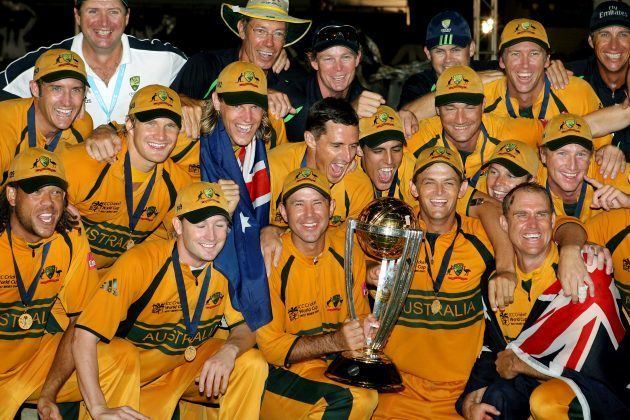
The Cricket World Cup takes place next summer in England, which means it will have been 12 years since the first Cricket World Cup I paid attention to, 2007 in the West Indies. A laughable tournament but one that caught my attention and held it square. 12 years was a very, very long time ago, but it also of course feels like yesterday, like I went to sleep one night as a 31 year old kid and woke up a 43 year old old man. I remember watching England and India crash out, I remember watching Malinga rip through the death overs like death itself, I remember a crushing Australia win in the final, Ponting and Gilchrist batting on and on and on, the latter supposedly with a squash ball in his glove, and the Sri Lankan fielders complaining about them trodding on the wicket, and the farcical ending via Duckworth/Lewis. A farcical ending to a farcical World Cup, but one that I remember with great joy and nostalgia.

Then we all blinked and it was 2011 and we were all watching India lift the Cup in Mumbai. It was less a victory than a coronation. That’s not to say that they didn’t deserve the win, that they didn’t grind out the Ws against good teams, but from the opening ball to the last over, you could just feel it was India’s tournament to lose. God smiled on them, and Sachin smiled back. As did the whole of India. That was seven years ago. Seven. I hadn’t even started this blog yet. Obama was still in his first term. The world was still reeling from the global recession. We all looked back as India lifted the Cup and thought about 2007,  about all that had happened and the time that had passed us by, and we looked ahead to 2015, and Australia-New Zealand, and all that potential, all of that time, all of that potential for something magical to happen in our lives.

Of course, it didn’t. And, of course, it did. Four years is a long time. The years between the final at the Wankhede and Australia’s defeat of New Zealand at the MCG produced a lot of everything and a lot of nothing. I watched that final at my kitchen table on my laptop with bottles of New Zealand’s MOA beer. And I thought about all that happened in the last four years, and during some overs it felt like life had finally started to happen for me and during other overs it felt like nothing at all had happened, that I had just spent the four years twiddling my thumbs, listening to my arteries harden, having perhaps one or two too many hangovers. Both are true. Neither is true.

And now we are all waiting for the calendar to turn over to 2019 and have it be summer in England and Wales. I will watch the matches and think back to 2015 and 2011 and 2007 and all of that potential for change and magic, and I will also feel old and worn down and wonder if it’s been worth it, about what I have to show for all those mornings I pried myself out of bed, all of that time that had passed me by.

Others though, people that have followed the game longer, will think back to the last time England hosted the World Cup: 1999. 20 years. 20 years of triumphs and little successes and hard days and time, time, time, ticking away mercilessly. They might have been children when the World Cup was last on English soil, now they are adults with mortgages and kids of their own. They will look back on those 20 years and wonder to themselves: where did it all go? Did I do okay? Am I all right? And hopefully they will look around and see positive answers to all those questions.

But even if they don’t, even if they see negatives, even if those are hard questions with harder answers, they are important questions, and important answers. We all should take a moment here and there and take stock, see where we are, where we are going. There are lots of mile markers in life that can provide that moment of reflection, but sport is a really good one, maybe the best one, because it exists outside our sphere, it is a shared experience, and so we can, unlike personal anniversaries or milestones, take comfort in the fact that millions of other people, the whole world over, are watching those closing ceremonies, those final few overs of the final, those few precious final seconds of stoppage time, and reflecting in the same way.

The world stops to watch the World Cup, and together we all pause, and look back, and look ahead.

What a gift.

Image result for 2007 cricket world cup final

Where were you while we were getting high?

There’s an article on Cricinfo this morning: What does it really mean to be Asia Cup champions? It’s a good question, and a good article, though mostly it talks about the history of the tournament, and what we might see this year, rather than actually answering the question in the headline.

But the question is a valid one, and one that could be applied to all tournaments, all series, all sports. Why do we watch? And what does it all mean?

The cynic will tell you it’s meaningless, that we are not fans, we are a product sold to advertisers. Cogs in a billion dollar machine designed solely to make money for autocrats and dictators. We dress up like kids on Halloween and cheer on mercenaries playing a game designed for children.

The cynic’s foil will tell you that people should find meaning and joy wherever they can. Be it the novels of Proust or a Seahawks game. They will see the fans of teams care with such passion that their hearts will double in size to see all that caring, an action that many feel is slowly leaving our world, replaced with the cynical constructs above. And they will tell people that sport is community, and community is sport. We rally around the home team at the local watering hole, and rally around whatever team we want on Twitter, making friends all over the world.

In truth, for most of us, it’s probably somewhere in the middle. We know we are a cog, but that’s fine, it’s our leisure time, let’s spend it at a pub with a beer and some friends. Sure, life is very short, but it’s also very long, and there’s plenty of time for pursuits that might bring more meaning — whatever that is — to our lives.

Honestly, though, can any of us really answer the question above with any real certainty? Do we know specifically why we watch, and what it all means? Why we live and die with our teams, and why we lose our shit when they lose, and why celebrate for hours when they win?

There’s a famous Noel Gallagher quote about what the words to “Champagne Supernova” mean. I can’t seem to track it down online, which means he probably never said it, but the gist of it was: people were always asking him what the lyrics meant, but he never had a good answer for them. Then one night they were playing the song in front of 60,000 people and he looks out and there’s a shirtless kid sitting on someone’s shoulders crying his eyes out and singing along to every word. “That’s what the fucking song’s about,” he concluded.

And, really, that’s how it is with sports. It’s that moment of pure joy, pure unexplainable joy. That’s what it’s about.

So to answer the question posed by Cricinfo’s copy editor:

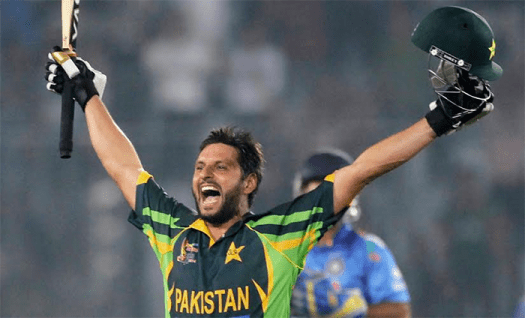
This is what it really means to be Asia Cup champion:

image2.png


A little KP, a little Freddie

Wow. Do I love this picture:

https://www.instagram.com/p/BnqhEYyAWkn/?taken-by=kp24

Freddie and KP, just 27 and 25 years old, respectively, KP just having made his Test debut two months earlier, posing in front of 10 Downing St. in a pair of ill fitting suits like two school boys who had just pulled a prank on their prep school headmaster.

Which, of course, they were.

The two of them — along with their England teammates — had pulled a prank on the whole cricketing world: beating Australia, winning the Ashes, and making England care about cricket again. They did it with substance and they did it with style. You look at that picture and you see youth, and ego, and that sense of invincibility that those two things combine to create. Bad luck injuries and controversies and the IPL and a short lived boxing career and Peter Moores were but glints in their eyes. The whole world spread out before them, nothing was impossible.

And that’s how we all are at that age, more or less. When you’re 25, even if you haven’t just won the Ashes, you still feel like you could take on the world. Aging and death are deep in the distance, and are barely concerns. You can drink all night and get to work in the morning. You can play soccer and take a hard tackle and not hobble around for days afterward. You can take risks — in work, in love, in whatever — because you don’t see consequences, you only see reward.

But you also feel like you are pulling off a prank on everyone. You are just faking it while everyone else around you has adulthood and life all figured out. You are wary of the future and scared of all that you don’t know. Time is moving fast, and the fear of life just passing you by while you try to figure out how to simply be alive and exist and be happy without the safety net of home.

One of those feelings goes away, the other never does. We are spend our whole lives feeling like we are going to be found out at any minute, that everyone will learn that we just frauds who are just faking their way through life. Meanwhile, we simultaneously lose our sense of immortality, our belief that we can do just about anything we set our minds to. It’s hard combination.

In the picture, you can see both. Flintoff, the elder statesman, who’s been playing Test cricket for seven years, who’s distant, serious stare speaks not of pranks or immortality, but of world weariness, of fear of creaky knees. While KP has the look of a total chancer, in love with the world that he is king of.

It’s the Yin and the Yang of life, of aging, of existence. And the key is to try to be both. To be humble in our fears, but to also remember that life is really damn short, and to live a life without a constant fear of consequences, to instead concentrate on its rewards. To be KP, and to be Freddie. To live in the present, to not worry so much about the future while still keeping a close on what’s to come, and to remember that we are all — every single one of us — just faking it, every single day.

Teach them how to say goodbye

There’s an infamous plot line in an episode of the American comedy series, Seinfeld. The episode is called the “Burning” and it’s the one where Jerry Seinfeld advises a friend, George, to use the old Vegas showmanship trick of leaving the room after a comedic high note. Get a good laugh? Great, say goodnight and leave the stage. Later George uses the advice and leaves a work meeting after a good joke and goes to a movie theater to watch “Titanic.”

It’s also the episode, if you’re familiar, with the “tractor story” and the where Kramer and Newman fake illnesses for Med students and Elaine accuses David Puddy of being a Christian. That’s a lot to pack into a 22 minute show.

Leaving on a high note is exactly what Alistair Cook did today in London. He strode out to thunderous applause and honestly could have just had a nice little day in the sun, but instead he batted for hours and hours, saw 286 balls, and just like he’s done so many other times, scored a quiet and attractive and game-winning ton. it was easily the perfect way to go out.

I can’t think of anything else to compare it to, in cricket or in sports overall. My first thought was Cal Ripken, Jr., who hit a home run in his last All Star Game. But that pitch was grooved and it wasn’t his last game, just his last All Star Game.

Thinking about Cal Ripken, Jr. — who famously played in over 2,600 games — got me to thinking about baseball’s original Iron Man, Lou Gehrig, who sat himself down after 2,130 games. Two days later he retired. Two years lated he passed away at only age 37.

That’s usually how it ends for sports figures. Either their careers end tragically short due to injury or death, or they hang on a bit too long. The ego that led them to their ascent of their chosen profession also contributing to their sad demise. Zidane’s headbutt. Ali’s fight against Larry Holmes in 1980. Willie Mays’ last two seasons with the Mets.

In cricket there was Ricky Ponting who looked like a dying and raging Lear in his final Tests, but he was one of the few. For some reason, cricketers know more than other athletes when to call it quits. Sachin could have held on a while longer, so could have Dravid, surely. I think Shane Warne could still bowl at the top level. But they always seem to hang it up on top.

Part of this probably has to do with the fact that the sport isn’t quite as physically punishing as say, American football or boxing (Ali had taken 200,000 hits by the time he retired), which affords cricketers the ability to remain competitive right up until the end. But I think it’s more than that. I think, more than any other sport, cricketers have a flair for the dramatic, for the poetic moments. Cook surely could have played another year or two at the international level, but doing so would have risked injury, or a drop in form leading to getting dropped, and so his career would not have ended in London on a sunny September afternoon with the scent of autumn on the wind, but it could have ended on day 3 of a rain shortened match in Bridgetown. Cook never would have let that happen.

Cricketers are like Russians, in that sense. They both love to do things the poetic way. When Russians need to duel, they pick a spot that could be the setting of a second act of an opera: a sun dappled forest hill, a sumac grove near the bend of a river, under a cherry tree as it rains it’s blossoms on them. And Cook is the same way. He never would have retired someplace utilitarian. Despite his quiet manner, he wanted London and autumn, against the side that he made his debut against.

I am being hyperbolic, of course. Cook decided it was his time, and called it quits. Like Sachin and Dravid and thousands of other cricketers have done. But still, I think it’s true that cricketers, more than other sportsmen, simply love the poetry of the game, and their actions within its confines. You see it in celebrations and in how they dress (do you really need that sweater, Stuart?). They don’t just like playing cricket, they like being cricketers, and they like acting like cricketers. The jackets at the coin toss, the gallantry of upholding the spirit of the game, and the retirement at the end of summer on the far edge of the world’s greatest city.


This is water

My sister fought — and beat — colon cancer this past spring. She was diagnosed on the fourth of July, 2017, then went through chemotherapy, then radiation, then surgery, before finally been declared cancer free. It was a long, hard year for her. Exhausting and painful. But for all those months, she kept in her mind the promise of that pure, wonderful, perfect moment of sitting in a doctor’s office on some distant afternoon and being told that the fight was over, that she had won.

But that moment never came. Sure, it happened, but it was not the pure moment of elation that she had hoped for. It was just another moment in a life full of them. Her fight was over, and part of her missed the fight. It was a few months before she was, once again, able to look toward the future, to plan, to feel good. It wasn’t cancer one moment, then no cancer the next. There was no fist pumping, no pure elation. Just life. Progressing.

Pure moments, pure joy, those really only happen in sports. Think of the moments when you received the best news of your life. News that you had dreamed about for months, maybe years. Was it a run through the streets screaming moment? It probably wasn’t. Life isn’t like that. Change, and good news, happens over long stretches of time. And when the news finally comes, it’s almost a letdown, because it’s never as good as you hoped it would be, there’s always a drawback or two, and then you miss the anticipation, the waiting, the looking forward.

This morning I read one of those Cricinfo 25th anniversary posts about Edgbaston ’05. It’s one of those matches that everyone remembers, even those of us that weren’t even aware that it was happening at the time. You hear the words “Edgbaston” and “oh-five” and you are instantly transported back in time. You see the sun on that Birmingham patch. You see Freddie Flintoff setting the place alight. You see Michael Vaughn’s worried face. You see Brett Lee’s brave final stand in that simmering cauldron, the crowd quiet and murmuring and riddled with anxiety, minutes from watching their side go down 2-0. And you hear those words and those images float through your mind, then you hear the commentary, that famous commentary:

Jones! Bowden!

It’s a perfect moment. A pure moment. The kind you only get in sports. From the brink of despair to a glittering pool of joy, all in just a few seconds.

But the best moment of Edgbaston ’05 took place shortly after that. When Flintoff bends down to comfort a despondent Brett Lee. He puts his hand on his back, and takes his hand in his. “You were fucking brilliant, mate,” he tells Lee, a look of almost sorrow on the face of Flintoff, sorrow and empathy in the face of all that joy, all that elation.

It’s a pure moment too. But not like the moment before when the ball settled into Bowden’s outstretched hand, it’s not like the pure moments you get in sports, it’s the kind of pure moment you get in life. And that’s what makes it so special, so memorable, because it reminds us of the innate goodness in humanity, in the world.

We all have such moments, when someone, sometimes a perfect stranger, reached out with kindness, or helpfulness, leaving you godsmacked with just how kind people can be, and how the world really is a good place, in the end, despite all the vitriol and hate and violence. It’s a good place, and those small, pure moments are what keep the fires at bay.

They are rare moments in sports, that’s why the Flintoff handshake stands out for us, normally sports are bravado and testosterone. But Flintoff’s empathy reminds that people are, for the most part, good. It’s a rare moment in sports, but not necessarily in life. At least, they don’t have to be. Because it doesn’t matter if you are receiving the kindness, or giving it. “Perform random acts of kindness” is a cliche, but it’s also true. You can be Brett Lee, or you can be Freddie Flintoff, no matter which the kindness will help the world keep spinning, will help keep the darkness from taking over.

So when you see someone hurting, despondent, help them. Be kind to them. But more. Be kind to everyone. Because that’s the dirty little secret that we all know but so often forget: everyone we see is fighting a war, is maybe on the wrong side of life’s tug-of-war, is feeling happiness maybe slip away forever. They have just buried their mother. Or their child was bullied at school. Or their parter lost their job. Reach out to them too. Even if you don’t know their struggle, even if they don’t look like their struggling. Reach out to them, put your hand on their shoulder, and tell them they are fucking brilliant.

We don’t get pure moments like you get in sports in our regular life. Ours are quieter, harder to see, harder to celebrate, but also way better, and far more important. There might not be a crowd cheering us on, there might not be a commentator enshrining our moments in bronze where they will live forever, but our moments collect in our hearts over the course of our lifetime, they never leave us, their light never diminishes, and they are what keep us afloat and make this a good world, a good life, one with staying for.

Edgbaseton ’05 produced wonderful cricket, moments of joy and madness, but it’s Flintoff’s kindness that made it the perfect Test. It’s not the moment of being told that she was cancer free that my sister remembers, it’s all the small kindnesses that she both received and gave over the year of her fight, those moments that kept her going, kept her smiling, kept her alive.

51 seconds. All that’s great about sports, and all that’s great about humanity.

What a moment.


The Kaepernick ad and the black armband protest

And, so, that Colin Kaepernick Nike ad. No matter what you think of him, or his protests, or anything else politically, you have to like the sentiment: be the best ever in whatever you do. Don’t be a cricket blogger, be Jarrod Kimber. Don’t be a slightly above average county cricketer, instead dredge up every last bit of your talent and become captain for England.

Of course, it’s idealism. A corporate vision of utopia. Not every kid who has a killer jump shot is going to get lucky enough to play in front of the right college recruiter on the right day. Back to cricket: Yesterday,  I was thinking about Lasith Malinga and his return to the Sri Lankan side for the Asia Cup. His unique arm action — like a kid skipping rocks on a lake — made me swoon when I first started following the game. That big fluff of hair, those wicked in-swinging yorkers breaking the legs of batsmen. And then I thought about all of those kids in the ghettos of Colombo who grew up mocking that action, and that thought warmed my heart a little. Malinga’s been playing international cricket since July of 2004. 14 years. And so an entire generation of Sri Lankans have grown up watching him bowl death overs. But then I remembered an article that Jarrod Kimber wrote a few years back:

Like many in Sri Lanka, the cricketers from Chilaw are largely invisible inside the system. There are Test-quality cricketers playing on the streets of the Hikkaduwa right now that will never play with a hard cricket ball in their life.

That’s the thing. That’s what we should all be rebelling against. The systems that keep those outside. And that’s what Kaepernick is doing, or at least that’s what he — and many others — believe he is doing: protesting against the systems that keep people down, or even, in some cases, end up killing them. He is giving a voice to the voiceless. It doesn’t matter if you agree or disagree with how he is going about it, his intentions and his actions are exposing the very systems that take away the even ground necessary for us all to be the best ever in whatever we choose to do. In that sense, the ad has multiple narratives.

*

Reading about Kaepernick of course also got me thinking about on field protests, and since this is a cricket blog, I started reading about the “Black armband protest” at the 2003 World Cup. For those interested, Andy Flower and Henry Olonga wore black armbands in a World Cup match for Zimbabwe, played in Zimbabwe (the country hosted six group stage matches), against Namibia. They were protesting the death of democracy in Zimbabwe (Mugbabe was nearing the height of his powers) which included the seizure of white owned farms as well as human rights abuses that the EU had punished the country’s elites for just recently.

The planning for the protest was quite in-depth, and included a statement partially written by an attorney delivered just before the start of the match. Farcically, both players neglected to actually bring black armbands to the ground, so were forced to use black electrical tape instead. Some of the crowd even joined in on the protests throughout the game as they learned of the statement, putting their own black armbands on. Flower batted for 39 and Olonga took no wickets for 8, as Zimbabwe won the rain shortened match.

As we all know, political statements on the field during a cricket match are a violation of the spirit of cricket, and so the hand wringing commenced almost immediately. The reactions were, at first glance, similar to the reactions to Kaepernick’s protests: a slap on the hand from an ineffectual governing body, and loud consternations from the Zimbabwean president and his party, while the support from fellow cricketers and the international press was largely positive. The similarities stop there though. Olonga was called an “uncle Tom” and was charged with treason (one fan wearing an armband at the match was also arrested and charged, but 200 fans wore them at Zimbabwe’s next match), he was sacked by his club, he received death threats, and was dropped by the national team for the remainder of the group stage, playing only one final match for his country (a super six match) before retiring — and was even kicked off the team bus.

Flower, for his part, while the reaction from certain parts was equally acrimonious, he was also considered undroppable and played for Zimbabwe the remainder of the tournament. And while he didn’t wear a black armband, he did wear black wristbands or white armbands. He had already announced his retirement from the national team, and so received no further punishment.

Both men eventually settled in England, and were awarded honorary lifetime memberships of the Marylebone Cricket Club.

Now, it’s a complicated issue. And one that has come up in the news recently, only in South Africa instead of Zimbabwe. And I won’t begin to try to understand the minutiae of Zimbabwean politics in the early 2002s. But what Flower and Olonga were attempting to do was the same thing that Kaepernick is trying to do: give voice to the voiceless and expose the systems that keep people down. Right or wrong, their actions were at least an attempt at virtuousness. An attempt to use the stage they were given to shed light on an issue that exists mostly in shadow. Just like Tommie Smith and John Carlos. Just like Věra Čáslavská. They had the biggest stages in the world, and they used them.

People get crispy about mixing politics and sport, or politics and music, or politics and just about anything. But usually they are only against it if the athlete or musician is expressing an opinion that they don’t agree with. We are all guilty of this. Both sides. But we shouldn’t be. As long as the opinion or protest is valid, it should be not just allowed, but celebrated. The world is filled with far too many people not just outside the system, but who are being crushed by the system. And if an athlete wants to give voice to those people, then more power to them. Be they democrat, republican, whatever. For we should all have the chance to play hard ball cricket.

Never Again

4256

Where do you start?

Alastair Cook made his Test debut in March of 2006. 12 and a half years ago. I was 30. Living in a St. Paul suburb. Still smoking cigarettes. Working at a toy company. Traveling too much. Working too hard. Life was okay then. Okay in that way that you don’t really recognize until it’s too late. I took the bus home everyday. And when the #61 would hit Snelling Ave. I would call my wife and just say “yep” and then she would get in the car with our dog, Murray, who would get excited the minute the phone rang, and come pick me up outside the diner in the strip mall next to one of those 24 hour fitness places.

Cricket was but a glint in my eye. Honestly, it wasn’t even that. It was, to me, nothing. Like it didn’t exist at all.

In the fall of that same year, Cook flew to Nagpur on short notice and hit a glorious 106 against India in the grueling heat to pull a draw out of a hat for England, batting in alien conditions with jet lag and an Indian attack that held no quarter.

And then time passed like falling leaves.

In April of 2007, I quit smoking. And everything changed. The whole world changed, for me. And I discovered cricket. Here was this game that I knew nothing about, that made no sense to me, but that I could wallow in completely, let it hold me in its arms. And somehow, despite every notion to the contrary, I was able to quit smoking. I followed the Cricket World Cup like an infant followed a set of keys. And while it was a hard, terrible time, I got better. Thanks to cricket. Everything changed, and for the better. For the way better. The whole world opened up, light poured in.

Later that year, December, I was still working at the Toy Company, living with my wife and dog, as Cook batted for 118 against Sri Lanka in Galle. His 7th Test hundred. And it saved the Test for England. He was only 22 years old. I was 31. And at the time it felt like life was just beginning for me, as it seemed for him, too, probably. He blocked and played off his back foot. He was handsome and charming, like a prince in a knit sweater in a field of green on the other side of the world.

In 2010 he scored in my opinion his most brilliant Test century. I don’t know. I think maybe it was because I was able to watch it live. But when no other England player could manage anything, he eked out this quiet little 110 against Pakistan at the Oval. And that would start this run for Cook that really made me a fan. His 235 against Australia at the Gabba, his 294 against India at Edgbaston. The April before the latter, I started this blog. I was working one of the worst jobs of my entire life. I remember that Edgebaston Test, watching him bat on and on and on and on, and somehow it made me feel as though everything was going to be okay.

And then there was that series in India in the fall of 2012. His 176 at Ahmedabad, his 122 in Mumbai, his 190 in Kolkata. That was maybe the hardest fall of my life. We had run away, and then we’d come home, and it was as if my life was being lived on the edge of a cliff, like everything could collapse and spill over the edge at any moment. But in the fall of that year, I graduated from college after spending most of my 20s and 30s as a college drop out. And through those rough days, I remember two or three times waking up, having gone to bed with Cook at the crease, and see that he had spent most of the night there, as I’d slept, on the other side of the world, in the heat and haze, playing off his back foot, keeping himself alive via his sheer force of will.

For Cook, though, after that, things started to drift. Hard years came, and hard years went. But, for me, life started to happen. I was offered my perfect job and then a year later, another perfect job. Things started to solidify. And, for the first time, be okay. There was a slight insurgence, for Cook, against New Zealand, with his 162 at Lords, and of course his 263 against Pakistan at Abu Dhabi and, his last Test century, his 244 at the MCG when the Ashes were already long lost. But, mostly, we felt we were all watching him struggle against the inevitable tide. That his hand had been played, and that it was his time to move on.

Then, today, Sept. 3, 2018, on what is traditionally the last day of summer in America, he retired. 12 years. 160 Tests. 12,254 runs. 32 centuries.

For so long, my entire life as a cricket fan, I had been used to seeing Cook in the England whites, the cross of St. George over his heart. He was never hurt, or dropped, or sick. He was just always there, through every England Test. And now, after the last Test against India, all of a sudden he won’t be there. I’ve watched him bat in India, Sri Lanka, the Caribbean, South Africa, Australia. I would turn on the cricket and there he would be. Opening for England. With his strong jaw and shock of black hair, handsomer than any devil. And sometimes he would bat for minutes, and sometimes he would bat for days, but no matter what, he was always there.

But, now, he won’t be. From the 22 year old on debut against India when I was a year away from following the game, to yesterday against India at Southhampton. From the Toy Company to the public radio station. College, and dead dogs, and divorce. Through it all: Cook has been there. And later this year in Sri Lanka when England’s openers walk out in the heat and haze, it won’t be Alastair Cook. It will be someone else. And that thought makes me almost intolerably sad. For me, as a cricket fan, considering when it all started, England is Cook, and Cook is England. But. Now. No more. For good or for bad, that’s the new reality.

Life is change. That’s what my mother always says. But sometimes there’s too much change. Sometimes you want that old cricketer who’s not even that old to give it one more year, because too many other things have changed and you want a few things to stay the same. You want that old cricketer to trade in those aching joints and walk out into the sun just a few more times. Sometimes there’s too much change. I’ll close my eyes tonight and when I open them in the morning the light will be soft and to my left, like it never has been before. And for a few seconds I will wonder where I am. But then I will remember. And it’s a dark, hard moment, that remembering. So I wish Cook had hung on for a little longer. Just one more series even. Given me a morning like I remember. Those mornings back in 2012. When I’d wake up with the dog and take him outside and look at my phone and know that some kid from Gloucestshire had batted the whole time I’d been sleeping.

But. Never again. Just like so many other things.

Life is change.