Hashim Amla

What else is there left to say about Hashim Amla’s knock at the Oval against England this weekend?

Very little. It has all been said already. My early read has Firdose Moonda saying it best so far, but that could easily change.

Forget all of the speculation about whether he was fasting for Ramadan or not, forget all the talk about how the pitch is a road (it’s not, just ask Andrew Strauss, Alastair Cook, Jonathan Trott, and Kevin Pietersen), at the end of the day: this was everything I love about cricket, wrapped up in a nice little package.

Like Cloud Cult sang once: it was “like New Year’s Eve and the Fourth of July making love in the snow.”

This 29 year old, quiet, devout young man walked out onto a ground 10,000 miles from his home, that was built 148 years before he was born, and on a perfect July weekend on the far edge of the world’s greatest city, simply batted for 790 minutes, just a hair over 13 hours, scoring 311 runs along the way.

He only left the pitch when his captain said “enough.”

It was elegant, it was peaceful, it was everything I love about cricket.

Again, there just isn’t a whole lot more to say.

There are times when sport transcends itself. When moments are pure and the athletes poets. These happen very rarely. But one happened today in London. And the 25,000+ at the Oval knew and understood what they were seeing: as evidenced in the massive standing ovation they gave the man that was burying their team.

Even his opponents on the England team cheered for the South African. It was a remarkable moment. I get goose-bumps just thinking about it.

The series might have already achieved its zenith. I can very well see South Africa riding on Hashim Amla’s big beautiful wave all the way to a 3-0 white wash. In fact, it is already happening, just ask Andrew Strauss, Alastair Cook, Jonathan Trott, and Kevin Pietersen.

Hashim Amla, cricketer:

The Local Club

Earlier this week, the sport of cricket, specifically the Minnesota Cricket Association, made the front page of the St. Paul Pioneer Press. A couple weeks back, the same organization made the front page of the lifestyle section of the Minneapolis Star-Tribune.

My initial reaction was, quite literally: HOLY CRAP!

But after a few minutes, my reaction was more along the lines of: okay…sooo… when does England v South Africa start?

When it comes down to is that I don’t give a shit about the MCA. That sounds overly harsh, but there is no other way to put it. I also don’t give a rat’s behind about the USACA – whether it be on the pitch or off. My fellow American cricket fans are always all a-twitter about the organization and its crazy antics, but personally I just don’t care. I am far more interested in what Cricket South Africa or the BCCI is up to.

A few months back, when the USA were playing in the T20 World Cup qualifiers, my fellow American cricket fans were all firmly in the corner of their countrymen, while I was quietly hoping Ireland and Afghanistan would be the two teams that went through. I just didn’t care. I had no allegiance whatsoever to my home country’s cricket squad.

That is not to say that my fellow American cricket fans are fools – the exact opposite is true: I feel the fool for not supporting my country in the sport I love, for not supporting the thriving league that exists right here in my hometown. I feel like my fellow American cricket fans are doing real, solid good for this sport we all love, while I would rather sit around in my pants and read about Sussex’s chances in the knockout stages of the FLT20.

And all of the above is true for other sports I enjoy: I love, LOVE, football, but the MLS is completely outside of anything I am remotely interested in. I think I have watched a grand total of maybe 20 minutes worth of MLS in the last three years. I hear good things though.

Also, Minnesota has a thriving second division football team. They have an active and fun supporter’s group that gives out free beer before matches (seriously). And shoot they even won the god damn league last year. But I am lucky if I make it to one match a season.

All of the above always makes me feel like a bit of a heel.

I wish I was one of those guys that supported the local club no matter what. That took the time to nurture the game in their communities. That didn’t waste their time away in a pub watching a team play on television 4,000 miles away when there was real, live football and cricket to watch just down the street.

I have tried. But I am just not that guy. Nor will I ever be, it seems. I am happy for the MCA, and I am thankful the US has cricket supporters like Peter Della Penna, for instance, who support the grassroots cricket happening throughout the country, and I am thrilled to see the MN Stars put 4,000 people in their rickety old stands every Saturday night…but it’s just not for me.

And so, fellow American Cricket Fans: keep writing, keep reading, keep supporting. You are doing the Lord’s work. And I while I thank you, envy you, and respect you, I am not going to join you.

My passions lie elsewhere.

*

(Note: the only real exception to the above is that I am a huge supporter of the US Men’s National Soccer Team. I nearly died with joy when Donovan scored for the US against Algeria in 2010.)

Race

“England’s not the mythical land
of Madame George and roses,
it’s the home of police who kill
black boys on mopeds”
-Sinead O’Connor, from Black Boys on Mopeds.

*

Angry, naive lyrics from a young, angry, possibly naive, pop singer. Surely. Nothing more. But also a comment on the volatile racial viper pit that was London in the 1980s. The Brixton Riots. Colin Roach. Nicholas Bramble. This article from The Independent dated 21 November 1993 is a proper summation of what life was like for the black English in London at the time. It was a difficult time, a time when England’s racial problems took hold and threatened the civility of an entire nation.

And those problems have not gone anywhere. It was just seven years ago that the police gunned down Jean Charles de Menezes in the wake of the 0f the 07 July bombings in London. And earlier this week, the captain of England’s football team was acquitted of racially abusing Anton Ferdinand, despite reams of evidence to the contrary.

There is not an Englander alive that won’t tell you that England doesn’t have a race problem. A problem that saw its genesis on the backstreets of Stoke Newington and one that continues today.

You can even see it in the faces of the country’s international cricket team.

The England squad that is to face South Africa in the first test of a hugely anticipated series is, with the exception of Ravi Bopara, as white as driven snow.

Meanwhile, South Africa’s squad features seven non-white athletes: Hashim Amla, Jean-Paul Duminy, Alviro Petersen, Robin Petersen, Vernon Philander, Thami Tsolekile, and Lonwabo Tsotsobe.

Now, I realize I am wading in dangerous waters here, and I realize that when it comes to racial problems, South Africa’s are incomparable to England’s, it’s not even apples to oranges, it’s apples to hand grenades, but I still think it is worth noting that England’s squad is noticeably whiter than that of South Africa’s: the country that stripped its dark skinned populace of citizenship not 42 years ago.

Who cares? That might be your response. And what does it matter what color cricketers are anyway?

Because I think a strong African English and Caribbean English interest in cricket is necessary for not just the continued growth of the sport, but for the continued bridging of the racial divide discussed above. I feel the same about Major League Baseball and African Americans: I think it is a shame that more African American kids do not want to play baseball; I think it is bad for baseball, and bad for America.

Why?

Because: there should not be white sports and black sports. Right now: cricket is a white sport, and it shouldn’t be that way. In America: baseball is for whites and hispanics; hockey is for whites; basketball is for African Americans, as is gridiron football (except for the quarterback, of course, and the kicker.)

The racial divide in sport among the two shining lights of Western style democracy is a chasm deep, wide, and bridge-less.

Yes, of course, football has a huge race problem, in England, and throughout the world. I get that. I am not saying cricket is the only devil here. I am just saying that it is a shame that while we demand racial equality in the workplace and in the schools, we allow it to fester between the lines of our favorite Saturday pastimes.

And so what do we do? How do we kick racism out of football? How do we get more Afro-Caribbeans interested in cricket?

In researching, and reading, I came across this article that I think is worth your time. There is also the Chance to Shine project, and many other worthwhile attempts to keep the sport healthy, vibrant, and diverse.

But otherwise, I don’t have any answers. I just think it is a shame. And really something that the ECB should actively be talking about. And it looks like they are. Good on them.

*

If any of the above offends, please take a moment and remember that it was not meant to do so. It has been just something I have been thinking about the last couple of days. Please do let me know your thoughts in the comments.

*

Here is a hauntingly beautiful version of the song quoted above:

*

All of the above, I am excited as can be for the series. See everyone on Twitter.

Why Cricket?

Note: I had shopped this around as a freelance piece but it went nowhere; so I thought I would just go head and post it here. And so without further ado: the story of how I fell in love with cricket:

*

My name is Matt, I was born and raised in the midwestern United States, and I am 36 years old.

In 2007, I fell head over heals in love with the sport of cricket.

And the affair continues, all these years later, and in fact my admiration and respect for the sport and its participants has only grown, and I continue to find joy in it in different ways every single day.

So how did this happen? How did a middle-aged man who had spent all of his life in a country that ignores cricket fall so deeply for the sport?

Short answer: baseball, cigarettes, and the Internet,

Long answer:

I was born in Flint, Michigan, but moved soon after my birth to Cincinnati, Ohio, and it was there that I became a kid obsessed with the great American pastime of baseball. I loved the hometown Reds, but I also loved the Montreal Expos, and the Pittsburgh Pirates, and the St. Louis Cardinals. When I was nine, my maternal grandfather gave me two books: The Glory of Their Times, The Story of the Early Days of Baseball Told by the Men Who Played It, and A Thinking Man’s Guide to Baseball; both defined how I felt about baseball, and about sport in general. I still have, and treasure, both volumes.

When I was nine years old, my family moved to upstate New York, and then later to central Michigan, and then later again to Minneapolis, Minnesota. Along the way, I lost track of the Reds, and simply supported whichever team I fancied. The seeds of being able to support teams that existed outside of my community, something unheard of in America, were being sown.

My attraction to baseball ebbed, and flowed, as I grew older. I discovered girls: ebb. I had my heart broken: flow. There was the strike in 1994: ebb. There was the steroid era: further ebb. There was the resurgence of the Minnesota Twins: flow.

Despite the ebbs, I still loved to read about the game, its history, its stats, its heroes, its moments.

At its soul, I loved the game. But I also loved the idea of it.

Still do.

*

Sometime in 1995, I started smoking cigarettes. My addiction to tobacco was intense and all encompassing, but that is a love story for another day.

In April of 2007, I quit smoking.

This is where the cricket comes in.

Most fans of the sport will know exactly what was happening in April of that year: the Cricket World Cup, hosted by the West Indies.

The tournament is widely remembered for its empty stadiums and its bland cricket; it was too long, there was too much rain, and everyone knew Australia was going to win anyway.

But I was enthralled. My nicotine starved brain had found the one thing in the entire world that it could not relate cigarettes to. I followed every match on Cricinfo, I read, and re-read, and read again all of the rules of the game. I studied its history, I watched videos on YouTube, and I still remember the thrill I would get in the lining of my stomach (not kidding, that’s where it was) whenever I thought about the game.

I freely admit at this point that I was intrigued with the novelty of it all, and was not yet truly a fan of the game. Many Americans stumble upon cricket, find it initially fascinating, and then fade back to baseball.

Further, I also admit that I was clearly insane with the symptoms of nicotine withdrawal. Every ex-smoker will tell you of those odd first six months.

But I stuck with it. Thankfully, I had the Internet. And a cracking Indian tour of England that summer to follow on it. I started listening to radio coverage of County Cricket  mornings at the office. I rode my bicycle to Bryn Mawr Field in Minneapolis to watch the league of ex-pats play. I bought a bat. I started a blog. I made friends with fellow fans on the Internet. I subsribed to Willow.TV and woke at odd hours to take in important matches. I went to London and had my wife take my picture in front of Lord’s.

So what made me stay?

The game itself. And distant friends.

First: the latter. After college, or thereabouts, all my friends moved away: Wisconsin, Florida, Burma, Nepal – all the four corners of the world, in other words. And I felt a little isolated in my suburb, a little stuck, a little far away. I had a mortgage, and a job, and I had roots.

But cricket was my escape. At any moment, I could be in London, Mumbai, or Perth. Colombo, Dhaka, or Johannesburg. I could travel the world by following my sport.

But then there was the game itself.

The game.

It had its history and it stats, just like baseball, only its history went back hundreds of years, and its stats filled more than just notebooks, they filled data banks.

But more: I loved that the attacking team could change the game with a single ball, forcing the batting side to build momentum over hours, sessions, days; the opposite of baseball, and far more logical. And the batsmen, the best batsmen, bat for days, and days. What a magnificent and admirable test of patience, skill, and concentration. While the bowlers, the best bowlers, those that make the new ball sing, are like ballet dancers, steaming in again and again and again.

The game is just beautiful to watch, sometimes incomprehensibly so, considering all of the standing that goes on. But the power is in the spaces between the moments, like great poetry, or falling in love.

And more: the different formats: county cricket versus the Indian Premier League versus the Ashes. An infinite cycle of formats, players, and grounds: I love test cricket for its quiet dignity: flip a coin, play cricket for five days, but I also love an ODI in Chennai for its color and its energy, and I love a T20 in Melbourne for its brevity and its ferociousness.

And then there are the characters the game produces. Sure, the game has its pastoral side, but it is also made up of drunks, and sledgers, and criminals, and cheaters. It is a non-contact, bat and ball sport, but despite that there is violence in the short ball, in the attack, in  the 60 ball century.

Every pitch is different, some with green patches, some dry and cracked, some swing when its cloudy, some spin on day four, some crumble on day three. The ball travels vastly differently in the subcontinent than it does elsewhere – every ground is different, and therefore able to produce magic. The rigidness of the football pitch does not exist in cricket.

And then you spice the matches up with regional conflicts, colonialism, globalization, and the soup gets even spicer. The English with bacon and egg ties and their long rooms juxtaposed against one billion cricket mad Indians. Pakistan having two sources of national pride: cricket, and their nuclear weapons program. The West Indies throwing off the shackles and dominating the game for twenty years. Afghanistan, Zimbabwe, the Rebel Tours of South Africa. It is never ending.

And so I watch, and I will continue to do so. But I will also read, and write; because that’s the one thing about cricket that most people do not realize: no other sport lends itself to quality writing quite like cricket does. There are countless fantastic cricket writers in the world today, the vast majority unpaid and unknown bloggers. Romance, history, humor, drama…name the genre, and cricket will provide the fodder.

*

That is the story of I how fell in love with cricket, and that is why I will stay in love with cricket, and that is why I will bunk off work tomorrow morning so I can watch the first T20 between Sri Lanka and Pakistan, and that is why I will write a blog post about Kevin Peitersen’s decision to quit international limited overs cricket while doing so.

In the end, I am glad I stumbled upon the game. It is a great sport, albeit an unsure one: unsure of its future, unsure of its identity, and unsure of its place in the world. It also tries too hard to impress the wrong people, and tends to ignore the things that really matter, and strangely, despite all of its insecurities, seems to simultaneously think way too much of itself, especially when you consider all of its flaws.

Wait a minute, that also describes me, maybe that’s why I fell in love… we were made for each other.

The Wednesday Three

This morning: the world is alive with the sound of cricket. Sri Lanka v Pakistan at Pallekele. Scotland v Canada at Ayr. West Indies v New Zealand at Basseterre. Ireland v Afghanistan at Dublin. England Women v India Women at Wormsley. Plus three County Championship Division One matches, two County Championship Division matches, and two Clydesdale Bank 40 matches.

That’s a lot of great cricket.

Five internationals matches. Three continents. Two formats. And two sexes.

Today, the game feels very global. These are the good days.

*

Mark Boucher retired, but you already knew that.

The incident, the subsequent announcement, and the outpouring of emotion that followed, all reminded me of former Minnesota Twin Kirby Puckett. He was hit in the jaw in the fall of 1995 and sat out of the rest of the season. In the spring of 1996, he woke up with blurred vision and was diagnosed with glaucoma, forcing his retirement from the game just a few months later. He was only 36 and had many good years ahead of him.

Unfortunately for Kirby, who was at the time a legitimate hero to an entire generation of baseball fans in Minnesota, his life took a dark turn after baseball. There were divorces and restraining orders and accusations of assault and false imprisonment. He withdrew from the public eye, from the game he loved.

In 2006, he suffered a massive stroke at his home in Arizona, and passed away the next day at the age of 45.

I don’t forgive Mr. Puckett for his off field transgressions, but his story is a cautionary tale of regret, sadness, and decay. It makes you ask yourself: how would I react if the one thing I loved more than anything was taken away from me? It’s a question only the best of us have to answer…the artists, the athletes, the geniuses. But it’s still worth the contemplation, I think.

Of course, Mark Boucher’s story is much different. He was already very close to retirement before the incident earlier this week. And he surely will have opportunities to work for Cricket South Africa if he chooses to do so, and I am sure he will have a long, fruitful life now that his international duties are over.

His story just reminded of Puckett’s, before the downfall.

*

England finished off of a 4-0 ODI whitewash of Australia yesterday.

2012 is a very important year for England. This is the year they can prove themselves the best team in the world, in all formats. But so far, it has been a mixed bag.

In tests, year to date, they have won three, lost four, and drawn one. In ODIs, they have won ten, lost none, and drawn none: a perfect record so far.

This is the exact opposite of what I had expected out of England in 2012. And, of course, they are peaking in the ODI format three years out from the next ODI World Cup, and their test form is sagging right before two of the biggest series of the year: South Africa and India.

And speaking of which: the first test between England and South Africa starts in just eight days. Very much looking forward to it.

*

One note about the South African tour of England: it really is a proper tour. Sure they play England in three tests, five ODIs, and three T20s, but they also play Somerset, Kent, Worcestershire, Derbyshire, and Gloucestershire. Which is just great for the counties, and it should raise the level of South Africa’s game, as well.

And while those T20s at the end of the tour look like throwaways, they are both countries’ final tune ups before the World T20 Cup in Sri Lanka. Very important matches, indeed.

*

That’s your lot. More tomorrow.

Breakfast at Wimbledon

This morning I am writing this with the Wimbledon’s Men’s final in the background.

I have in the past compared tennis to cricket, and cricket to tennis. Both sports have similar backgrounds: both invented in England, cricket in Kent, tennis in Birmingham; and both spread in popularity throughout the English speaking world. (For whatever reason, however, tennis spread throughout the non-English speaking world as well, while cricket is still only popular in former British colonies. More on that in a second). Furthermore, they exist on a similar historical timeline: the first test match was held the same year as the first Championships at Wimbledon; and while initially dominant, England has seen its presence in the game diminished. Andy Murray is the first British Wimbledon finalist since Fred Perry in 1936.

Since then, Wimbledon has seen Men’s Champions from the USA, France, Australia, Egypt, Peru, Spain, Czechoslovakia, Sweden, West Germany, the Netherlands, Croatia, Switzerland, and Serbia.

Also, in my opinion, the games are similar in other ways:

Both are gentlemanly lawn pursuits that have welcomed swashbuckling foreigners to spice up the game.

And both require creativity, stamina, concentration, and intelligence – in spades. Tennis is far more athletically challenging than batting in cricket, of course, but I feel the latter is closer to the former than anything else in major sport.

And both sports’ games require a long time to develop their individual storylines. It’s games, sets, hours before you really know what kind of tennis match you are going to get. Just as in cricket it takes overs, hours, DAYS before you get an idea as to how the historians will remember the match.

Both are great old games.

But it makes me wonder why the world accepted tennis, and golf, and football, but turned up its collective nose at cricket?

Also, tennis is incredibly entertaining because of its global nature: Spanish swashbuckling, Eastern European efficiency, North American arrogance, South American passion.

How much fun would cricket be if we could be treated to similar such diversity?

An unanswerable question, of course. The game might actually be less entertaining, but I don’t think so.

Unfortunately, the world will probably never know. Cricket’s time in the sun is fading, and despite the ICC’s best efforts, it will never become a global game. Ever. That window of opportunity has closed forever.

*

I had been toying with a piece on attacking cricket versus “boring”, defensive cricket, after all of the talk about Spain’s Euro 2012 win, and about “parking the bus” etc. But Russ from Idle Summers beat me to the punch with this fantastic article. Definitely worth a read.

*

Until next time.


He scores when he wants

“RVP is leaving Arsenal. I fucking hate sports.”

– text message from me to a friend, 4 July 2012, 12:32 CDT

*

And that’s the thing: I really do hate sports. I hate baseball, football, cricket, rugby, tennis, track & field. I hate the athletes, the owners, the pundits, and the vast majority of the fans.

Seriously.

Sport is manipulative, the athletes have no honor, and it really just one constant disappointment after another. Disappointment in the people, in the results, and in the fans.

This all might sound like sour grapes, and it surely is. Hearing the news of Robin van Persie’s announcement was like a punch in the gut. And it made me ask myself, for just about the one millionth time: why do I do this to myself?

I remember my Aunt Cathy, who is from Cleveland, OH, USA, telling me what it was like when the NFL’s Cleveland Browns, one of the league’s oldest franchises, picked up and moved to Baltimore: she said it was a relief. I didn’t understand. I would have been gutted. But she said it made her feel a thousand times lighter. She was free. Her Sundays were hers again.

And similarly, I envy non sports fans. Ever Saturday morning, August through May, I pull myself out of bed at the crack of dawn and force myself to watch Arsenal play with the handbrake on and draw to a weaker side on their home patch. I live and and die with every touch of the ball. Meanwhile non sports fans are sleeping, or enjoying the morning paper on the front stoop.

Why do I do this to myself? Why do I continue to set myself up for heartbreak and disappointment?

And the answer is: I don’t know.

But I think it is why I enjoy cricket so much. I have no real strong allegiance to any side, club or country. Even though it is a team sport, I can enjoy it like I do tennis, or the Olympics, or cycling. The game for the sake of the game.

But the disappoints still come: spot fixing and match fixing in cricket, doping everywhere else.

I don’t know, maybe it is time to give sports a rest. I have other pursuits, of course. I love to read, I love riding my bicycle, being outside, love writing about things other than cricket. I mean, the Art History post from a few days ago was a blast to write.

But I know deep in my heart that come Arsenal’s season opener, I will be back at the pub wearing my heart on my sleeve. And I know when England’s test series against South Africa kicks off, I will watch nearly every ball. And I will wake up at the crack of dawn this weekend to watch the Wimbledon semi-finals. And so on.

Because that’s the thing: I love sports:

The Fourth

It’s the Fourth of July here in the States.

Independence Day.

On this day in 1776, a gang of old, white, slave-owning aristocrats decided they didn’t want to pay their taxes anymore.

Sound familiar?

Probably.

Except for the slave owning part, of course.

Don’t get me wrong, I love my country. And I consider myself to be incredibly lucky to have grown up among the general American comforts of air conditioning and fresh water and antibiotics.

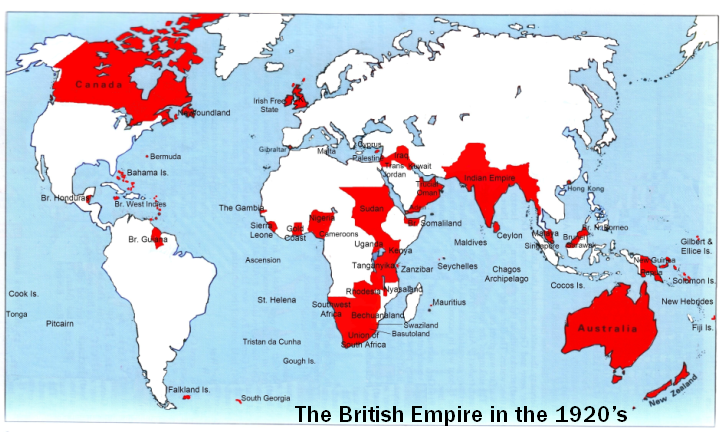
I just wish we all had waited until, say, 1930 to declare our independence, because then we would be cricket mad, just like all the other former British Colonies:

Instead, we get baseball, apple pie, and partisan politics.

Oh well.

Happy Independence Day, America.

Should we talk about the weather?

Today: it is hot. 98 degrees Fahrenheit (36.6 degrees Celsius) in Minneapolis and whoppingly humid.

Whoppingly.

And, really, I do not feel like writing much. Not because it is too hot, but because, actually, it is too cold.

We are lucky enough to have central air conditioning, and right now it is a chilly 69 degrees Fahrenheit (20.5 degrees Celsius) in our house. It is also very dry, and a little stale, and kind of dark, and not really all that inspiring when it comes to writing about cricket, a sport that is played for the most part in the hottest and dampest parts of the world.

But I made a pledge, and so post I will.

As evidenced by the previous 100 words or so, people like to talk about the weather. Even people that claim they don’t like to talk about the weather still like to talk about the weather. It is the absolutely one and only thing that we all share in common with the people in our general vicinity.

Today in Minneapolis, it is all anyone can talk about: how hot it was yesterday, how hot it is today, and how hot it will be tomorrow.  If it was cold, we would talk about that instead. Same if it was dry, or storming, or foggy.

The weather = humans talk about it.

Which is another thing I think people would like about cricket: the weather is an intergral part of the game. Cricket people talk about the weather constantly, as it really does have profound impact on the outcome of every single match. The ball moves differently in humid conditions than it does under dryer conditions. It swings when its overcast, but not when the sun is out. Sometimes rain wipes out entire matches, and sometimes the heat sucks the life right out of the players.

And that is not even bringing into consideration the wind, or the wicket itself. They swing in England, they spin in India. Sometimes they are dry and friendly, and sometimes they are wet and sticky. It all depends on where you are, and the weather that day.

Cricket matches are defined by the weather conditions they are played under, far more so than any other sport.

Sure, gridiron football is sometimes played in the rain and mud, but those games are few and far between. And, sure, sometimes a baseball game gets rained out, but they just play it the next day instead, no big deal. Those sports just don’t concern themselves with the weather as much – and so the weather is simply not a huge subject of conversation among the fans, players, commentators, and pundits.

But if you like to talk about the weather, if that is your thing, and I know it is, AND you like to listen to other people talk about the weather on the telly, then cricket is the sport for you.  Hands down.

*

Turn it up:

Streaming Dynasties

A couple quick subjects I would like to comment on, inspired by yesterday’s European Cup final:

Streaming:

Yesterday, in the United States, the final match was not available via over-the-air television. It was on ESPN, and also available online via ESPN3. Now, I am lucky enough to subscribe to the correct ISP to have access to ESPN3, but the vast majority of Internet users do not. And so for those it was either have cable (or satellite), head to the pub, or find an illegal stream.

Based on my Twitter feed, it seemed most folks chose the last option.

Before on the blog, I have talked about what a shame it is that more matches are not made available via legitimate sources to US cricket fans, but I have not talked about watching those same matches illegally. According to Giles Clarke, they are what is killing cricket, as they are stealing revenue from the cricket boards that desperately need the cash. To which most fans, including Jarrod Kimber, respond: fuck you, old man: there is no other way to watch certain matches!

Now, I do not watch illegal streams. If it is not on Willow.tv (which I gladly pay my $20 a month for) or ESPN3, then I do not watch it. I either listen to commentary from the BBC or follow along via Cricinfo.  However that choice has more to do with my paranoia about malware than with any sort of moral sanctity.

With that said, an interesting point arises: I firmly believe that file sharing and the like of music, film, TV…etc., is very much ethically and morally wrong. Those are people’s works that they put their heart, soul, and a whole lot of money into, and it is wrong for the average Internet user to download them from sources that the artist did not approve of.

I might catch a little flack for that from the Internet world, but that is my opinion.

And so then shouldn’t it follow that watching illegal streams is equally as abhorrent? Or is it different because it is a stream, not a download? Or is it different because it is a sport, and not a work of art?

Three great questions that I do not have the answers to, but I think as cricket fans they are questions worth mulling over.

At the end of the day, I think watching or listening to something that you do not obtain through the proper channels is stealing. And so, on this matter, I am in agreement with Giles Clarke, despite the fact that the matches are not available to purchase, even if you wanted to.

*

Dynasty:

Spain won yesterday. Their third major international title in four years.

They were without their best striker and their best defender, yet they didn’t even take their game out of first gear until last night – when they turned it on for 25 minutes or so, just long enough to show Italy and the rest of the world that they were leagues better than any other side in the tournament.

Without any doubt, they are the best international side in a generation. And calling them the greatest international side ever, while arguable, is not an overstatement.

And considering the ages of their core players, they could very well win the World Cup two years from now.

They are, officially: a sports dynasty.

And I loathe dynasties.

I hate it when the same team wins everything, all the time. The Lakers, the Bulls, the Yankees, Liverpool in the 70s-80s…etc. It bores me to tears.

Be there is one exception to this rule: Cricket.

I love dynasties in cricket. The West Indies, Australia…etc. Those mythical  sides that thrashed everyone for a decade or more. I think it is my favorite thing about the sport. As much as I talk about parity, I would love for a side to emerge that can win in every format and in all conditions.

And, truth be told, that team might be upon us.

Despite what I said a few weeks ago, that England were good not but not great, they could very well be the number one ranked ODI team by the end of the current series against Australia. They could also very well win the T20 World Cup again in September. And they could very well beat the Indians in their series this fall on the subcontinent, maintaining their number one test ranking and proving that they can win in all conditions.

If they do all that, and if the core group stays together over the next five years or so (and those are both mighty big asks) then they could legitimately be called a dynasty: A golden age of English cricket that people will talk about for decades to come.

They are not there yet, of course, but they are closer than any other current side, surely.

And I personally hope that they get there, because I think cricket could really use a good old fashioned dynasty.