Reign: 4 August 1903 – 20 August 1914. “Encouraged and expanded reception of Holy Communion, and combatted Modernistic theology. Most recent pope to be canonized.”
Cricketer:
C. B. Fry
England, Hampshire, Sussex. 26 Tests, 1,223 Test Runs. Represented England in both football and cricket; made an FA Cup Final appearance with Southampton, and once equaled the world record for the long jump.
Reign: 3 September 1914– 22 January 1922. “Credited for intervening for peace during World War I. Remembered by Pope Benedict XVI as ‘prophet of peace’.”
Cricketer:
Jack Hobbs
England, Surrey. 61 Tests, 5,410 Test runs. “Known as ‘The Master’, Hobbs is regarded by critics as one of the greatest batsmen in the history of cricket. He is the leading run-scorer and century-maker in first-class cricket, with 61,760 runs and 199 centuries.”
Reign: 2 March 1939 – 9 October 1958. “Invoked papal infallibility in encyclical Munificentissimus Deus.”
Cricketer:
Don Bradman
Australia, New South Wales, South Australia. 52 Tests, 6,996 Test runs. Career Test average: 99.94. The greatest Test batsman of all time.
Song:
Judy Garland’s Somewhere over the Rainbow: Written for the 1939 movie “The Wizard of Oz” and Judy Garland’s signature song. Won an Oscar.
*1958*
Pope:
Pope John XXIII
Reign: 28 October 1958 – 3 June 1963. “Opened Second Vatican Council; sometimes called ‘Good Pope John’.”
Cricketer:
Garry Sobers
West Indies, Barbados, South Australia, Nottinghamshire. 93 Test, 8032 Test runs, 235 Test wickets. One of the greatest all-rounders of all time. Once scored 365 not out.
Reign: 21 June 1963 – 6 August 1978. “The last pope to be crowned with the Papal Tiara. First pope to travel to the United States. Concluded Second Vatican Council.”
Cricketer:
Fred Trueman
England, Yorkshire, Derbyshire. 67 Tests, 307 Test wickets. Prime Minister Harold Wilson once described him as the “greatest living Yorkshireman.”
Reign: 26 August 1978 – 28 September 1978. “First pope to use ‘the First’ in regnal name. First pope with two names, for his two immediate predecessors.”
Cricketer:
Sir Viv Richards
West Indies, Glamorgan, Queensland, Somerset, Leeward Islands, Combined, Islands. 121 Tests, 8,540 Test runs. 187 ODIs, 6,721 ODI runs. Widely considered the greatest ODI batsman of all time, and named one of Wisden’s five cricketers of the century in 2000.
Reign: 16 October 1978 – 2 April 2005. “First Polish pope and first non-Italian pope in 455 years. Canonized more saints than all predecessors. Traveled extensively. Third longest known reign after Pius IX and St Peter. Recently beatified by Pope Benedict XVI.”
Reign: 9 April 2005 – 28 February 2013. “Oldest to become pope since Pope Clement XII in 1730. Elevated the Tridentine Mass to a more prominent position. First pope to renounce the Papacy on his own initiative since Pope Celestine V in 1294,retaining regnal name with title of pope emeritus.” Also, best hat.
Cricketer:
Andrew “Freddie” Flintoff
England, Lancashire, Chennai Super Kings. 79 Tests, 3845 Test runs, 226 Test wickets. Set England alight, and promptly retired.
Reign: 13 March 2013 – Present. “First pope born outside Europe since St. Gregory III and first from the Americas. First Pope from the Southern Hemisphere. First Jesuit pope. First to use a new and non-composed regnal name since Lando (913–914).
In my last blog, I mentioned how I didn’t have the same connections to cricket that others have. Kolkata 2001 does not remind me of moving to America, for instance.
Well, this is my attempt at fixing that, without causing too many ripples in the space-time continuum.
*
Sometime after the India vs Australia series, most cricket fans, be they casual or serious, Indian or otherwise, fully expect Sachin Tendulkar to retire from Test cricket.
24 years, 196 Tests, 15,746 runs, 51 centuries, and God only knows how many balls faced.
*
Sachin made his Test debut on November 15th, 1989, as a 16 year old. It was against Pakistan in Karachi. He scored 15 off of 28 balls before being bowled by Waqar Younis.
Six weeks before he did so, on a sunny Autumn morning in Minneapolis, minutes after finishing the Twin Cities Marathon, my dad died of a massive heart attack. He was 40 years old.
I was 13.
I loved my dad. He was my best friend. To say it was a massive blow would be a profound understatement.
*
This is the story of Sachin, me, and my dad.
*
Those first few weeks are a blur. I remember making bargains, I remember not crying very much, and I remember a very general sense of holy shit everything is changing.
As Sachin prepared for his Test debut, we had a funeral in Minneapolis, and another one in Cincinnati a few days later. None of it was easy for any of us.
Halloween was hard, Thanksgiving was harder, and it’s almost as if Christmas didn’t even exist that year, because I remember nothing about it.
*
The following summer, Sachin hit his maiden Test century. 119 not out against England at Old Trafford, helping his country save the match.
That summer we drove to Chicago to spend time with my Uncle, and then later in the summer, probably around the time Sachin was walking to the crease in Manchester, we drove to Cincinnati to spend time with my dad’s extended family.
Life was for the most part getting back to normal. When you are young however you don’t understand how complicated grief is. It’s a not a straight road through a dark tunnel; it’s a dimly lit maze of caverns that you never truly emerge from, no matter how you try, no matter how many years pass.
Michael Ian Black did a piece for This American Life a few years back about the death of his father that summed everything up for me:
“Rather than feeling the loss of my father subside over the years, I feel it more acutely as time goes on. I want a dad. I want my dad. I still feel that way, 28 years later. Meanwhile, I hurdle through life like a running back, my arm forever outstretched to keep people from getting too close.”
That’s it, that’s all of it. But when you are 14 going on 15 and alive and healthy, you don’t see it that way. You see grief as a disease and death as something that you get over, and move on from.
And as Sachin was scoring freely against England, that’s what I was thinking, my head pressed against the glass of the passenger window in my mom’s station wagon as we rumbled back home through midwestern summer fields: everything was going to be okay, we were going to move on, it was going to be fine.
I had no idea what was I getting myself into.
And I would bet that Sachin really didn’t either.
Our journeys had just begun. His would take him to the absolute height of sporting success; mine to the depths of the aforementioned dimly lit maze.
*
On the first of February, 1992, Sachin hit a sublime 114 in Perth against a venerable Aussie attack. He was coming into his own. He was becoming not just a great batsman, but an icon.
That February I would turn 16, which in the United States means the license to drive, which in turn of course means freedom. I remember that late spring for a certain group of friends that I have lost touch with, and high school hockey tournaments, and again: moving on. It’s not as if I was forgetting my dad, it was more (way more, in fact) that I simply was not ready to even start mourning.
Oh sure, I was sad; I wore black sweaters and listened to The Smiths but so did a million other people. I was high school sad. I was not mourning.
*
October, 1996. Seven years on.
Sachin is made India’s captain. He leads them to victory in a one-off match against Australia in Delhi, and then a series win over South Africa.
I was living in a tiny studio apartment in the Marcy-Holmes neighborhood of Minneapolis, and I was attending classes at the University of Minnesota. That fall two of my best friends in the world transferred back to the U and I think I was finally finding my feet, socially. I also was still going to my classes at that point, and studying, and turning in my papers on time.
All of that would change soon enough.
But I also was beginning to understand that in a lot of ways, my mind was still suck in October of 1989. I was immature. I was relationship illiterate. I was spending entirely too much time alone. I pushed people away that would have been great for me, and I smothered those that were terrible to me. In a lot of ways, looking back, things were really starting to fall apart.
Sachin was only 24. He was India’s captain. He had 10 Test tons. He was a millionaire. He was married.
And while he ascended, I circled the drain, despite all that I had going for me, socially and academically.
*
Ahmedabad. October the 29th. 1999. Sachin’s first double century. A 217 against New Zealand.
The very next day, I would meet my future wife.
I was living at the time in an even smaller studio apartment in the West Bank neighborhood of Minneapolis after a failed experiment in a house with roommates and several failed relationships. I was still enrolled at the U, though it was more ceremonial than anything. I was yet again spending an extraordinary amount of time alone, and I was painfully aware that I really needed to deal with my dad. I needed to finally mourn.
I would watch Field of Dreams just to cry, I would think about him constantly, I would talk to him as I walked between classes. I missed him so much. I thought if he was around, things would be better. I would have a center of gravity, and all of the things that were spiraling out of control would not even exist.
When I met my wife, though, the day after Sachin raised his bat to the adoring fans on the terraces of the Sardar Patel Stadium, I knew I had found a kindred spirit, as she had lost her mother at a very young age. I knew right then and there that everything was going to be okay. Not wine and roses all day, every day, of course, but when it came to my inability to properly mourn because of the walls and layers I had spent years building, the hard times were ending.
And I was right. About two months later, for the first time ever, I cried about my dad. I mean really cried. My wife-to-be, like the most patient angel on earth, held me in her arms while I cried for what felt like hours. It was the most intimate I had ever been with another person, and I mean that sincerely.
*
On the 31st of March, 2001, Sachin surpassed 10,000 ODI runs. A phenomenal achievement.
India was entering a period of tremendous growth. They were breaking out of their shell and were getting a seat at the international table. The “aughts” would be the Decade of India, and Sachin with his 10,000 ODI runs and his 25 Test centuries and his 30 ODI centuries would be their talisman.
Two weeks after ODI run number 10,000, my dad’s father passed away.
We drove down for the funeral. I could feel the links to a time when my dad was alive slowly slipping away.
A week later, my dad’s mother died of a broken heart. Broken once when my dad died, broken again when her husband died.
The next summer my uncles sold the house my dad had grown up in; the new owners tore it down and built a new one.
Having moved around so much, my grandparent’s house in Cincinnati that they had built after my grandfather returned from World War Two, the house that they had raised four children in, was the closest thing I would ever have to an ancestral home. And it was gone.
And with it, so much of what linked me to my dad.
*
In Sachin’s 99th Test appearance, on August the 23rd, 2002, he surpassed the great Don Bradman’s record of 29 Test centuries with a 193 against England at Headingley.
Three weeks earlier, in a once-in-a-generation thunderstorm, my wife and I were married.
We had a picture of my dad on display in the reception room.
He was never far from my thoughts.
We paid for the wedding with the inheritance we received from my grandparents; they had written my brother, sister, and me into their will after my dad had died.
*
On March 16th, 2005, Sachin scored his 10,000th Test run. He was 31 years old. I was 29, going on 30, and my clock was ticking.
I still missed my dad. I missed him more than anything. But the loss of him at such a young age was a constant reminder that I could very well die young, too. I was going to turn 30. He had died at 40. I had ten years. 3,500 days. These thoughts would rule my brain then and now. Sachin had 10,000 Test runs, I had an expiration date.
Then again, so did he.
*
After what surely must have felt like the longest 14 months of his entire life, on March 16th, 2012, Sachin scored his 100th international century.
It was the end of a very difficult time for the player, and the sense of relief he must have felt we will never be able to fully understand. It was a pure moment, the kind we only ever get in sports:
It was the culmination of a lifetime of effort from a very special player. And the TV announcer was right: we will never seen anything like it ever again.
As I watched this, my life was once again on the rocks, and I once again kept thinking to myself: if only my dad had lived, everything would be different, better. I still struggled with missing him, I still talked to him on long bike rides, wishing he was there. Despite my decades of effort at getting over him, I was still very much in mourning; I would never get my culmination, my pure moment.
Sachin was aging, he had reached pinnacles in cricket that no one ever will see again, and I was still stuck in October of 1989. My grief refused to age, refused to ebb; simply refused.
*
And, finally, despite the fact that there is one last chapter he has yet to write, on December 23rd, 2012, Sachin retired from one day cricket. He left us all wondering, of course, why just retire from one format, but in metaphor, and in the context of this post, it works.
I will never fully forget my dad, I will never fully be over him. But certain facets of my grief have recently retired. I can tell people I meet that my dad died when they ask what he does for a living. I can watch films where sons bury their fathers without completely losing it. I can let people in. I can foresee a future past the age of 40.
But yet, despite that, the pain still lingers, and it will continue to linger. Long after Sachin retires from Tests, I will still mourn my dad. The wound opened in 1989 will never fully close.
*
It was interesting allowing myself to plot my grief along Sachin’s career timeline. The day is coming however when he will will have to fully retire and his own wound will open up and his life will have the giant hole in it.
It’s almost as if our two timelines were reversed. In the fall of 1989, my world ended while his was just opening up before him.
In a few weeks, his world will end, all that he knows will go away, just as my wounds are finally starting to heal.
Here’s to you, Sachin. A remarkable career that spanned an entire grief cycle for me.
And here’s to you, dad. I still miss you so much.
My mom, dad, sister, and me outside my grandparent’s house. August of 1977. Sachin would have been four.
As I have mentioned several times here, I moved around a lot as a kid.
Recently, thanks to the magic of Facebook, I have reconnected with some people I attended middle school (grades six and seven, ages 10 and 11) with in Howell, Michigan about a million years ago.
In creeping through their photos, I have on several occasions come across albums of high school era pictures scanned in and reposted: groups of friends together sitting on the hood of a brand new used car, cheap ill-gotten beers in hand, bad 90s small town fashion, bad 90s small town everything.
I look at those pictures, and I am filled with melancholy: that was my alternate timeline, to borrow a phrase from Doctor Who. I was supposed to be in those pictures, too, but I wasn’t, and I never will be, because my dad picked up and moved the family to Minnesota the year before high school. From small town to suburb. I should have had Dazed and Confused, instead I got Pump Up the Volume.
This is my roundabout way of saying that often, when reading about the cricket that happened between my birth and the year I discovered the game, I feel a similar sense of loss and disconnectedness. When Sachin retired from ODIs, I felt a tinge of jealousy of those that have strong memories of Sachin in his youth, of the format in its youth, of the whole of India in its youth (relatively), memories that connected them to certain times and places and events in their own lives. I read those posts and think to myself: that should have been me. I should have been enjoying the 2005 Ashes, but instead I was smoking cigarettes and buying a house; I should have been watching the Kolkata Test in 2001, but I wasn’t; I should have been watching Sachin’s Test debut, but instead I was moving from Michigan to Minnesota.
Cricket’s history is my alternate timeline. And reading about one’s alternate timelines, and we all have them, always fills us with melancholy.
Which is why I am so very thankful when performances like what we saw last night happen, because it allows me to be a part of cricket history, to look back 10 years from now and not mourn an alternate timeline, but instead look back and say I was there, I saw Cheteshwar Pujara’s 206 at Hyderabad against Australia in the late winter of 2013. I saw the rebirth of Indian Test cricket. I saw the second coming of Rahul Dravid.
Just a quick post tonight, as I have to my affairs in order to so I can sit back and enjoy the fifth day of India vs Australia – and what a treat that test has been, eh?
(And by “affairs” I mean, “watch an episode of Downton Abbey.”)
On Sunday afternoon, I took my nephew and brother to see the Minnesota Timberwolves play the Golden State Warriors in a basketball game at the Target Center in Minneapolis. For those unaware, the Timberwolves play in the National Basketball Association, or NBA, which is the Premier League of professional basketball.
I had gotten the tickets as a Christmas present for my nephew, though I bet he would have preferred something like a Lego, but I want to get to know him better and I thought a Sunday afternoon sporting event would be a great way to do so, but that is neither here nor there.
So while we had a nice time drinking sodas and chatting, the game itself was everything I hate about American sports. There was loud pop music ALL THE TIME, even during gameplay, the focus was on the spectacle instead of the game, there were more TV time outs than I thought reasonable, it was a basically meaningless regular season matchup despite the fact that there are eight weeks left in the season, the crowd was maybe, MAYBE, half paying attention, the quality of the game was poor, most of the players, with the exception of the phenomenal Ricky Rubio, who really is the real deal, looked bored and utterly lacked passion and commitment, and no one, and I mean no one, played anything resembling what could reasonably be called defense.
I could go on, but I won’t.
It reminded me why I dislike the NBA, and why all of my attempts to like it in the past have failed – and I have actually tried to like it, as part of me really wants to be an NBA fan.
It reminded me why I like Test cricket, why I like Premier League football, and for the most part, why I like baseball.
I know all of those sports have their serious flaws, and some of those are the same as the ones specifically mentioned above, and I know therefore it sounds like I am being unfair to the NBA, but honestly this is all just my opinion – a matter of taste rather than right or wrong. I don’t think you are ignorant if you prefer the NFL to the EPL, the former is just not my cup of tea, that’s all.
But we probably can’t be friends.
(Just kidding about that last part.)
Here’s the deal: If you put yesterday’s NBA game on a wall next to tonight’s India v Australia Test match, one of them screams MATT BECKER WILL LIKE THIS – and the other, simply, does not.
And yesterday’s action at the Target Center drove that point home. Again.
Here’s a picture I took during the game.
Take note of: Howl-o-Meter on the center screen, the woman in front of us not even slightly paying attention, and the half empty arena.
As I have mentioned before, I moved around a lot as a kid, and never really had a hometown team, so I supported certain players instead.
And my favorites were always the catchers.
Carlton Fisk, Johnny Bench, and the late, great Gary Carter. Just to name a few.
There are rarely captains named in baseball, Derek Jeter and Paul Konerko are the only two active players who have been officially designated as captains, but the catchers were always the unofficial captains more often than not, and officially or unofficially, they were always the on field defensive leaders: as they are the only players on the the diamond that can see the entire field.
Their responsibilities, defensively, are endless – they need be able to talk down an errant pitcher, throw out base stealers, and make split second decisions on whether to call for the cut off man – and on top of all of that, their position is simply brutal physically, far more so than any other position with the possible exception of the pitcher, and yet, unlike the pitchers in the American League, they are expected to pull the shin guards off and go out and bat and run the bases the next half inning.
Their determination in the face of near constant physical pain, their baseball smarts, and their on field leadership are the reasons why ex-catchers always seem to make for good managers/coaches, and those were the same reasons catchers were always my favorite, too.
And so, it followed, that when I “discovered” cricket in 2007, that I would have a hard time finding a single team to support, and that I would seek out the wicketkeepers, and the captains, as my favorites, and so of course when I stumbled upon Mahendra Singh Dhoni, I was in love. His long hair, his big sixes, his wicketkeeping, his captaincy…it was a perfect storm. He instantly became one of my favorite athletes on the planet. And I cannot tell you how happy his double century yesterday at Chennai made me.
He did what captains are supposed to do: put a struggling team on their shoulders and lead them to victory. And when he does finally get out, he will have to put the gloves on, and lead his him defensively. No hiding at deep backward point. No resting on his laurels.
He has come under criticism as of late, because of Dominica and slow over rates and lackluster performances, but I think the bulk of the criticism has been unfair.
India was the number on Test side on the planet for a time under Dhoni – and yes it was short lived but it still happened. India won the World Cup in 2011 under Dhoni – to stay it was a “must win” tournament for India would be an understatement. Yet despite all that pressure, he led his team to the pinnacle.
And on top of all that pressure, he still has to go out and lead, and keep the wicket, and bat:
There have been 12 centuries in Test cricket from a wicketkeeper that was also team captain: Dhoni has five of them. Of the 20 highest scores from a wicketkeeper also serving as captain, Dhoni has ten of them. Half.
A leader, a captain, a wicketkeeper, a batsman.
Surely he has his flaws, but here’s hoping his performance in Chennai this week will quiet a few of those critics…for a little while at least.
Considering Alan Swann’s sexist and gross article in the Peterborough Telegraph (lovingly surmised on Teesra.com – he links to Swann’s article, I won’t), I thought it would behoove me to write a quick follow-up to my post from a few days ago that concerned ladies cricket.
I don’t find ladies sports dull. Not in the slightest. I highly enjoy the subtle nature of ladies football and basketball, just as two examples. I do not think it’s a shame that lady tennis players earn the same as gentleman tennis players, and I do not think Mr. Swann’s statements were of a “biological” nature – I think they were the statements of sexist blowhard.
The reasons I gave in my previous post for not watching ladies cricket (or baseball) can surely be misinterpreted as sexist, but that was not my intention in the slightest. My reasons were that men’s cricket is quite subtle, and not as reliant on brute strength, and therefore I found no reason to watch the ladies version of the game. It is the same reason I don’t watch Serie A or Ligue Un or La Liga: because the English Premiere League, while not necessarily better or more exciting, simply ticks all my footballing boxes, not because those other leagues are dull. There are only just so many hours in a day.
If anything, my reasons outed me not as sexist, but as woefully ignorant when it comes to cricket. As laid out in the comments by the incomparable Russ from Idle Summers.
The games are different enough that one can enjoy both. And I am looking forward to giving ladies cricket the chance it deserves.
*
Mr. Swann wrote this article, and his editors published it, knowing full well the kind of reaction it was going to get. It is impression whoring of the worst kind. He should have his press credentials revoked. Neither he nor his editors should be allowed media access of any kind to any official sporting event in any league: men, women, or whatever. That is the only way to stop this kind of article from seeing the light of day.
In fact, I would bet dollars to doughnuts that while Mr. Swann is a massive tool, he probably doesn’t 100% believe the sentiments in his articles. As he freely admits on Twitter: writing controversial articles that go viral is his job, it is what he is paid to do. Which makes him even more of a massive tool, as he is turning journalism into a laughing stock. He is an entertainer, not a journalist. He and is ilk (Rush Limbaugh, for one) are everything that is wrong with modern journalism – and while that might not seem like a big deal, strong journalism is a key facet of any strong democracy. And the only way to protect us all from these kinds of blowhards is for the FA and the ECB and the like, in the case of Swann, to ban Peterborough Telegraph “journalists” from the press box.
One might argue that the above suggestion is a violation of freedom of the press – a right only tenuously upheld in the UK anyway. But I don’t think so. Mr. Swann and the Peterborough Telegraph can print whatever the hell they want in the interest of a few more banner impressions, but that does not mean that the FA and the ECB have to allow their employees into their grounds.
You want to print shit like that about our athletes? Fine. But you are going to have to buy a ticket like everyone else.
The women’s world cup ended a few days ago. Australia won. I think.
I have to admit that I did not watch a single ball, even though many of the matches were broadcast live here in the states on ESPN3.
It’s not that I dislike female sports. I think women’s soccer is phenomenally entertaining, and I would go on the record to say that women’s college basketball is more fun to watch than men’s college basketball. It’s more…fundamental.
Since women are not physically as strong as men (for the most part, and speaking only of athletes), the sports that reward physical domination, speed, and strength more so than other sports, like basketball and soccer, can be quite interesting when played by women, because they rely on passing and staying organized. They play the game the way the inventors intended. Honestly, at times, it’s like two completely different sports are being played.
Games that do not reward simple brute strength, however, like cricket, and baseball, and the like, are simply more entertaining when played by men, mostly because that is what we are used to seeing.
In other words, I did not not watch the cricket women’s world cup because I think women’s cricket is boring, it’s just not what I am interested in. It’s the same reason I don’t watch MLS, for instance.
Congrats to the Aussie ladies, though. Nice work.
*
This morning, on NPR, I heard about a new ad campaign from NASCAR – attempting to attract hispanics – and millenials.
I will just quote the pertinent part of the article verbatim:
“Will it work? Brand strategist Adam Hanft doesn’t think so.
‘NASCAR is doing all the right things,’ he says, ‘but they may be doing it for the wrong sport.’
Hanft says even a polished ad campaign won’t change the fact that car racing is time consuming.
‘It’s a huge time suck,’ he says, ‘you’re kind of in for the day.’
Perhaps, not the best sport for time-starved, multi-tasking millennials.”
The last line is some rather shameless editorializing on the part of the journalist, but it’s a valid point, especially for those of us that love a game that last five days long.
An five hour NASCAR race is short compared to first class and even 50 over cricket.
A couple things:
1. I disagree that millenials aren’t ready for a sport that requires a bit more effort and time.
2. Is it time for NASCAR to introduce a shorter format?
*
I really dislike NASCAR, but I still have a lot of respect for their marketing successes. Up until recently, they were achieving real cross-over status. They had taken a niche, southern sport and made it a national hit that attracted people of all types. Cricket could take a lesson there, despite the fact that NASCAR’s popularity has ebbed over the last few years.
I am going to watch this campaign closely, see if there is anything that can translate over to the world of cricket. I would love to help cricket find a way to attract millenials without resorting to all T20, all the time, as seems to be their go-to solution right now.
Australia have visited India a total of 12 times for a Test series. They have won four of those series, while India have won six, and the rest were draws.
The above numbers count the one-off test series in 1996, even though they really shouldn’t.
Throughout those 12 series, there have been 42 total matches. Australia have won 12, India have won 15, there have been 14 draws, and there was one tie.
There was one six-match series, there have been two five-match series, two four-match series, five two-match series, one two-match series, and one of the aforementioned one-match series. (I have been looking to see if that was a series that involved a no-result or two, or was shortened due to a national emergency, but as far as I can tell it was a planned one test series. Even more odd considering it took place in the pre-T20 era.)
India have won the last two series in Australia: 2008 and 2010. The former a four match series that ended 2-0, and the latter a two match series that also ended 2-0.
That’s right, sports fans, India whitewashed Australia, in India, as recently as 2010. Something to remember when the pundits get all ginned up and start talking about Australia’s whitewash of India in Australia in 2012.
*
The four grounds hosting the four Tests that start next week are as follows (in order of appearance): MA Chidambaram Stadium, Chepauk, Chennai; Rajiv Gandhi International Stadium, Uppal, Hyderabad; Punjab Cricket Association Stadium, Mohali, Chandigarh; and Feroz Shah Kotla, Delhi.
Australia’s records at those grounds:
Chennai: Played six, won one, lost two, tied one, drawn two.
Hyderabad: Australia have never played a Test at this ground
Mohali: Played two, lost two
Delhi: Played six, won one, lost two, drawn three
Delhi was the host ground for the one match series.
It is the second oldest Test ground in India.
Here’s a cool picture:
This file is licensed under the Creative Commons Attribution-Share Alike 3.0 Unported license.
Australia’s most successful ground in Indian was the Nehru Stadium in Chennai – they won three matches there. But that ground doesn’t exist anymore.
*
The highest combined run total in a Test between Australia and India in India was in 1986 in Madras. The two teams scored 1,488 runs between them.
And, get this: the match ended in a tie.
5 days, 1,488 runs, 401 overs, 2,406 balls: and a tie.
It really is a funny old game, eh?
*
The lowest combined run total in a Test between Australia and India in India was also in 1986, this time in at the Feroz Shah Kotla in Delhi. The two teams only scored 314 runs between them.
The first three days were washed out, however.
*
In the previous four-match series between the countries in India, Australia have won one (2004) and India have won one (2008).
There were 3,903 total runs scored off of 7,644 balls in the former, and 5,170 runs off of 9,562 in the latter.
Most sports writers will tell you that covering a sport changes their relationship with that sport. They see the sausage making, in other words, and the chinks in the armor, and the whole “factory” aspect that modern sport has become – and the journos become jaded, and it becomes a job.
And it is not just sports journalists either, Nick Hornby said that Fever Pitch forever changed his relationship with Arsenal and with Arsenal’s supporters – and not necessarily in a good way – and I think the same type of affliction affects us lowly bloggers, too.
Whenever I read about or watch cricket, I start to formulate blog posts in my head – and I bet all of us do. And it doesn’t even have to be cricket related. When I heard the news about Oscar Pistorius, for instance, I instantly started to think about ways in which I could relate his story to cricket, because he is South African and South Africa is a test nation .
Over the last few weeks, I have done nothing but obsess over Twitter feeds and World War One and this stat and that stat – what I missed along the way was why I am here all along: this beautiful and silly and remarkable old game that I simply love to watch.
Thankfully, as a reminder, down in Cape Town, there is a Test match going on.
Yesterday morning, when I tuned in to watch, I was able to enjoy the game as simply a fan, not as a blogger. I didn’t have story ideas rolling around in my head, I just had Dale Steyn steaming in over and over again, all under that huge expanse of African sky.
And today I was able to watch Pakistan spin their way through South Africa’s openers, take the day, and put the match and the series back in doubt – something we all said was impossible a week ago. A truly remarkable turnaround.
Ironically, not wanting to write about cricket reminded me why I write about cricket in the first place: I am a fan of the game. And unlike a lot of journalists, I was a fan first and a writer second, not vice versa. So I am able to remember that this is a magical and wonderful game that is quite simply a joy to behold when it is played at its highest level. That’s why I started this blog in the first place. And that’s why I will allow myself to forget all of this tomorrow so I can keep writing about it.


 England, Hampshire, Sussex. 26 Tests, 1,223 Test Runs. Represented England in both football and cricket; made an FA Cup Final appearance with Southampton, and once equaled the world record for the long jump.
 Reign: 3 September 1914– 22 January 1922. “Credited for intervening for peace during World War I. Remembered by Pope Benedict XVI as ‘prophet of peace’.”

 Reign: 2 March 1939 – 9 October 1958. “Invoked papal infallibility in encyclical Munificentissimus Deus.”
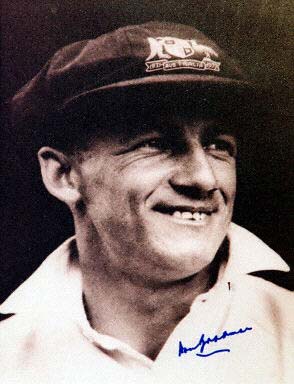 Australia, New South Wales, South Australia. 52 Tests, 6,996 Test runs. Career Test average: 99.94. The greatest Test batsman of all time.
 Reign: 28 October 1958 – 3 June 1963. “Opened Second Vatican Council; sometimes called ‘Good Pope John’.”
 West Indies, Barbados, South Australia, Nottinghamshire. 93 Test, 8032 Test runs, 235 Test wickets. One of the greatest all-rounders of all time. Once scored 365 not out.
 Reign: 21 June 1963 – 6 August 1978. “The last pope to be crowned with the Papal Tiara. First pope to travel to the United States. Concluded Second Vatican Council.”


 Limited Overs