Here’s a link to an interview I did with Aussie journalist Tristan Lavalette. We talk cricket and culture and writing. Check it out!
And be sure to follow Tristan on Twitter at @stumped4aduck.

A Cricket Blog
Here’s a link to an interview I did with Aussie journalist Tristan Lavalette. We talk cricket and culture and writing. Check it out!
And be sure to follow Tristan on Twitter at @stumped4aduck.
Dear American Sports Fan:
Last night, while you slept, on the other side of the world, 22 men battled to one of the most thrilling, nail biting, edge of your seat, and hard fought draws in recent memory.
That’s right, a draw. Not a tie. A draw. The two teams did not end with the exact same score. Instead, time and daylight ran out and one side couldn’t get the necessary runs to win whilst simultaneously the other side just could simply not get their opposition out.
You might scoff, you might dismiss me, and you might laugh: but it was the pinnacle of everything you love about baseball, gridiron football, and basketball.
You missed it. But you would have loved it.
The two teams involved were England and New Zealand. This was the 97th time the two teams had faced each other in a Test match. A history that dates back to 1930…
The game lasted five days. There were over 2,700 balls delivered. And yet somehow, despite all logic to the contrary, the game was not decided until the final ball was delivered…
The fifth and final day started at 10:30am Auckland time, mid-afternoon on the American east coast. You were still at work when it started, in other words, but it would be well after midnight on your watch before it was over.
New Zealand led England by an insurmountable total; and all they needed to do to win the match, and the series, and make history, was to get six more English batsmen out. All England needed to do was bat all day long. From the time you were still at the office until well after you were tucked in bed and dreaming…
And that is exactly what they did…
Matt Prior, England’s wicket-keeper, a hard nosed, blue collar cricketer, entered the game with England only having three outs left. The day was barely two-thirds over. And under immense pressure, he batted for almost four and a half hours, scoring 110 runs, and leading England’s inexperienced lower batting order across the finish line…
Stuart Broad, England’s vice captain, not known for his batting, still managed to stay out in the hot Auckland afternoon sun for over two hours. He blocked 77 balls bowled at anywhere from 30 mph to 80 mph. Some were at his head, some at his ankles, some bounced 20 feet in from of him, some tailed in the wind, some spun in the dirt. And yet, somehow, with a little bit of luck, he saw off nearly 13 of the 90 overs England needed to get through in order to save the match.
And with four overs left to get through, 24 more deliveries, New Zealand struck: Broad edged to a fielder in the slip position: out. Then James Anderson, another Englishman not known for his batting, did the same thing.
New Zealand was one out away. One out away from beating England in a Test series at home since 1985.
And on came Monty Panesar. A brilliant spin bowler, but thoroughly inept with the bat.
This was the scene, as New Zealand pressed Panesar and Prior for just one…more…out….
All 13 players on or near the pitch. It was that kind of day in Auckland. #NZvEng twitter.com/ESPNcricinfo/s…
— ESPNcricinfo (@ESPNcricinfo) March 26, 2013
All 13 men on the field at the time, 11 fielders and two batsman, all within meters of each other. One side just trying to hang on, the other begging for one more out. It was easily the most the absorbing 20 minutes of sport I had ever experienced.
You would have loved it.
And somehow, England, despite all of the pressure of the moment, made it through, and saved the match. Matt Prior dragged his entire team over the line.
*
Meanwhile, Brenden McCullum, playing with a severely pulled hamstring, hobbled around the pitch, positioning his fielders like a grandmaster chess player.
And New Zealand bowlers, on day five of play, steamed in again and again and again – each delivery more desperate and exhausting and knee pounding than the one before it – searching and searching and searching for that one magical delivery that never came. Tim Southee: 180 balls bowled in a day a half; Trent Boult 174; Bruce Martin 234…
…think about that next time your starting pitcher gets pulled on 85 pitches with a three run lead…
*
Nine hours of brilliant sport, on the other side of the world, while you slept.
Too bad you missed it, but I will be forever grateful that I didn’t.
Today I was doing some extra-curricular writing and started thinking about my status as an entirely neutral cricket fan.
I have no dog, in any hunt, the world over. No County Cricket team, no IPL squad, no Test nation. No tournament, no tour, no trophy.
I also don’t gamble, so the outcome is always fine with me, no matter what it is (for the most part, of course).
There are two sides to this coin: not having a team to support leaves me feeling a little shallow in my cricket fandom at times, like I am missing out on complete immersion into the sport. I also feel like I am missing out on the best the sport has to offer.
Moments like this:
Can’t stop watching #IndvAus highlights #wellofcourse
— Nikhil (@CricCrazyNIKS) March 25, 2013
But at the same time, I am lucky enough to miss out on moments like this:
Lets be honest.. On a flat belter we can’t make a run. If Starc didn’t get 99. This game was finished yesterday! #INDvAUS NOT GOOD ENOUGH! — Dean Jones (@ProfDeano) March 18, 2013
Today, for instance, even though it is not available to watch here in the States, I cannot wait for day five of the deciding Test between New Zealand and England to start. Can New Zealand beat England in a Test series for the first time since 1999? Or can Bell and Prior and company dig in and bat all day long and save the match and the series and England’s blushes? I honestly don’t care which happens, because I am a neutral. No matter what the outcome, it is going to be thrilling to watch and simply great for the Test format.
I get to be both this:
I will be home about half 12 when hopefully Ian Ronald Bell will still be at the crease digging the hell in — Elizabeth (@legsidelizzy) March 25, 2013
And this:
Feels like a good day to make history. You can do it @blackcaps!! #NZvENG — Laura McGoldrick (@LauraMcGoldrick) March 25, 2013
As a neutral supporter, I only want brilliant bowling, thrilling batting, great catches, five day battle royales, and last ball finishes. No matter who wins, loses, or draws, I am quite happy, as long as the cricket is fashionable and fun. And while yes I might miss out on the sheer monumental joy of supporting a cricket squad with my blood, sweat, and tears, I make up for that part of my sporting life with the Arsenal:
Just watched the goal via @arsenalist – tears in my eyes. Exactly want I needed today. Looking forward to watching it 1,000 times. #Arsenal
— Matt Becker (@matthewtbecker) January 9, 2012
And so in that spirit: God Defend New Zealand, and God Save the Queen.
Should be a great day down in Auckland.
sunrise in auckland – not a cloud in the sky… #nzveng twitter.com/richardboock/s…
— Richard Boock (@richardboock) March 25, 2013
There have been 50 four-Test series in Test cricket’s history. The first was 1881: England vs Australia, in Australia. After that series there was not another four-Test series until 1930: England vs New Zealand in New Zealand. There were a handful of four-Test series in the 50s, 60s, 70s, and 80s, with the format steadily increasing in popularity until becoming what it is today: the go-to number of Test matches in marquee tours that are not the Ashes.
In the format’s history, there have been six 4-0 whitewashes: Australia vs India in Australia (1967-1968) (Australia 4-0 India); South Africa vs Australia in South Africa (1970) (South Africa 4-0 Australia); England vs the West Indies in England (2004) (England 4-0 West Indies); England vs India in England (2011) (England 4-0 India); Australia vs India in Australia (2011-2012) (Australia 4-0 India); and India vs Australia in India (2013) (India 4-0 Australia).
What’s interesting is that Australia has been involved in four of the six white washes and India is a close second having been involved in three of the six. I think supporters of both nations will tell you that, yes, it’s either sink or swim with those two.
*
Australian supporters are of course are in full on meltdown, and looking back at their nation’s history, they really should be.
After being whitewashed by South Africa in 1970, they hosted, and lost, the Ashes. Then went to England in 1972 and failed to win them back.
They only won one Test of the ten immediately following the fateful trip to South Africa.
But of course things turned around for the Aussies soon: They mauled Pakistan 3-0 at home in a three-Test series; went to the West Indies for a five Test series and won 2-0; won the Ashes back in 1975; and held them in 1976.
And so everything is not lost, Australia, but I think if history teaches us anything, you are in for some dark days.
*
Meanwhile, down in New Zealand, England is two days away from losing their first Test series to New Zealand since 1999; and two days away from losing their first Test series to New Zealand IN New Zealand since the first term of the Reagan administration.
And, just like their Australian counterparts, England supporters are in full on meltdown mode. And so how did England fare after last losing a Test series to New Zealand?
They went to South Africa, and lost.
But after that: they hosted Zimbabwe, and won; they hosted the West Indies, and won; they traveled to Pakistan, and won; and they went to Sri Lanka, and won.
All told, they won four of the five Test series immediately following their series loss to New Zealand.
Regarding the Ashes specifically, after the New Zealand series, they were thoroughly drubbed 4-1 in England in 2001 and thoroughly drubbed 4-1 again in Australia in 2002.
*
And so, with the Ashes not four months away, both teams are in a wee spot of trouble. Though Australia surely is in muddier waters than England, both teams are hardly going to be at their best, on the field or in the clubhouse, when the first coin is tossed at Trent Bridge this coming July.
Which, in a lot of ways, for this neutral, is going to make the series even more interesting than it usually is.
*
List of years that Coldplay performed in England:
2000, 2002, 2003, 2005, 2006, 2008, 2009, 2011, and 2012.
In 2005, England hosted the Ashes, Coldplay performed in England, and England won the Ashes.
In 2009, England hosted the Ashes, Coldplay performed in England, and England won the Ashes.
In 2013, Coldplay is not scheduled to play in England.
This of course bodes well for Australia.
Or something.
*
I don’t care much for Coldplay, but this song’s all right:
*
Last night I put a jokey little post up about how much it would cost to travel to London and take in all five days of an Ashes match. It was meant to be silly but I thought it came across as asking for money – and that was not my intention in the slightest – so I took it down.
(If you subscribe to my blog in a RSS reader, you can still read it if you want, as deleted blog posts are not purged from RSS feeds which I think is just ridiculous but that’s a post for another day.)
The gist of what I was trying to get across is that we have unbelievable and unheard of access to the sport of cricket these days, thanks primarily to the Internet. This access has in a lot of ways created a very large and active cricketing diaspora. Ex-pats and Americans and others all over the world are now fans of the game and follow it just as relentlessly and fanatically as those that live in Test playing nations.
Because of this, however, you have a whole generation, if not two generations, of cricket fans who do not have access to one very key part of following the game: watching top flight matches in person.
That might seem unimportant to many because, in a lot of ways, cricket is more enjoyable to watch on TV or on the Internet: you have access to stats and instant replays and “expert” commentary. Plus you can watch it in your pants and the beer is cheaper. But let’s of course remember for a minute that cricket existed long before the Internet and television and even radio. Cricket is not globally popular because of how it appears on television, it is globally popular because it is enjoyable to watch live. Being able to take in top flight matches is a fundamental part of enjoying cricket – and the fact that generations of fans are unable to participate in such a fundamental facet of fandom is, in a lot of ways, really terrible for the future of cricket.
Of course, cricket is not the only sport with an active diaspora. There are legions of Manchester United and Arsenal and Chelsea fans for instance that will never even step foot in England. However, the big difference between cricket’s diaspora and football’s diaspora is that top flight soccer is everywhere. I can drive to Chicago and watch the Fire play the Galaxy if I wanted. But if I wanted to watch top flight cricket, I would have to, as I detailed in yesterday’s phantom post, spend thousand and thousands of dollars.
All of that said, cricket is quite possibly extinct right now if the Internet never happened. It’s a blessing and a curse, surely, but I think in the long run, it might very well prove to be a detriment to the overall quality of the game.
I mean, really, when you think about it, those who don’t think that television ruined sports are few and far between. So just think what the Internet is going to do to these games we love.
*Shudder*
*
At the end of the phantom post, I half jokingly suggested there should be a kickstarter for cricket bloggers to help alleviate the problem detailed above.
And this is something I have thought about before. Could I do a kickstarter where my friends and family pony up $25-$50 each to send me to England or India to “cover” a cricket match? The answer of course is a resounding no – mostly because none of us have any idea how to monetize our blogs, and therefore we have nothing to offer as spiffs to supporters. (You can ask family members to “pre-order” your CD, but asking family members to “pre-order” your blog post is of course ridiculous.)
But there is precedent for this sort of thing. The news website I work for, MinnPost.com, started its first crowd-funded beat this past fall. The goal of the program is to get people to pay for a journalist to write on a regular basis on an under-covered topic.
Unfortunately for cricket bloggers, of course, cricket is not the slightest bit under-covered, and there are plenty of experts doing a great job writing about cricket the world over – and yes that includes beats such as the Associates and other non-Test nations.
What bloggers do have to offer are unique perspectives, unique voices, and unique styles that I think all cricket fans the world over would enjoy reading, if the writer was given proper access to matches, coaches, boards, and/or athletes. (Note the fantastic work The Cricket Couch is doing with his podcast, and that’s just through sheer hustle, without any “proper” access – I mean, just imagine what he could do if he had access to press credentials).
(Cricinfo of course understands the above, which is why they started up The Cordon. It’s a definitely a step in the right direction when it comes to giving all cricket fans access to more unique voices in cricket, but it’s a very small step. And it is also a step toward monetizing blogs (with Disney the only organization seeing any of the ad dollars unfortunately) AND a step toward the homogenization of the blogosphere…but again those are posts for another day. For now: Cricinfo understand the value of the average cricket blogger, and that value is evidenced in their creation of The Cordon.)
And so my thought was to create something similar to the Knight Foundation’s News Challenge. Cricket bloggers and writers and authors and journalists unite to form a foundation: paying membership dues based on a sliding scale. Then cricket bloggers the world over, on an annual basis, submit proposals: which matches they want to cover, how they want to cover them, and why their voice will be unique. Then several of those proposals are funded via several rounds of voting and discussion, and the final pieces are distributed via the Associated Press to media worldwide to cricket fans the world over. (Edit: The commenter below nailed it: bloggers lose their soul when they are forced into the world of the AP style guide. Method of distribution is now TBD.)
At the end of the day, I think it would produce phenomenally entertaining content.
It’s a pipe dream, of course, but I think a workable pipedream, and I would love to hear people’s thoughts.
*
This weekend I will start writing about actual cricket again, I promise.
Right.
Onward.
*
The big news today is the announcement of the World Test Championship to take be hosted by England in 2017 and then by India in 2021. The tournament will feature four teams, and the four teams invited will be, I am assuming, the top four teams in the ICC rankings on a certain date.
Now, I must say, I really love this. To say I am excited would be an understatement. Cricket now has three marquee tournaments spread out in the calendar, which means TV revenue for the boards, and meaningful cricket for the players and the fans. Furthermore, because the World Test Championship will only feature the top four teams, it gives meaning to most Test matches that take place outside of the tournament. Dead rubbers no longer exist, and with them the meaningless matches ripe for spot fixing.
We will have to see how it all plays out, of course, and in a lot of ways teams might hold back and play for draws instead of going for wins, and the purists will of course be unhappy because it is an awful way to decide which squad is the best Test squad, but I think in the end it will be a good thing for both the format as well as the overall health of the sport.
Test cricket needed a marquee event to continue to compete with T20s and ODIs, and now it has one.
I also believe I am excited mostly because I am an American. And Americans like seasons that end with championships. The infinite nature of cricket and it’s neverending cycle of matches and tours always makes my head hurt a little. Now there is meaning, and an ending. Crown a champion, then start a new cycle. Amen.
The only issue I might have I alluded to briefly above: it’s a terrible way to crown a side the best in the world. Cricket is a marathon, not a sprint. The number one Test team in the world needs to show up and grind it out, for days at a time, in shitty conditions, 10,000 miles from home. And they need to do it over and over again before anyone thinks to call them the best in the world, despite what the ICC rankings say. South Africa is just now being seen as the real deal, for instance. It took more than just one good summer to get them to not just the top of the ICC rankings, but to gain the full respect of fans and pundits the world over as truly the best around.
If the tournament were held tomorrow, India would be the fourth ranked team in the tournament. And they could very well get red hot and South Africa get ice cold and India, the team that was thoroughly thrashed by both Australia and England in the last 18 months would all of a sudden be crowned the best Test side in the world: thanks to a few matches over a 15 day period.
Most would cry foul; all should cry foul.
It is the main argument I have with American sports: regular seasons are meaningless because all it takes is one team to get hot at the right time and the team that was winning all season loses in the early rounds of the playoffs. It’s not fair. It’s a crappy way to crown a champion.
All of that said, I stand by my earlier statement: I am excited, and I think it will be a good thing for the game and for the format.
I am looking forward to reading all of the articles and blog posts about the tournament over the next few days. Of that I am certain.
When YouTube first launched, before it was purchased by Google, it was not the cricket fans paradise that it is today. Good, quality cricket highlight videos were few and far between.
One of the first videos to receive traction was a recap of the famous “underarm incident” in the final of the 1981 World Series Cup between Australia and New Zealand.
When I discovered this video, I must have watched 25 times over a month-long period, mostly because it was one of the few quality videos at the time that showed actual in-match action, but also because it is a lovely time-capsule of early 80s cricket, and that’s why I continue to watch it at least every six weeks or so.
The open collared kits, the chest hair, the bacchanalian scenes in the crowd. It is a marvelous snippet of a cricketing time long since past, never to be seen again.
At the end of the video, the legendary cricket commentator, Richie Benaud, gives a scathing account of the incident, calling it the most disgraceful thing he had ever seen on a cricket ground – a profound statement from a man who has either played in or covered over 500 Test matches.
It’s a common sense and articulate and grounded review of what was a truly disgraceful moment for cricket.
*
Yesterday, over on Twitter, this happened:
Sometimes you read something and it is an honour to do so. This article is one of those times: limitedovers.wordpress.com/2013/03/10/my-…
— Richie Benaud (@RichieBenaud_) March 17, 2013
No, Mr. Benaud, the honor is all mine. Truly. Thank you for reading. I was both honored and humbled to learn that you had read my post, and enjoyed it enough to pass it on with such kind words.
**UPDATE** Someone on Twitter mentioned this might very well be a parody Richie Benaud account. And, I guess, it might be. The account has 23,000 followers, which is high for a parody account but low for a commentator/player with the stature of Mr. Benaud. If anyone has any information either way, that would be great.
I am a little embarrassed, and I wish I would have thought about the parody aspect before writing this post, but I just assumed with the number of followers, and with the traffic it drove to the post, that it was real. But when it comes to the Internet, you can never really be sure about anything.
And while I am still holding out hope that it is actually Richie Benaud’s account, at the end of the day, a person I don’t know read my work and passed it on, and that still makes me feel great, just as it does when anyone praises the work I do on this silly little blog. Whether you have a Test cap, work for Channel Nine, or whatever, does not matter to me. Whoever you are, whatever you do: thank you, thank you, thank you for reading.
With all honestly, this is exactly how I felt last Sunday night/Monday morning, long before the Tweet in question:

This update makes the last paragraph of this post obsolete, but I am going to leave it there anyway.
**UPDATE #2**
I think this just muddies the waters.
MT @limitedovers: .@richiebenaud_ Thanks for your kind words about my blog post. The reaction to it has been overwhelming.// Marvellous
— Richie Benaud (@RichieBenaud_) March 18, 2013
**UPDATE #3**
It’s a parody. I will have my internet credentials on your desk by the end of the day.
*
And while I am it, thank you ALL for reading and commenting and retweeting and for your kind words. This has been an amazing, and cathartic, week.
*
St. Pius X

Reign: 4 August 1903 – 20 August 1914. “Encouraged and expanded reception of Holy Communion, and combatted Modernistic theology. Most recent pope to be canonized.”
C. B. Fry
 England, Hampshire, Sussex. 26 Tests, 1,223 Test Runs. Represented England in both football and cricket; made an FA Cup Final appearance with Southampton, and once equaled the world record for the long jump.
George Enescu premiered his Romanian Rhapsody in Bucharest; February 23rd, 1903.
Benedict XV
 Reign: 3 September 1914– 22 January 1922. “Credited for intervening for peace during World War I. Remembered by Pope Benedict XVI as ‘prophet of peace’.”
Jack Hobbs

England, Surrey. 61 Tests, 5,410 Test runs. “Known as ‘The Master’, Hobbs is regarded by critics as one of the greatest batsmen in the history of cricket. He is the leading run-scorer and century-maker in first-class cricket, with 61,760 runs and 199 centuries.”
Pius XI

Reign: 6 February 1922 – 10 February 1939. “Signed the Lateran Treaty with Italy, establishing the Vatican City as a sovereign state.”
Jack Hobbs (see above)
“Three O’clock in the Morning” spent eight weeks at number one in 1922.
Pius XII
 Reign: 2 March 1939 – 9 October 1958. “Invoked papal infallibility in encyclical Munificentissimus Deus.”
Don Bradman
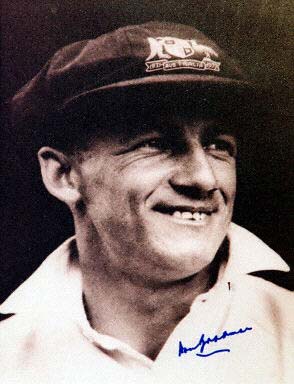 Australia, New South Wales, South Australia. 52 Tests, 6,996 Test runs. Career Test average: 99.94. The greatest Test batsman of all time.
Judy Garland’s Somewhere over the Rainbow: Written for the 1939 movie “The Wizard of Oz” and Judy Garland’s signature song. Won an Oscar.
Pope John XXIII
 Reign: 28 October 1958 – 3 June 1963. “Opened Second Vatican Council; sometimes called ‘Good Pope John’.”
Garry Sobers
 West Indies, Barbados, South Australia, Nottinghamshire. 93 Test, 8032 Test runs, 235 Test wickets. One of the greatest all-rounders of all time. Once scored 365 not out.
The Kingston Trio recorded “Tom Dooley” in 1958 and hit #1 on the Billboard charts the same year.
Paul VI
 Reign: 21 June 1963 – 6 August 1978. “The last pope to be crowned with the Papal Tiara. First pope to travel to the United States. Concluded Second Vatican Council.”
Fred Trueman

England, Yorkshire, Derbyshire. 67 Tests, 307 Test wickets. Prime Minister Harold Wilson once described him as the “greatest living Yorkshireman.”
Bob Dylan released “The Freewheelin’ Bob Dylan” in May of 1963.
John Paul I

Reign: 26 August 1978 – 28 September 1978. “First pope to use ‘the First’ in regnal name. First pope with two names, for his two immediate predecessors.”
Sir Viv Richards

West Indies, Glamorgan, Queensland, Somerset, Leeward Islands, Combined, Islands. 121 Tests, 8,540 Test runs. 187 ODIs, 6,721 ODI runs. Widely considered the greatest ODI batsman of all time, and named one of Wisden’s five cricketers of the century in 2000.
Kraftwerk released “The Man-Machine” in May of 1978.
John Paul II

Reign: 16 October 1978 – 2 April 2005. “First Polish pope and first non-Italian pope in 455 years. Canonized more saints than all predecessors. Traveled extensively. Third longest known reign after Pius IX and St Peter. Recently beatified by Pope Benedict XVI.”
See above
Bruce Springsteen released “Darkness on the Edge of Town” on June the 2nd, 1978.
Benedict XVI

Reign: 9 April 2005 – 28 February 2013. “Oldest to become pope since Pope Clement XII in 1730. Elevated the Tridentine Mass to a more prominent position. First pope to renounce the Papacy on his own initiative since Pope Celestine V in 1294,retaining regnal name with title of pope emeritus.” Also, best hat.
Andrew “Freddie” Flintoff
England, Lancashire, Chennai Super Kings. 79 Tests, 3845 Test runs, 226 Test wickets. Set England alight, and promptly retired.
The National released “Alligator” on April the 12th, 2005.
Francis I

Reign: 13 March 2013 – Present. “First pope born outside Europe since St. Gregory III and first from the Americas. First Pope from the Southern Hemisphere. First Jesuit pope. First to use a new and non-composed regnal name since Lando (913–914).
TBD. (But probably going to be a South African).
Cloud Cult released “1x1x1” on the 5th of March, 2013.
*
Sources:
1. http://en.wikipedia.org/wiki/List_of_popes 2. http://en.wikipedia.org/wiki/Wisden_Leading_Cricketer_in_the_WorldCricketers are those awarded the Wisden Leading Cricket in the World honor – announced retroactively in 2007 for the years 1900-2002.
Songs were my choice.
Papal bios are quoted from the link above.
***All images are from Wikipedia Commons and link back to original***
“Después”
after chopping off all the arms that reached out to me;
after boarding up all the windows and doors;
after filling all the pits with poisoned water;
after building my house on the rock of no,
inaccessible to flattery and fear;
after cutting off my tongue and eating it;
after hurling handfuls of silence
and monosyllable of scorn at my loves;
after forgetting my name;
and the name of my birthplace;
and the name of my race;
after judging and sentencing myself
to perpetual waiting,
and perpetual loneliness, I heard
against the stones of my dungeon of syllogisms,
the humid, tender, insistent
onset of spring.
-Octavio Paz
In my last blog, I mentioned how I didn’t have the same connections to cricket that others have. Kolkata 2001 does not remind me of moving to America, for instance.
Well, this is my attempt at fixing that, without causing too many ripples in the space-time continuum.
*
Sometime after the India vs Australia series, most cricket fans, be they casual or serious, Indian or otherwise, fully expect Sachin Tendulkar to retire from Test cricket.
24 years, 196 Tests, 15,746 runs, 51 centuries, and God only knows how many balls faced.
*
Sachin made his Test debut on November 15th, 1989, as a 16 year old. It was against Pakistan in Karachi. He scored 15 off of 28 balls before being bowled by Waqar Younis.
Six weeks before he did so, on a sunny Autumn morning in Minneapolis, minutes after finishing the Twin Cities Marathon, my dad died of a massive heart attack. He was 40 years old.
I was 13.
I loved my dad. He was my best friend. To say it was a massive blow would be a profound understatement.
*
This is the story of Sachin, me, and my dad.
*
Those first few weeks are a blur. I remember making bargains, I remember not crying very much, and I remember a very general sense of holy shit everything is changing.
As Sachin prepared for his Test debut, we had a funeral in Minneapolis, and another one in Cincinnati a few days later. None of it was easy for any of us.
Halloween was hard, Thanksgiving was harder, and it’s almost as if Christmas didn’t even exist that year, because I remember nothing about it.
*
The following summer, Sachin hit his maiden Test century. 119 not out against England at Old Trafford, helping his country save the match.
That summer we drove to Chicago to spend time with my Uncle, and then later in the summer, probably around the time Sachin was walking to the crease in Manchester, we drove to Cincinnati to spend time with my dad’s extended family.
Life was for the most part getting back to normal. When you are young however you don’t understand how complicated grief is. It’s a not a straight road through a dark tunnel; it’s a dimly lit maze of caverns that you never truly emerge from, no matter how you try, no matter how many years pass.
Michael Ian Black did a piece for This American Life a few years back about the death of his father that summed everything up for me:
“Rather than feeling the loss of my father subside over the years, I feel it more acutely as time goes on. I want a dad. I want my dad. I still feel that way, 28 years later. Meanwhile, I hurdle through life like a running back, my arm forever outstretched to keep people from getting too close.”
That’s it, that’s all of it. But when you are 14 going on 15 and alive and healthy, you don’t see it that way. You see grief as a disease and death as something that you get over, and move on from.
And as Sachin was scoring freely against England, that’s what I was thinking, my head pressed against the glass of the passenger window in my mom’s station wagon as we rumbled back home through midwestern summer fields: everything was going to be okay, we were going to move on, it was going to be fine.
I had no idea what was I getting myself into.
And I would bet that Sachin really didn’t either.
Our journeys had just begun. His would take him to the absolute height of sporting success; mine to the depths of the aforementioned dimly lit maze.
*
On the first of February, 1992, Sachin hit a sublime 114 in Perth against a venerable Aussie attack. He was coming into his own. He was becoming not just a great batsman, but an icon.
That February I would turn 16, which in the United States means the license to drive, which in turn of course means freedom. I remember that late spring for a certain group of friends that I have lost touch with, and high school hockey tournaments, and again: moving on. It’s not as if I was forgetting my dad, it was more (way more, in fact) that I simply was not ready to even start mourning.
Oh sure, I was sad; I wore black sweaters and listened to The Smiths but so did a million other people. I was high school sad. I was not mourning.
*
October, 1996. Seven years on.
Sachin is made India’s captain. He leads them to victory in a one-off match against Australia in Delhi, and then a series win over South Africa.
I was living in a tiny studio apartment in the Marcy-Holmes neighborhood of Minneapolis, and I was attending classes at the University of Minnesota. That fall two of my best friends in the world transferred back to the U and I think I was finally finding my feet, socially. I also was still going to my classes at that point, and studying, and turning in my papers on time.
All of that would change soon enough.
But I also was beginning to understand that in a lot of ways, my mind was still suck in October of 1989. I was immature. I was relationship illiterate. I was spending entirely too much time alone. I pushed people away that would have been great for me, and I smothered those that were terrible to me. In a lot of ways, looking back, things were really starting to fall apart.
Sachin was only 24. He was India’s captain. He had 10 Test tons. He was a millionaire. He was married.
And while he ascended, I circled the drain, despite all that I had going for me, socially and academically.
*
Ahmedabad. October the 29th. 1999. Sachin’s first double century. A 217 against New Zealand.
The very next day, I would meet my future wife.
I was living at the time in an even smaller studio apartment in the West Bank neighborhood of Minneapolis after a failed experiment in a house with roommates and several failed relationships. I was still enrolled at the U, though it was more ceremonial than anything. I was yet again spending an extraordinary amount of time alone, and I was painfully aware that I really needed to deal with my dad. I needed to finally mourn.
I would watch Field of Dreams just to cry, I would think about him constantly, I would talk to him as I walked between classes. I missed him so much. I thought if he was around, things would be better. I would have a center of gravity, and all of the things that were spiraling out of control would not even exist.
When I met my wife, though, the day after Sachin raised his bat to the adoring fans on the terraces of the Sardar Patel Stadium, I knew I had found a kindred spirit, as she had lost her mother at a very young age. I knew right then and there that everything was going to be okay. Not wine and roses all day, every day, of course, but when it came to my inability to properly mourn because of the walls and layers I had spent years building, the hard times were ending.
And I was right. About two months later, for the first time ever, I cried about my dad. I mean really cried. My wife-to-be, like the most patient angel on earth, held me in her arms while I cried for what felt like hours. It was the most intimate I had ever been with another person, and I mean that sincerely.
*
On the 31st of March, 2001, Sachin surpassed 10,000 ODI runs. A phenomenal achievement.
India was entering a period of tremendous growth. They were breaking out of their shell and were getting a seat at the international table. The “aughts” would be the Decade of India, and Sachin with his 10,000 ODI runs and his 25 Test centuries and his 30 ODI centuries would be their talisman.
Two weeks after ODI run number 10,000, my dad’s father passed away.
We drove down for the funeral. I could feel the links to a time when my dad was alive slowly slipping away.
A week later, my dad’s mother died of a broken heart. Broken once when my dad died, broken again when her husband died.
The next summer my uncles sold the house my dad had grown up in; the new owners tore it down and built a new one.
Having moved around so much, my grandparent’s house in Cincinnati that they had built after my grandfather returned from World War Two, the house that they had raised four children in, was the closest thing I would ever have to an ancestral home. And it was gone.
And with it, so much of what linked me to my dad.
*
In Sachin’s 99th Test appearance, on August the 23rd, 2002, he surpassed the great Don Bradman’s record of 29 Test centuries with a 193 against England at Headingley.
Three weeks earlier, in a once-in-a-generation thunderstorm, my wife and I were married.
We had a picture of my dad on display in the reception room.
He was never far from my thoughts.
We paid for the wedding with the inheritance we received from my grandparents; they had written my brother, sister, and me into their will after my dad had died.
*
On March 16th, 2005, Sachin scored his 10,000th Test run. He was 31 years old. I was 29, going on 30, and my clock was ticking.
I still missed my dad. I missed him more than anything. But the loss of him at such a young age was a constant reminder that I could very well die young, too. I was going to turn 30. He had died at 40. I had ten years. 3,500 days. These thoughts would rule my brain then and now. Sachin had 10,000 Test runs, I had an expiration date.
Then again, so did he.
*
After what surely must have felt like the longest 14 months of his entire life, on March 16th, 2012, Sachin scored his 100th international century.
It was the end of a very difficult time for the player, and the sense of relief he must have felt we will never be able to fully understand. It was a pure moment, the kind we only ever get in sports:
It was the culmination of a lifetime of effort from a very special player. And the TV announcer was right: we will never seen anything like it ever again.
As I watched this, my life was once again on the rocks, and I once again kept thinking to myself: if only my dad had lived, everything would be different, better. I still struggled with missing him, I still talked to him on long bike rides, wishing he was there. Despite my decades of effort at getting over him, I was still very much in mourning; I would never get my culmination, my pure moment.
Sachin was aging, he had reached pinnacles in cricket that no one ever will see again, and I was still stuck in October of 1989. My grief refused to age, refused to ebb; simply refused.
*
And, finally, despite the fact that there is one last chapter he has yet to write, on December 23rd, 2012, Sachin retired from one day cricket. He left us all wondering, of course, why just retire from one format, but in metaphor, and in the context of this post, it works.
I will never fully forget my dad, I will never fully be over him. But certain facets of my grief have recently retired. I can tell people I meet that my dad died when they ask what he does for a living. I can watch films where sons bury their fathers without completely losing it. I can let people in. I can foresee a future past the age of 40.
But yet, despite that, the pain still lingers, and it will continue to linger. Long after Sachin retires from Tests, I will still mourn my dad. The wound opened in 1989 will never fully close.
*
It was interesting allowing myself to plot my grief along Sachin’s career timeline. The day is coming however when he will will have to fully retire and his own wound will open up and his life will have the giant hole in it.
It’s almost as if our two timelines were reversed. In the fall of 1989, my world ended while his was just opening up before him.
In a few weeks, his world will end, all that he knows will go away, just as my wounds are finally starting to heal.
Here’s to you, Sachin. A remarkable career that spanned an entire grief cycle for me.
And here’s to you, dad. I still miss you so much.

 Limited Overs